
What Amino Acids Actually Do For Hair
You have bought the vitamins, tried the growth oils, and added more protein, and you are still shedding. The missing piece may be specific amino building blocks rather than another generic bottle of biotin.
You Have Tried Everything On The Shelf
You take the vitamins. You have tried the growth oils. You have upped your protein. And your hair is still struggling.
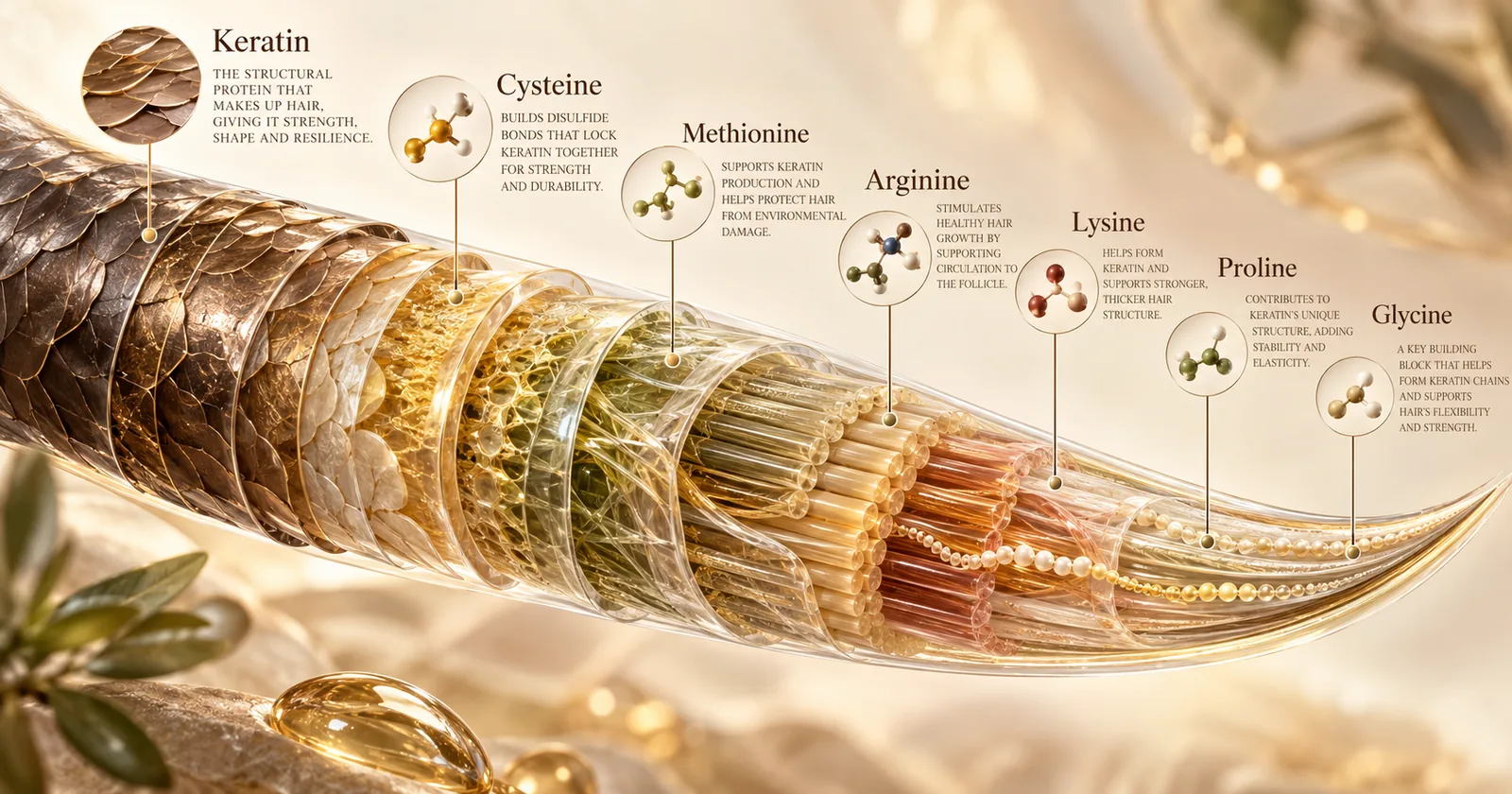
The Seven Amino Acids We Look At
As a functional medicine trichologist, this is one of the most common patterns we see: women loading up on biotin when their bodies are actually asking for specific amino acids.
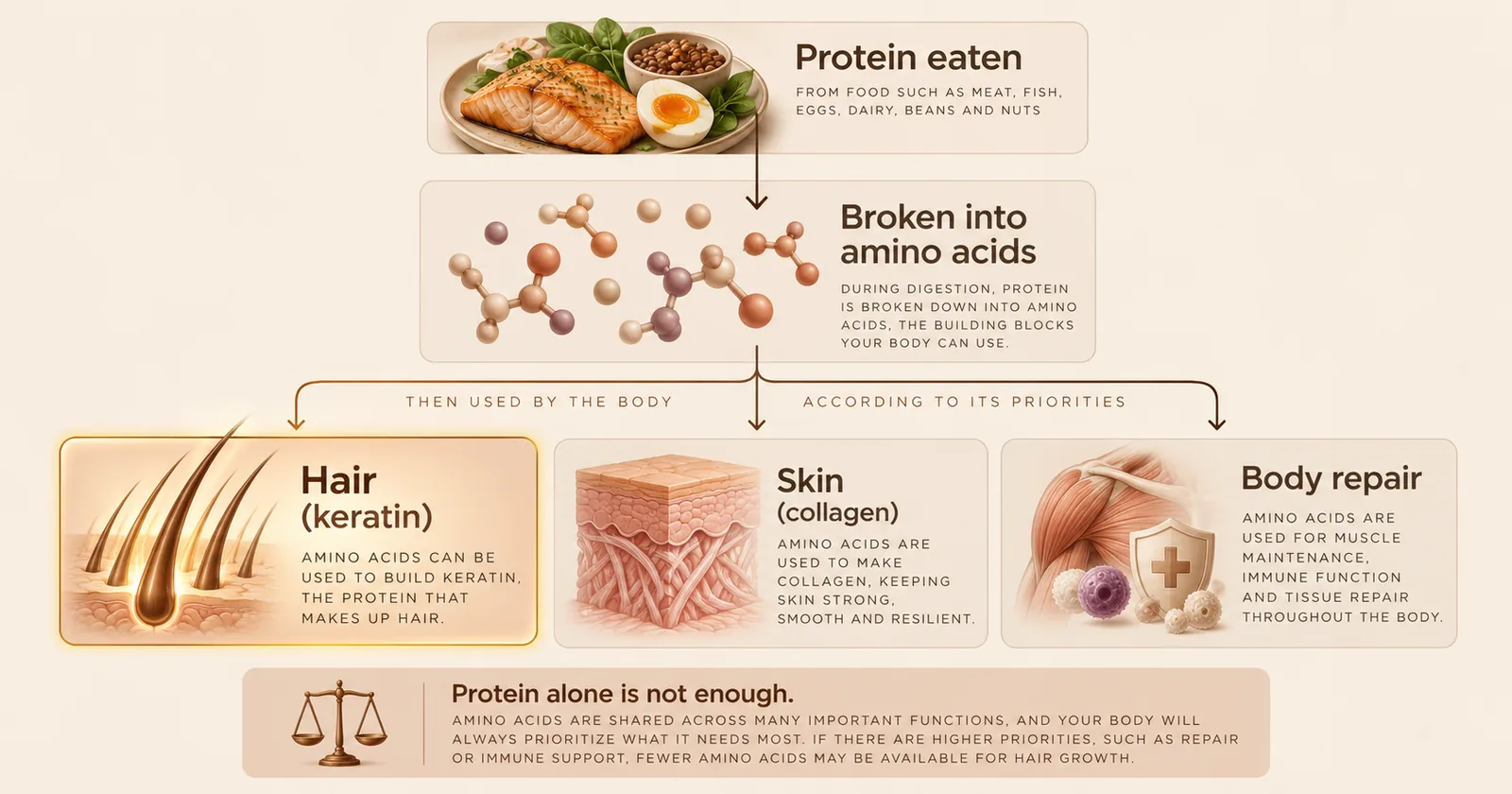
Why More Protein Is Not Always Enough
This is exactly where functional lab testing earns its place. Checking levels, gut function, and cortisol tells us what your body is short on, rather than leaving you to guess.
Built For Your Biochemistry
We do not hand out a generic hair vitamin. We start with a full evaluation and lab work so we can see whether your picture is a lysine and iron story, a methionine and sulfur story, or something else entirely.
How We Decide Which Amino Acids Belong In Your Plan
When it is indicated, we use medical-grade nutraceuticals, including our Gro’ N Glo’ Vitamins, and only when they are right for your biochemistry. It is never a hard sell.
Why a list is not a plan
It is tempting to turn amino acids into another shopping list. That misses the point. Hair depends on building blocks, but the useful question is not which ingredient is popular. It is which part of your own picture is asking for support.
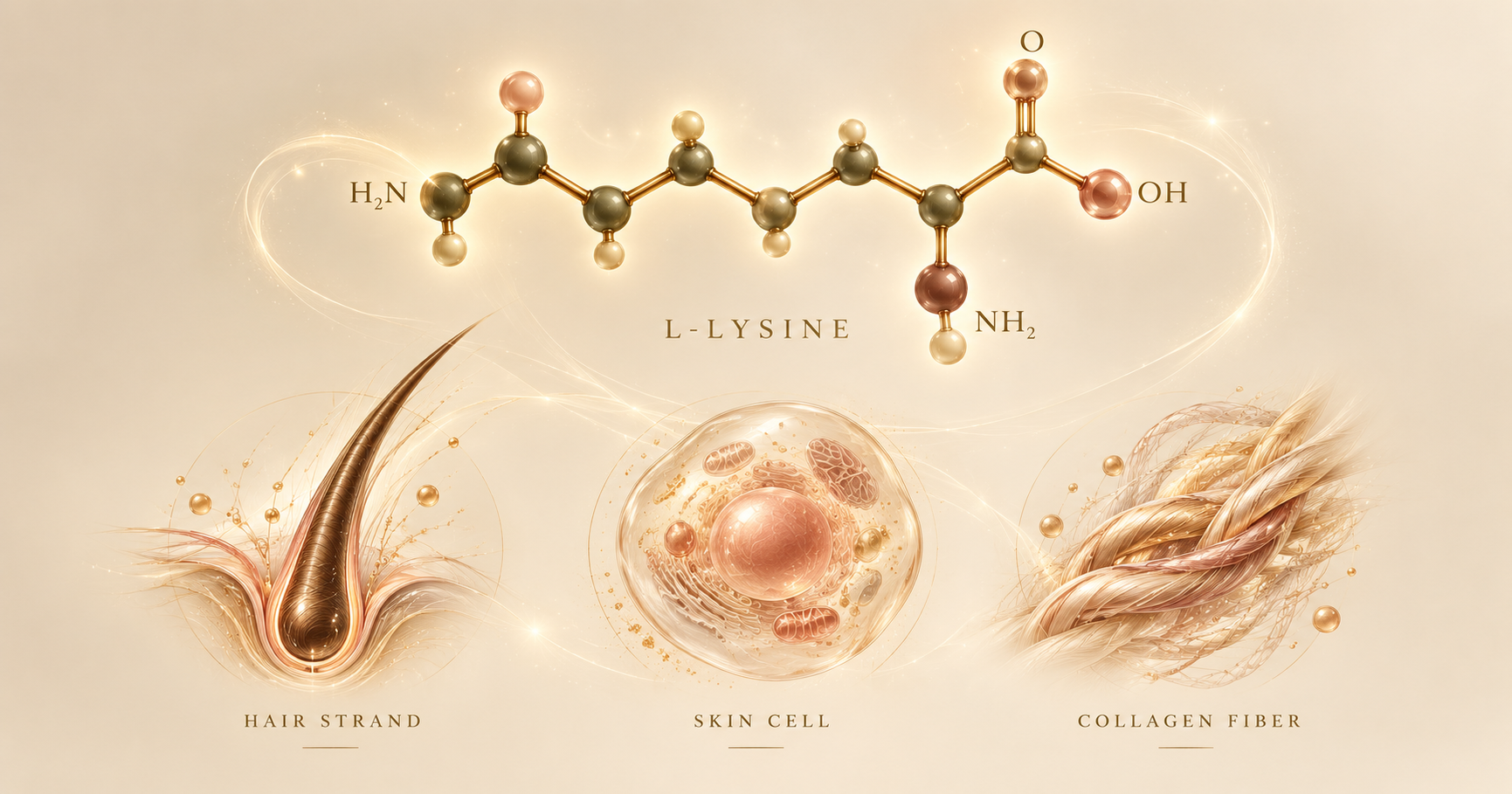
Lysine and methionine already give us two different examples. One can point us toward an iron story, while the other can point toward sulfur. Those are not interchangeable questions, and neither can be settled by taking more of everything.
A better standard. The goal is not the longest supplement label. It is a plan that can explain why each ingredient is there.
What we read before recommending anything
We begin with the pattern at the scalp, the timing of the shedding, what you eat, what you already take, and what changed before the hair changed. That history helps separate a possible building-block issue from a scalp condition or another internal driver.
- Where the thinning or shedding appears
- When it began and what changed beforehand
- Current food and supplement habits
- What the scalp shows under magnification
- Whether focused lab work would answer the remaining question
Only after those pieces agree does a targeted nutrient plan make sense. If they point somewhere else, adding amino acids is not the answer, and we will say so.
What progress should mean
A useful plan gives you something clearer than hope in a bottle. You should understand what is being supported, why it belongs in your plan, and what will be reviewed over time.
Hair changes slowly, so the first win is often clarity. Once the guessing stops, each next decision becomes easier and more personal.
Not sure this is you? See your scalp at 200x.
Book My $99 DiscoveryFrequently asked questions
Do amino acids help hair grow?
They are part of the raw material the body uses to make hair, but that does not mean every amino acid supplement fits every shedding pattern. The useful next step is to connect the scalp, history, food, current supplements, and any focused testing before choosing support.
Why might more protein not fix shedding?
Eating more protein does not tell us which building block may be relevant, whether it is being used well, or whether the hair change has another cause. A scalp condition, stress pathway, iron question, or different internal driver may need attention instead.
Which amino acids belong in a hair plan?
That decision should be personal. This article discusses lysine in relation to iron and methionine in relation to sulfur, but it does not prescribe a universal list. Dr. Nina uses the scalp pattern, history, and focused results to decide whether either question belongs in the plan.
Should I take a general hair vitamin?
A general vitamin may add ingredients without explaining which one you need. A better plan can tell you why each recommendation is present, what question it addresses, and when it will be reviewed. If the evidence points elsewhere, more supplements are not the answer.

Written and reviewed by
Double Board Certified Trichologist. PhD in Functional Drugless Medicine. Master Cosmetologist. Founder and Clinical Director of Nina Ross Atlanta, with 10 years of specialized care and 2,500+ clients seen.