Where Magnesium Touches Your Hair
If your hair is thinning and your scalp feels off, the answer may not be in the shampoo bottle.
You Are Doing The Things, And It Is Still Shedding
You eat decently. You manage your stress as well as anyone can. You have swapped shampoos, oils and leave-ins, and none of it changed what you are seeing in the sink.
The Magnesium And Hair Connection
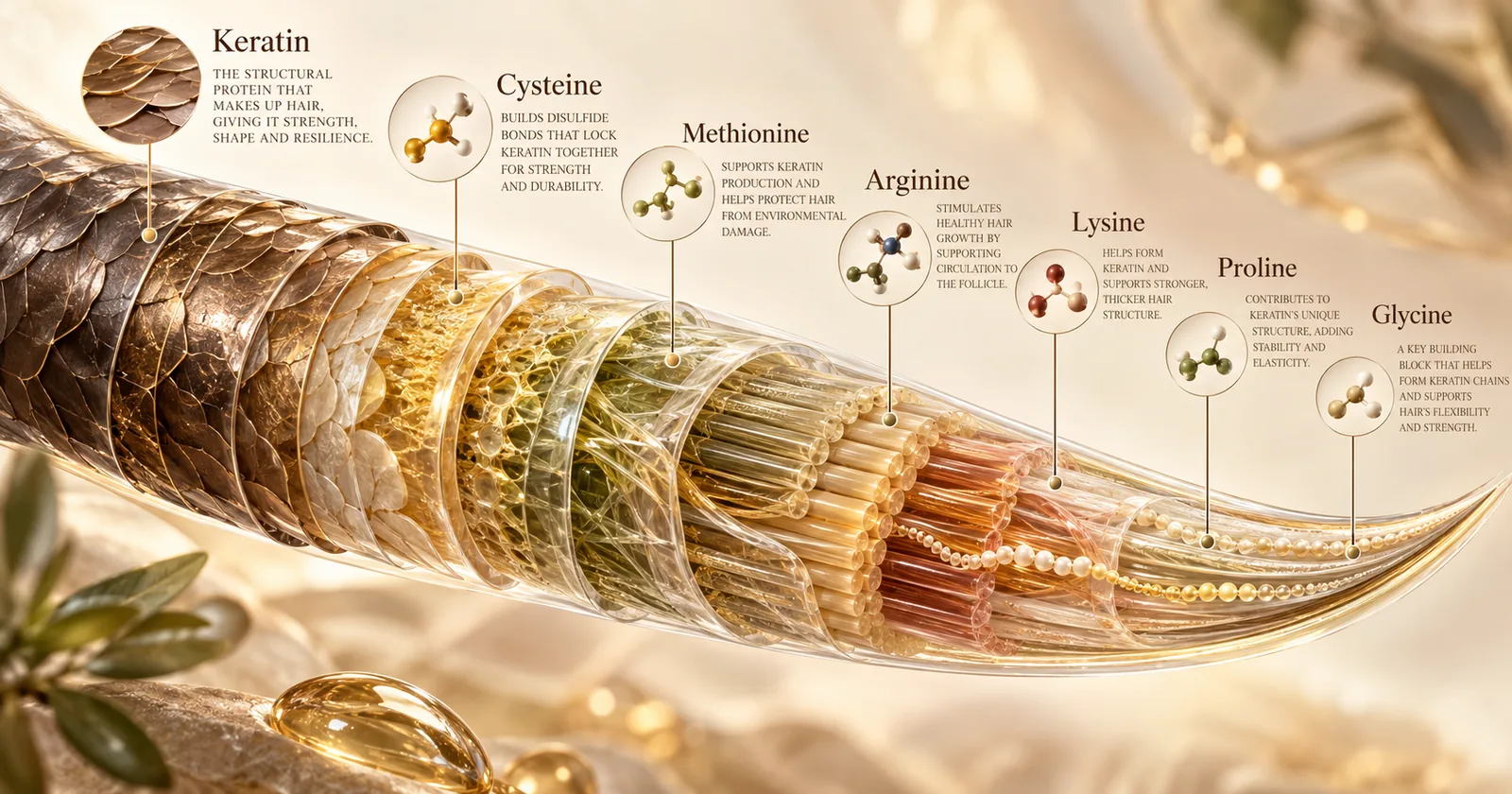
Magnesium is a cofactor in hundreds of enzyme reactions, including reactions involved in cellular energy production, protein synthesis, DNA and RNA activity, and normal nerve and muscle function. Hair-follicle cells divide rapidly and require a steady supply of energy and amino acids to produce the keratin that forms the hair shaft. That makes adequate magnesium biologically relevant to normal growth, but it does not mean magnesium deficiency is a common or proven cause of hair loss. The direct clinical evidence linking magnesium supplementation to hair regrowth is limited, so persistent shedding should be evaluated alongside iron status, thyroid function, protein intake, medications, inflammation, hormones, and the visible scalp pattern rather than blamed on magnesium alone.
Scalp Calcification And Delivery
Most people connect magnesium with sleep or muscle cramps. Hair rarely comes to mind, yet hair tends to suffer early when magnesium is low, because growing hair is expensive work that the body will quietly deprioritise.
Protein Synthesis And Keratin
Calcium can build up inside the small vessels of the scalp, much like rust inside a pipe. As that buildup grows, less oxygen and fewer nutrients reach the follicle, and the follicle cannot do its job on a reduced supply.
Signs You May Be Low
Buildup can also clog follicles themselves. That is where an inflamed, sore scalp comes from, and it is part of why folliculitis becomes more likely in a congested scalp.
What the scalp can and cannot tell us
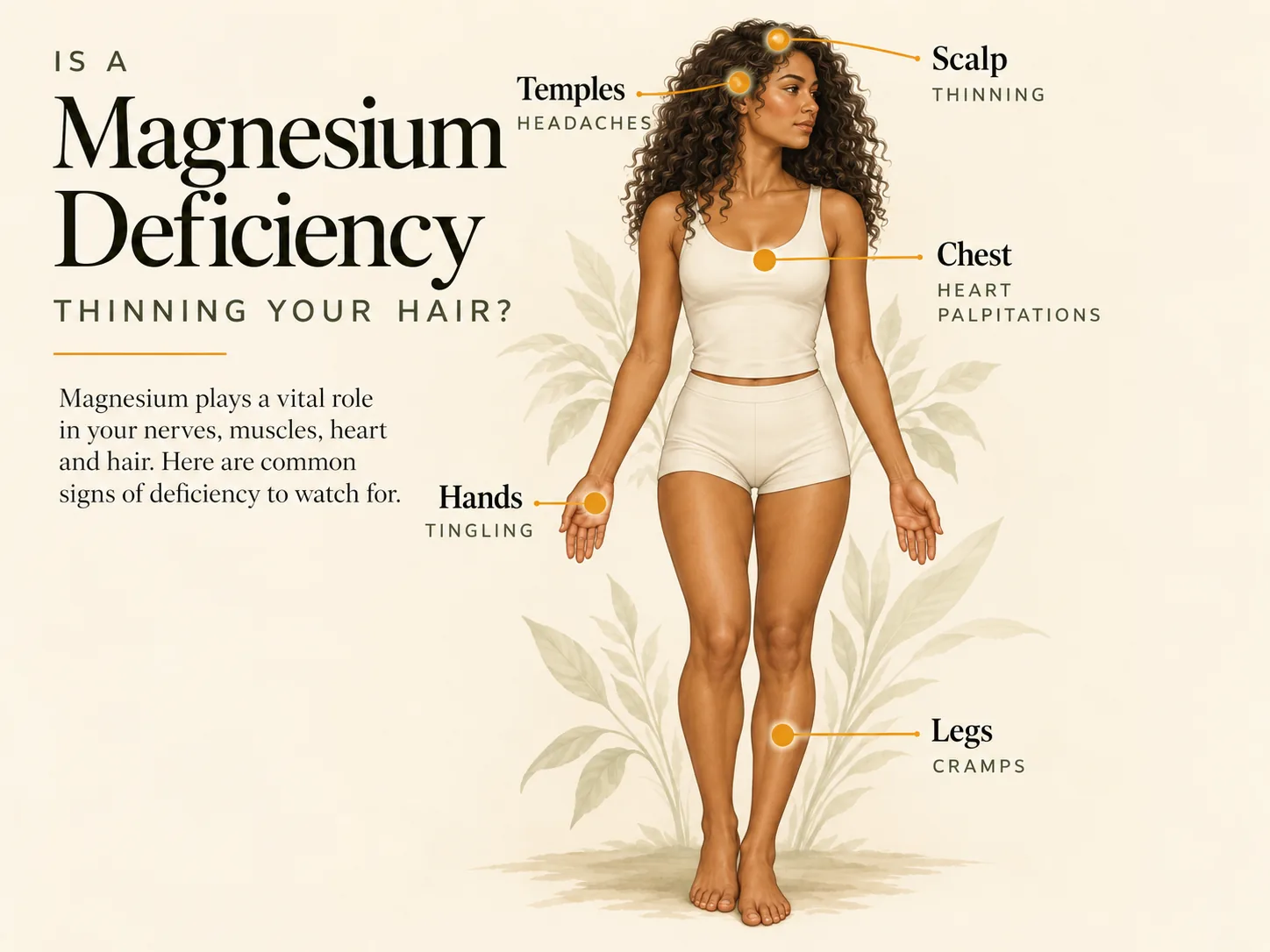
A tender, inflamed scalp and ongoing shedding deserve attention, but they do not identify a magnesium deficiency by themselves. The scalp read shows the pattern and environment. The internal question needs its own evidence.

- Ongoing shedding that has not been explained
- A scalp that feels tender or inflamed
- A history that raises a nutrient question
- A plan based mostly on generic hair supplements
- No clear connection yet between the scalp and whole-body picture
Why more is not the same as better
Magnesium appears in many wellness products, which can make it feel harmless to add one more. But an ingredient being common does not make it the missing piece in your case. We first ask what the scalp shows and whether the history supports testing that question.
Keep the clue in context. Shedding and scalp tenderness are reasons to look closer, not proof that one mineral is responsible.
How we decide whether it belongs
- Read the patternDocument where shedding and scalp changes are showing up.
- Review the historyLook at timing, food, current supplements, and related body changes.
- Narrow the questionDecide whether magnesium is plausible or whether another driver fits better.
- Build the planUse targeted support only when the pieces agree.
This approach also protects you from treating a scalp condition as a nutrient problem. If the surface needs direct care, that belongs in the plan. If the picture points inward, we can investigate that without ignoring the scalp.
What useful follow-up looks like
A recommendation should be reviewable. You should know what prompted it, what else is being addressed, and when the plan will be reconsidered. The purpose is not to keep adding supplements. It is to reduce uncertainty.
When the right question is finally being asked, you can stop blaming yourself for not finding the perfect product. That is a much healthier place to begin.
Not sure this is you? See your scalp at 200x.
Book My $99 DiscoveryFrequently asked questions
Can low magnesium cause hair shedding?
Magnesium may be relevant to some shedding patterns, but shedding alone does not establish a deficiency. The scalp, timing, food, supplements, and focused results need to support the same conclusion.
What signs make magnesium worth discussing?
This article points to ongoing shedding and a scalp that feels tender or inflamed as reasons to look closer. They are not specific enough to diagnose low magnesium, so they should guide a question rather than a self-selected dose.
Why is a scalp exam still needed?
Magnification shows the distribution of shedding and the condition of the scalp surface. It helps prevent an inflammatory or patterned concern from being treated as a nutrient problem simply because magnesium appears on a symptom list.
Should I add magnesium to a hair supplement routine?
Not automatically. A recommendation should explain why magnesium is being considered, what evidence supports it, what else the plan addresses, and when it will be reviewed. More ingredients are not the same as a more personal plan.

Written and reviewed by
Double Board Certified Trichologist. PhD in Functional Drugless Medicine. Master Cosmetologist. Founder and Clinical Director of Nina Ross Atlanta, with 10 years of specialized care and 2,500+ clients seen.