
What L-Lysine Can And Cannot Do
Another supplement promising radiance. Here is the real conversation about how lysine connects to your scalp and your hair, and why a pill on its own is never the full story.
You Have Every Right To Be Skeptical
Look at your bathroom counter. Biotin. Collagen powder. A few mystery herbs someone swore by. It is exhausting, it is expensive, and most of it was bought on hope rather than on anything you were told about your own body.
Your Scalp Is Skin
Healthy hair cannot grow out of an inflamed scalp. That is the starting point for everything else on this page.
What L-Lysine Actually Does
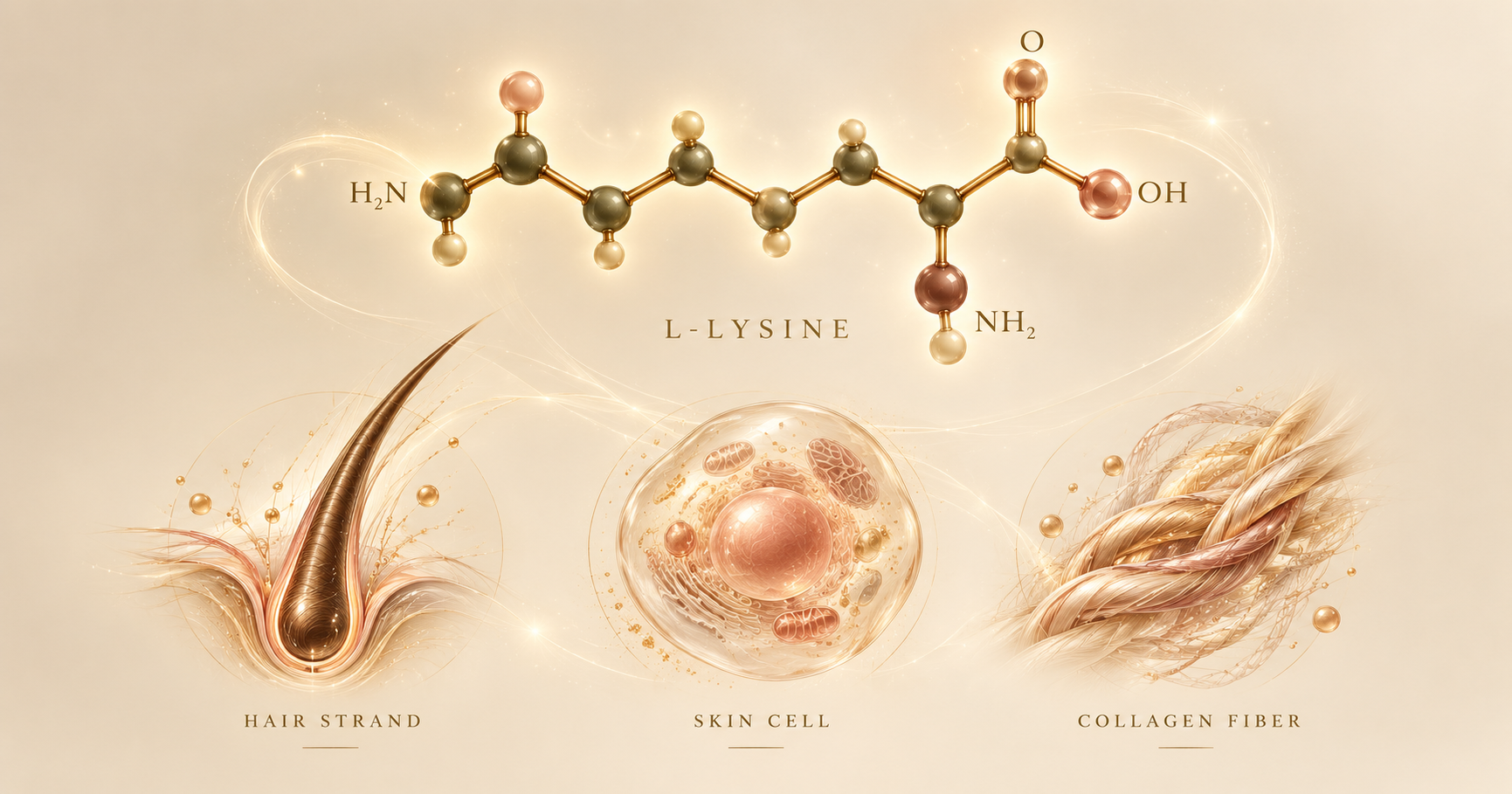
The original lysine conversation was always a skin conversation: texture, healing, collagen. Your scalp is skin. It is the same tissue, with follicles living inside it.
The Truth They Do Not Tell You
Collagen gives skin its structural integrity, and that structure is part of what anchors a follicle in place.
When Lysine Is Part Of A Real Plan
Lysine is essential for collagen synthesis. Your body cannot make it, so it has to come in. When inflammation is already working against the tissue, as it is in CCCA, having the building blocks available matters more, not less.
Two reasons lysine enters the hair conversation
| Role already discussed | Why it matters to the picture |
|---|---|
| Collagen support | Collagen helps form the structure around skin and follicles |
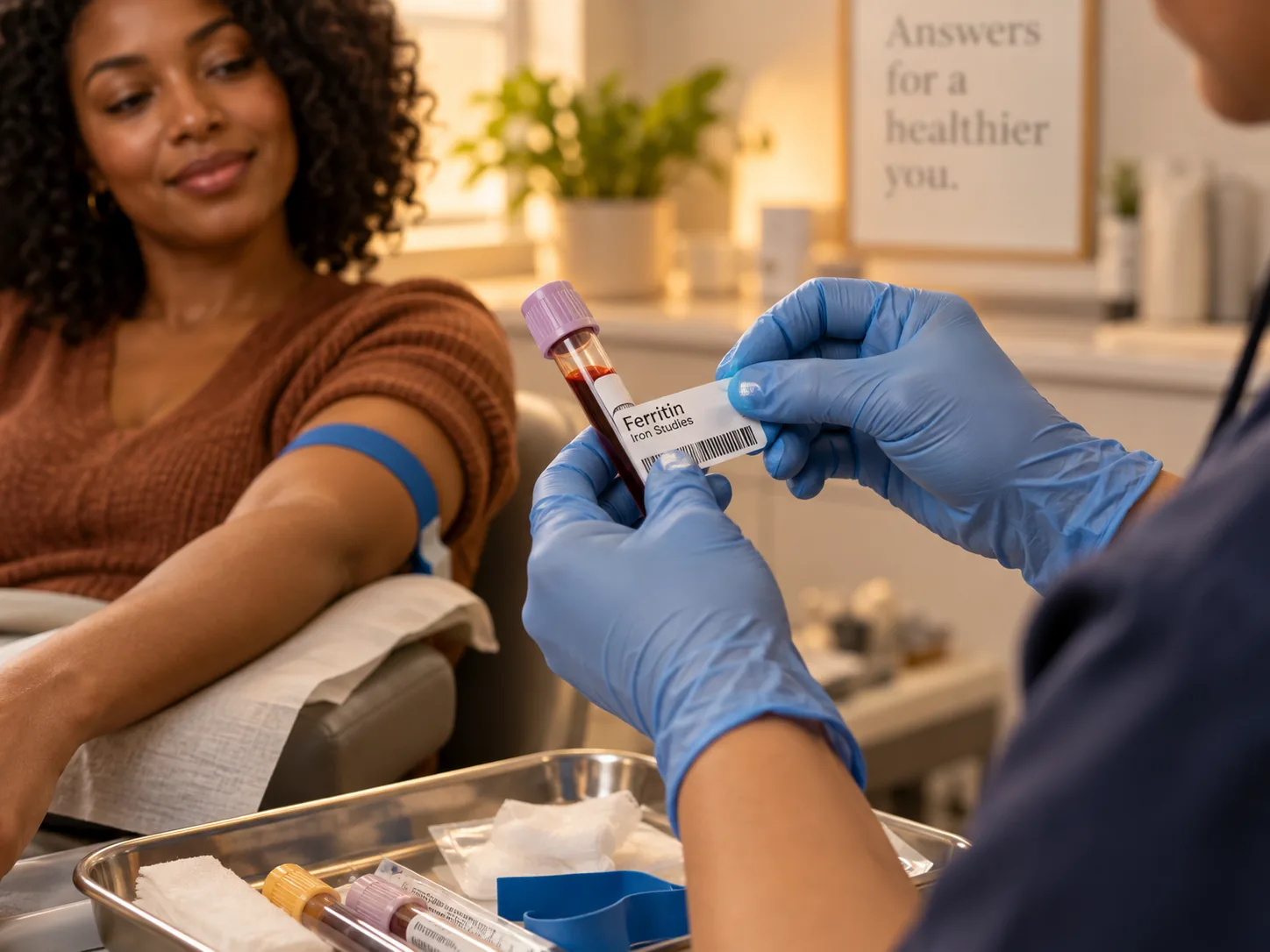
| Iron absorption and retention | An iron story can overlap with shedding, so the two questions may need to be read together |
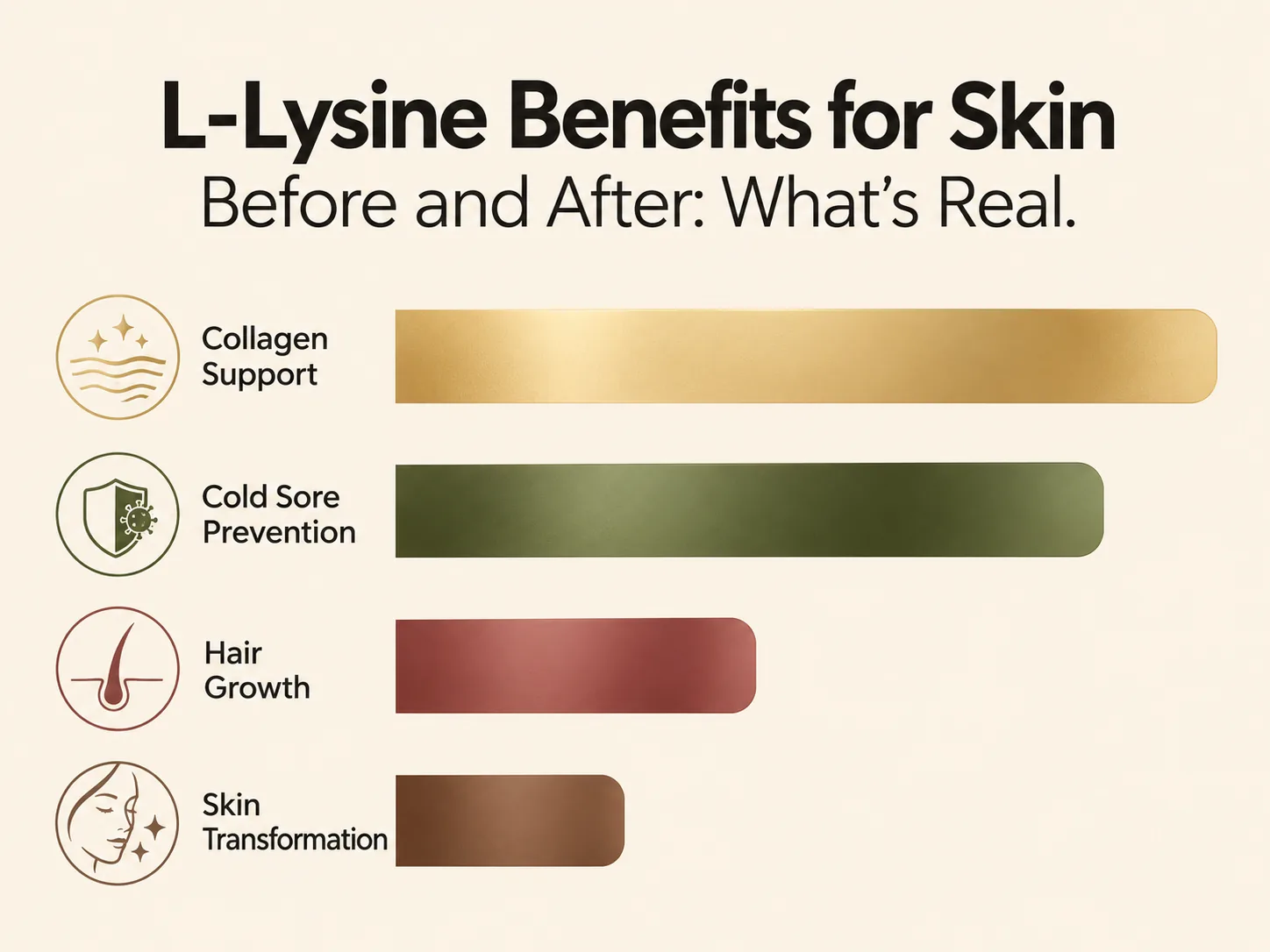
That does not make lysine a stand-alone answer for every skin or hair concern. It makes it one possible part of a larger pattern, especially when the history also raises a question about iron.
Why before-and-after photos can mislead
A photo can show that something changed. It cannot tell you whether lysine caused the change, what else the person was taking, or whether the starting problem matches yours. That is why we do not build a plan from someone else's result.
Context comes before the capsule. A useful recommendation should connect the ingredient to your history, your scalp, and the question being tested.
Where lysine fits in a real evaluation
- Review the shedding and skin timeline
- Ask about food and current supplements
- Look for overlap with an iron question
- Read the scalp pattern at 200x
- Use focused testing when the answer is still unclear
For a client with CCCA or another inflammatory scalp concern, nutrient support does not replace the care the scalp itself needs. The internal and surface parts of the plan have to be kept in their proper places.
What a personal plan should explain
You should know why lysine is being considered, what other result it connects to, and why it is more appropriate than another generic beauty supplement. If those questions cannot be answered, the plan is not personal yet.
Once each part has a reason, the routine gets simpler. You are no longer trying everything. You are supporting what your own picture actually calls for.
Not sure this is you? See your scalp at 200x.
Book My $99 DiscoveryFrequently asked questions
What does L-lysine do for skin and hair?
This article focuses on two roles: support for collagen structure and a connection with iron absorption and retention. Those roles can be relevant to skin and follicles, but they do not make lysine the answer to every concern.
Can L-lysine help with iron-related shedding?
Lysine may belong in the conversation when a confirmed iron question overlaps with shedding. The decision should come from actual results and the full pattern, not from assuming that every diffuse shed needs the same supplement.
Do before-and-after photos prove lysine worked?
No. A photo shows change, but it does not identify the cause, the other treatments used, or whether the person's starting concern matches yours. That is why this practice does not build a plan from someone else's result.
Where does lysine fit when the scalp is inflamed?
Nutrient support does not replace direct care for an inflammatory scalp concern such as CCCA. The internal and scalp parts of the picture need to be assessed separately and then brought together in one plan.

Written and reviewed by
Double Board Certified Trichologist. PhD in Functional Drugless Medicine. Master Cosmetologist. Founder and Clinical Director of Nina Ross Atlanta, with 10 years of specialized care and 2,500+ clients seen.