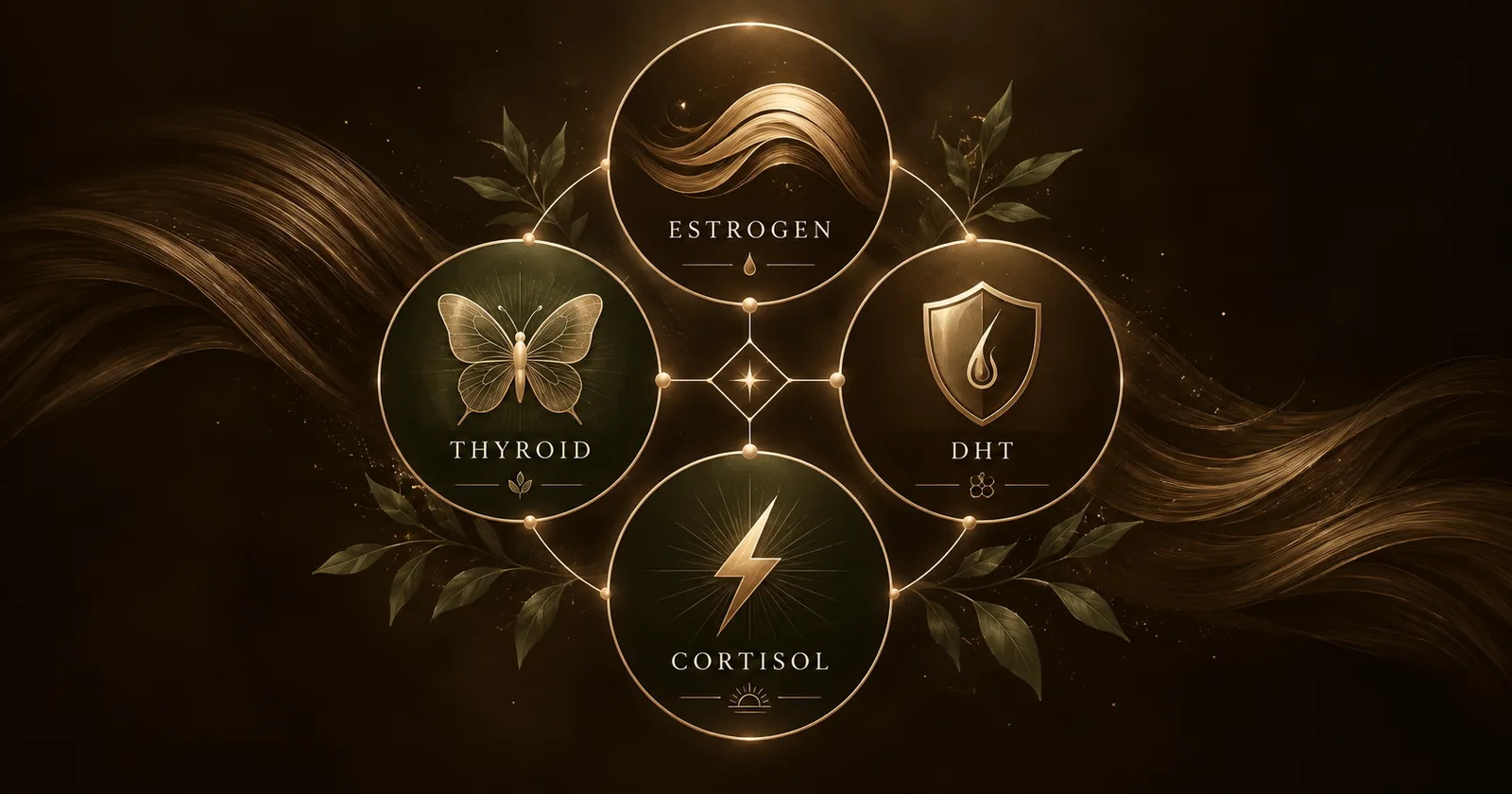

Four Hormones, Four Different Effects
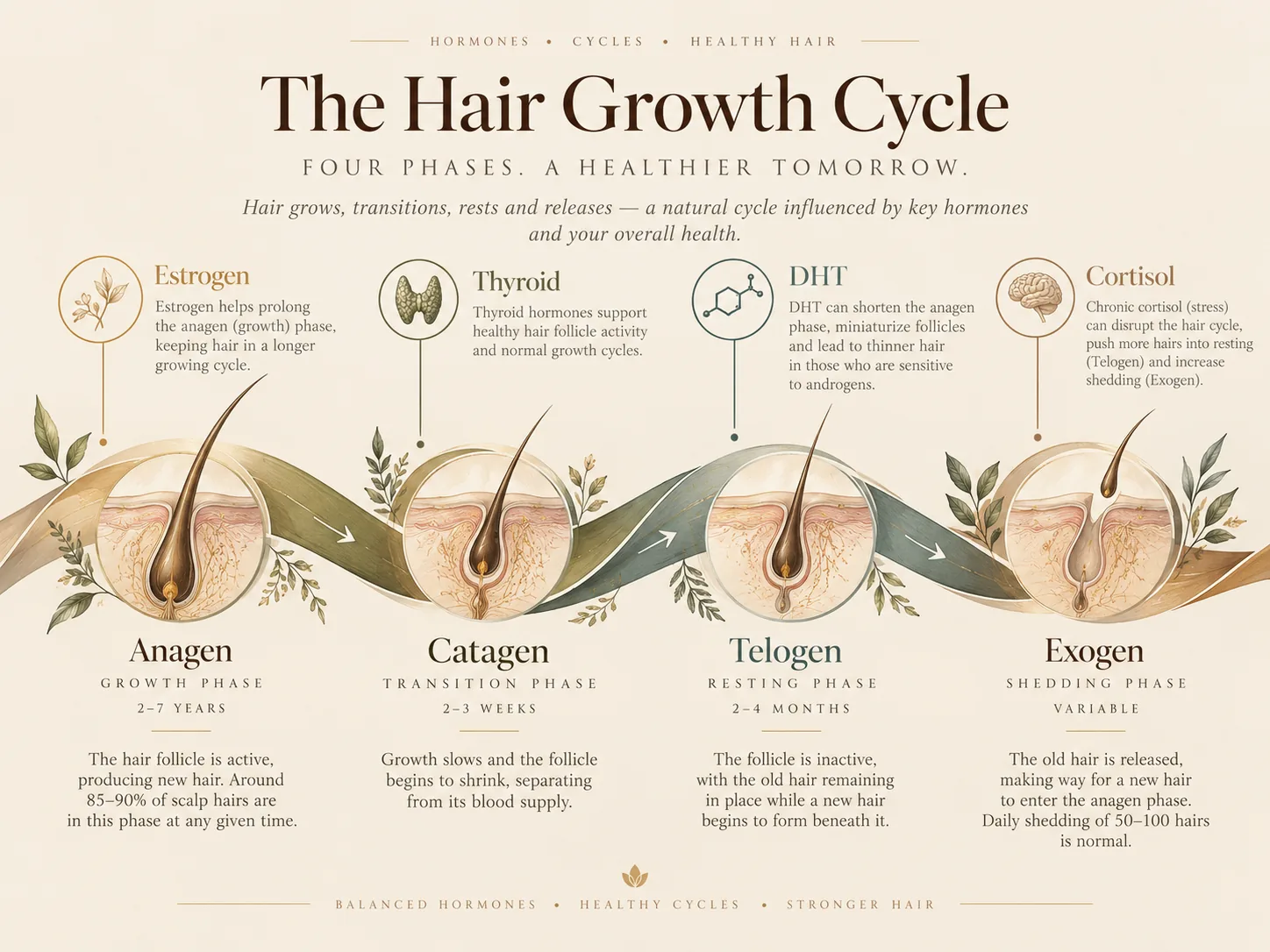
Estrogen helps hairs remain in their growing phase for longer, thyroid hormone helps set the pace, DHT can make sensitive follicles produce finer strands, and sustained stress can shift hairs toward rest. Those are different jobs, so the same visible shedding does not always point to the same system.
What Each One Does To Your Hair
At 200x, location and hair caliber give the hormone conversation needed context. A patterned change at the part or crown asks a different question from shedding that appears evenly across the scalp after a major life shift.
How We Decide Which Hormone To Chase
We do not choose a hormone from one symptom. We connect the timeline, the distribution, the magnified scalp picture, and the rest of your health story before deciding what deserves focused testing.
Find The System That Is Shifting First
The best starting point is the system with the strongest evidence behind it. That keeps the plan focused and prevents one popular hormone explanation from overshadowing what your own pattern is showing.
How the four patterns differ
| Hormone | Role already reflected in the hair cycle | Pattern to discuss |
|---|---|---|
| Estrogen | Helps keep hairs in the growing phase longer | A change that follows a larger hormonal shift |
| Thyroid | Helps set the pace of growth | Growth or shedding that changes with the body's overall rhythm |
| DHT | Can miniaturize genetically sensitive follicles | A widening part, temples, or crown pattern |
| Cortisol | Can move hairs into the resting phase early when stress stays high | Shedding that follows a sustained stressful period |
These descriptions are clues, not a home diagnosis. More than one system can shift at the same time, and different causes can look similar when all you can see is hair in the sink.
Timing is part of the answer
We ask what changed before the shedding changed. Postpartum shifts, the years before menopause, a sustained stressful period, and a change in the body's general pace do not tell the whole story by themselves. They help us decide which question deserves attention first.
- Notice the changeWrite down when shedding, thinning, or texture first felt different.
- Look backwardConnect the start to the body changes or stressful periods that came before it.
- Read the scalpUse the location and follicle pattern to narrow the possibilities.
- Test the remaining questionChoose focused testing rather than chasing every hormone at once.
Why we do not chase one number
A lab value without the scalp pattern and history can become another isolated fact. A scalp picture without the body story can do the same. We bring those pieces together so the plan follows the strongest signal rather than whichever hormone is getting the most attention online.
One pattern, several possible drivers. The goal is not to blame every strand on hormones. It is to identify the system that shifted first and decide what deserves a closer look.
Once the pattern is clear, the next step can be focused. That clarity is often the most reassuring part of the process.
Not sure this is you? See your scalp at 200x.
Book My $99 DiscoveryFrequently asked questions
Which hormone makes hair grow?
No single hormone controls the whole story. Estrogen, thyroid hormone, DHT, and cortisol each affect the cycle differently. The useful question is which pattern fits your timing and scalp, and whether focused testing supports that direction.
How can DHT-related thinning look?
The pattern discussed here includes a widening part, temples, or crown, with sensitive follicles producing finer and shorter hairs. That pattern can overlap with other causes, so location alone is not a diagnosis.
Can stress affect the hair cycle?
This article describes cortisol as one factor that can move hairs into the resting phase early when stress stays high. The timeline matters because the visible shedding may follow the period that placed the body under strain.
How does Dr. Nina decide what to test?
She starts with what changed, when it changed, where the thinning appears, and what magnification shows. Those clues narrow the question so testing can focus on the system that best fits rather than checking or treating everything at once.

Written and reviewed by
Double Board Certified Trichologist. PhD in Functional Drugless Medicine. Master Cosmetologist. Founder and Clinical Director of Nina Ross Atlanta, with 10 years of specialized care and 2,500+ clients seen.