PRP Therapy
Growth signals placed into the scalp to wake follicles that are still viable.
Home / Conditions / Hormonal / Female Hair Loss
Hormonal · condition 08 of 18
The widening part and the thinner ponytail, explained honestly.
 Clinically reviewed by Dr. Nina Ross, NDServing all of Metro Atlanta
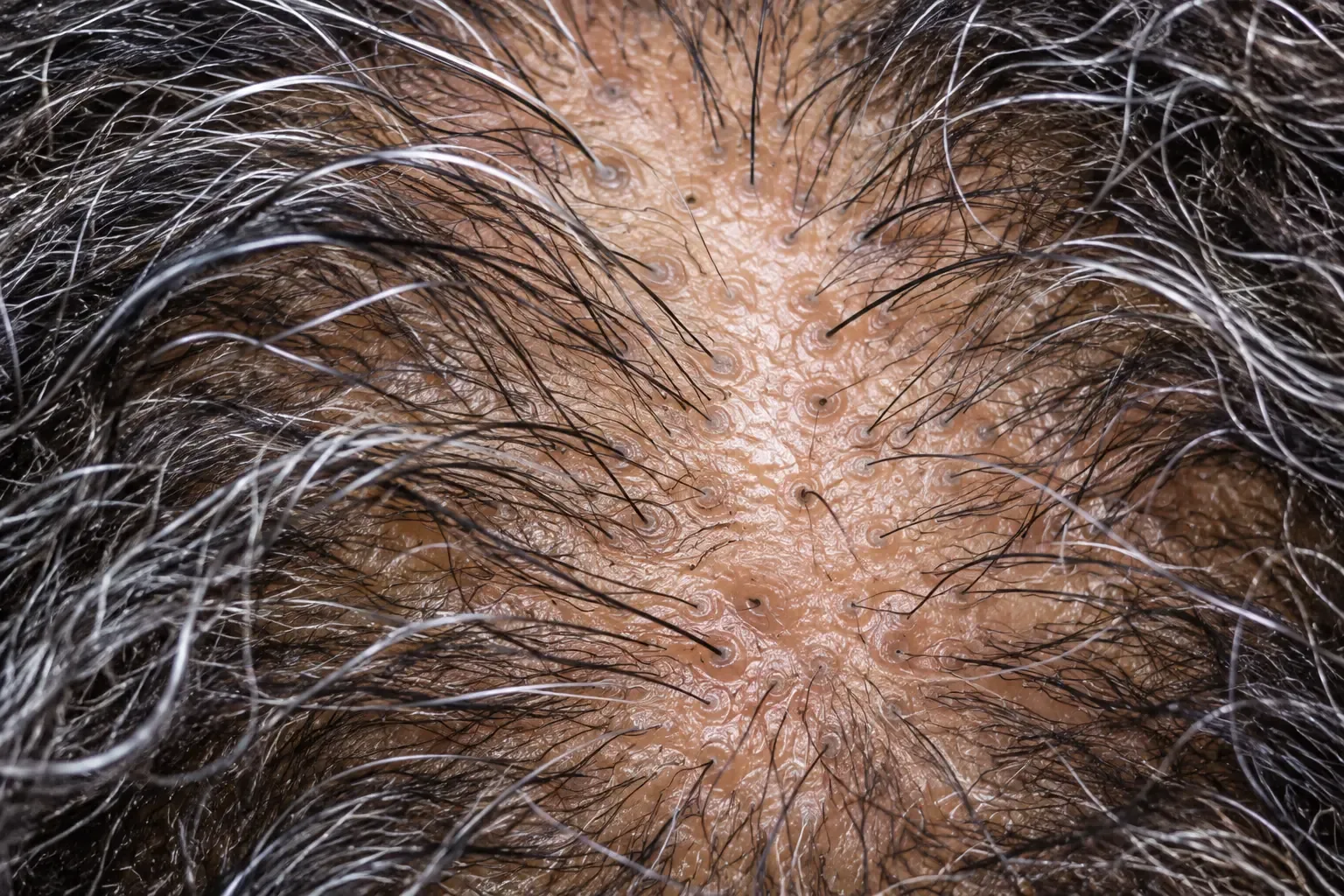
Female pattern hair loss thins the top of the scalp while keeping the hairline mostly intact. The earliest sign is usually the part looking wider in the mirror, or a ponytail that wraps more times than it used to.
Underneath, follicles are producing progressively finer hairs rather than disappearing, which is why this is often reversible in part when it is caught early. The picture is frequently mixed: hormonal miniaturization sitting alongside a shedding episode, nutrient depletion or tension from styling.
Sorting which is which is the entire job, because each one needs different work. We read your scalp at 200x at Nina Ross Atlanta in Sandy Springs. Serving all of Metro Atlanta.
What you might be noticing
Tap the one that sounds like you to see why it happens and how we figure it out.
My part looks wider than it used toWidening midline part, Christmas tree pattern✋🏾
A widening part is commonly linked to follicles at the top of the scalp producing finer hair over successive cycles.
We read the part at 200x for mixed hair thicknesses, which tells us whether this is pattern thinning, shedding or both.
My ponytail wraps an extra timeReduced bulk density✋🏾
An extra wrap usually means less overall bulk, from fewer hairs, finer hairs or both.
We compare density at the top with the back of your head to measure the change.
The front feels see-through in the lightFrontal accentuation of central thinning✋🏾
Thinning just behind the front of the part is a common feature of female pattern thinning, and light hitting the scalp makes it easier to notice.
We map where the thinning is concentrated at 200x, which helps separate pattern thinning from other causes.
My hairline is still fine, it is the topPreserved frontal hairline✋🏾
Female pattern thinning usually keeps the hairline intact while the top thins. Traction, by contrast, starts at the edges.
We read both the hairline and the top at 200x, so tension and pattern thinning are read as separate findings.
I shed handfuls in the showerConcurrent telogen shedding✋🏾
Heavy shedding on top of thinning is commonly linked to a shedding episode running alongside the pattern, often after a hormonal change, illness or nutrient dip.
When both are present, we find the shedding driver first, because it is the part that moves fastest.
What causes it
Sensitive follicles at the top of the scalp shrink over successive cycles, producing hair that is finer and shorter each time.
Postpartum, perimenopause and menopause change how much support the growth phase gets, which frequently unmasks thinning that was already underway.
Iron stores, vitamin D and protein intake all affect what the follicle can build. These are checkable and correctable.
Styling tension and an irritated scalp add load on top of everything else. We read that as a separate finding before calling it the explanation.
What we see that others miss
Shedding and thinning feel identical to you and look completely different to us.
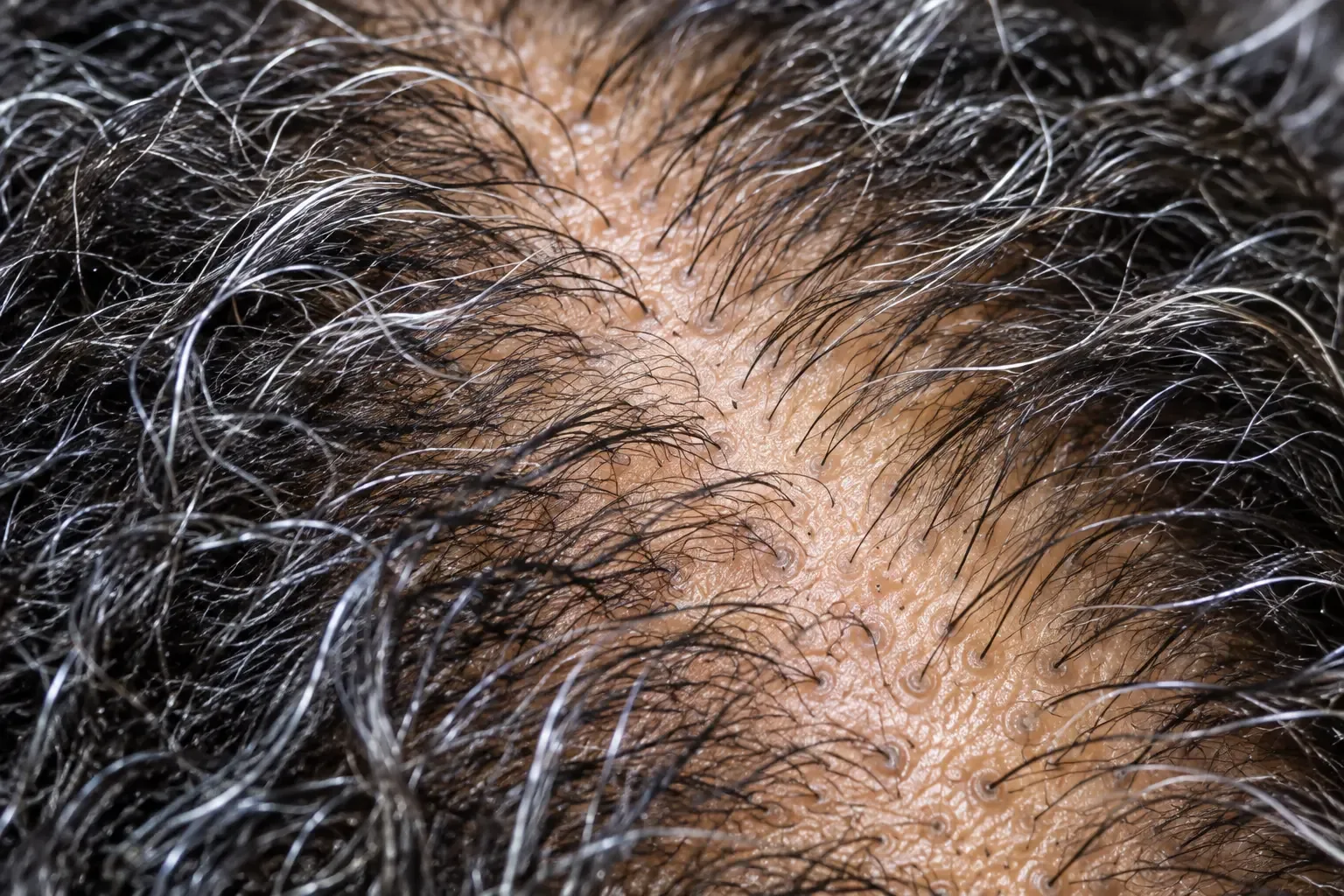
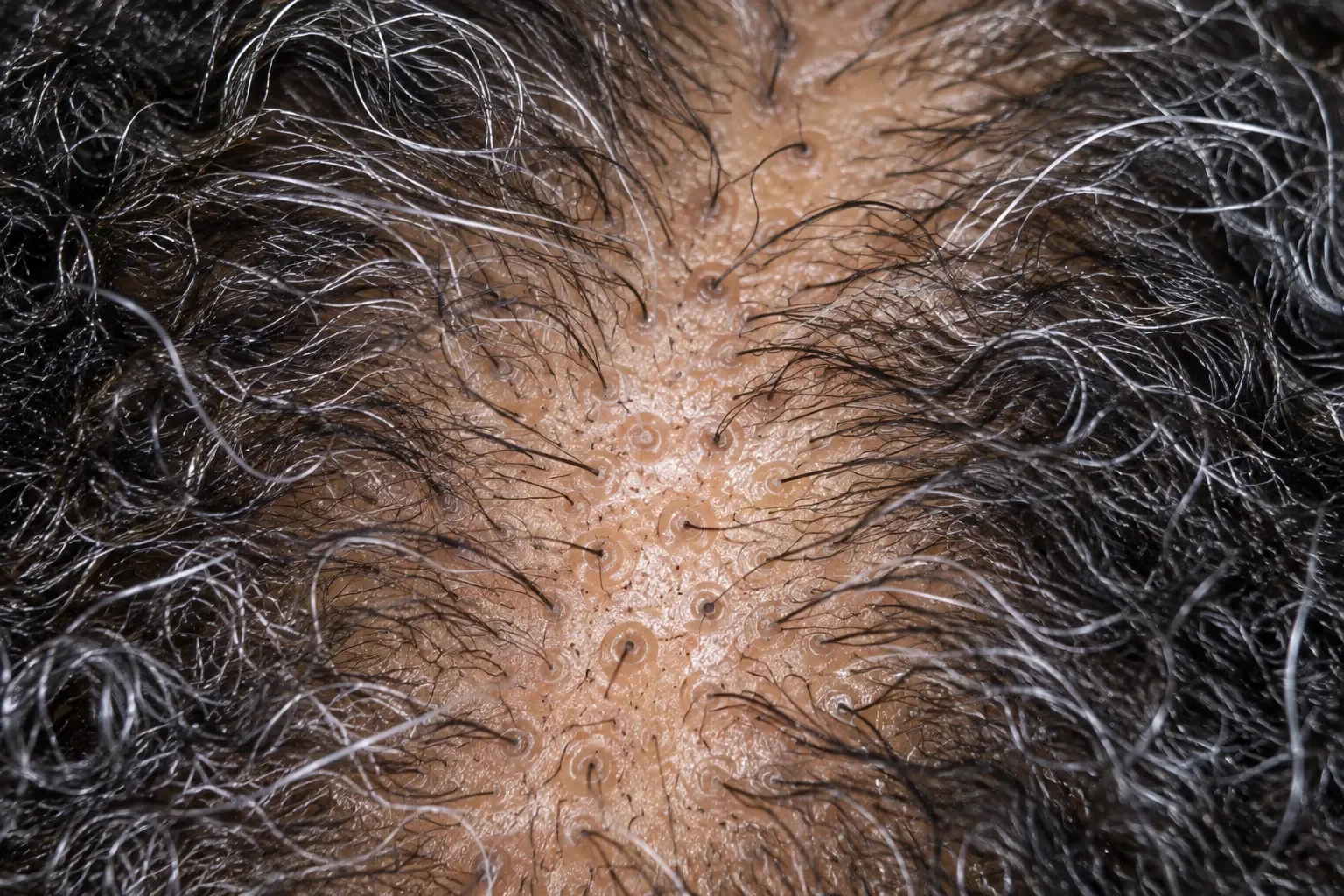
When both are present, we treat the shedding driver first, because that is the part that moves fastest.
How we treat it
We separate the layers first: miniaturization, shedding, tension and inflammation each look different at 200x. Then we treat in order, usually calming the scalp, supporting the systems your labs flag, and using growth signal therapy and microneedling for follicles that are still producing.
Growth signals placed into the scalp to wake follicles that are still viable.
Concentrated growth signals applied to the scalp to support follicles that are still active.
Controlled micro-channels that improve delivery of topicals into the scalp.
A structured in-house program that treats the scalp and the systems behind it.
One visit. Real answers.
Our promiseYou'll leave actually seeing what's happening, your scalp at 200x, the systems behind it, with your report the next day. If you don't, the $99 is on us.
Fully HSA/FSA eligible. 0% financing for qualified applicants.
You are welcome here
Black women are routinely told the problem is their styling before anyone has looked at the scalp. We look first. Relaxers, braids, locs, weaves and heat are welcome history, never a verdict.
Relaxers, braids, locs, weaves and heat. Share your full hair history. It is welcomed, never judged.
10 years of specialized care2,500+ clients seenNo judgment
Related conditions
Four hormones do most of the work. When they move, your hair reports it.
Sudden diffuse shedding, usually about three months after a trigger.
The hormone behind pattern thinning, and how to tell if it is your driver.
Questions, answered
Partly, and it depends on the stage. Follicles that are producing fine hair can often be pushed back toward thicker hair. Follicles that stopped producing years ago are a much harder ask, and we will tell you which you have. Results not typical. Individual results will vary.
Follicles at the top of the scalp tend to be more sensitive to hormonal change, while the hairline is often spared in female pattern thinning. That pattern itself is useful information.
Stress can trigger shedding, and shedding often sits on top of pattern thinning. At 200x we can tell the two apart, which matters because each needs different work.
No. We build around the hair you want to wear. If tension is adding load, we show you where and talk through options that fit your life.
Hair grows slowly, so change takes months. We photograph the same points each visit, so you can see progress against your own baseline.
Results not typical. Individual results will vary.
You'll see it, or the $99 is on us. Serving all of Metro Atlanta.
Nina Ross Atlanta, 8735 Dunwoody Place, Suite 290, Sandy Springs, GA 30350. Monday to Saturday, 10:00 AM to 3:30 PM.