Restorative Therapy
A structured in-house program that treats the scalp and the systems behind it.
Home / Conditions / Traumatic / Trichotillomania
Traumatic · condition 15 of 18
We treat the scalp. No judgment, no behavioral advice.
 Clinically reviewed by Dr. Nina Ross, NDServing all of Metro Atlanta
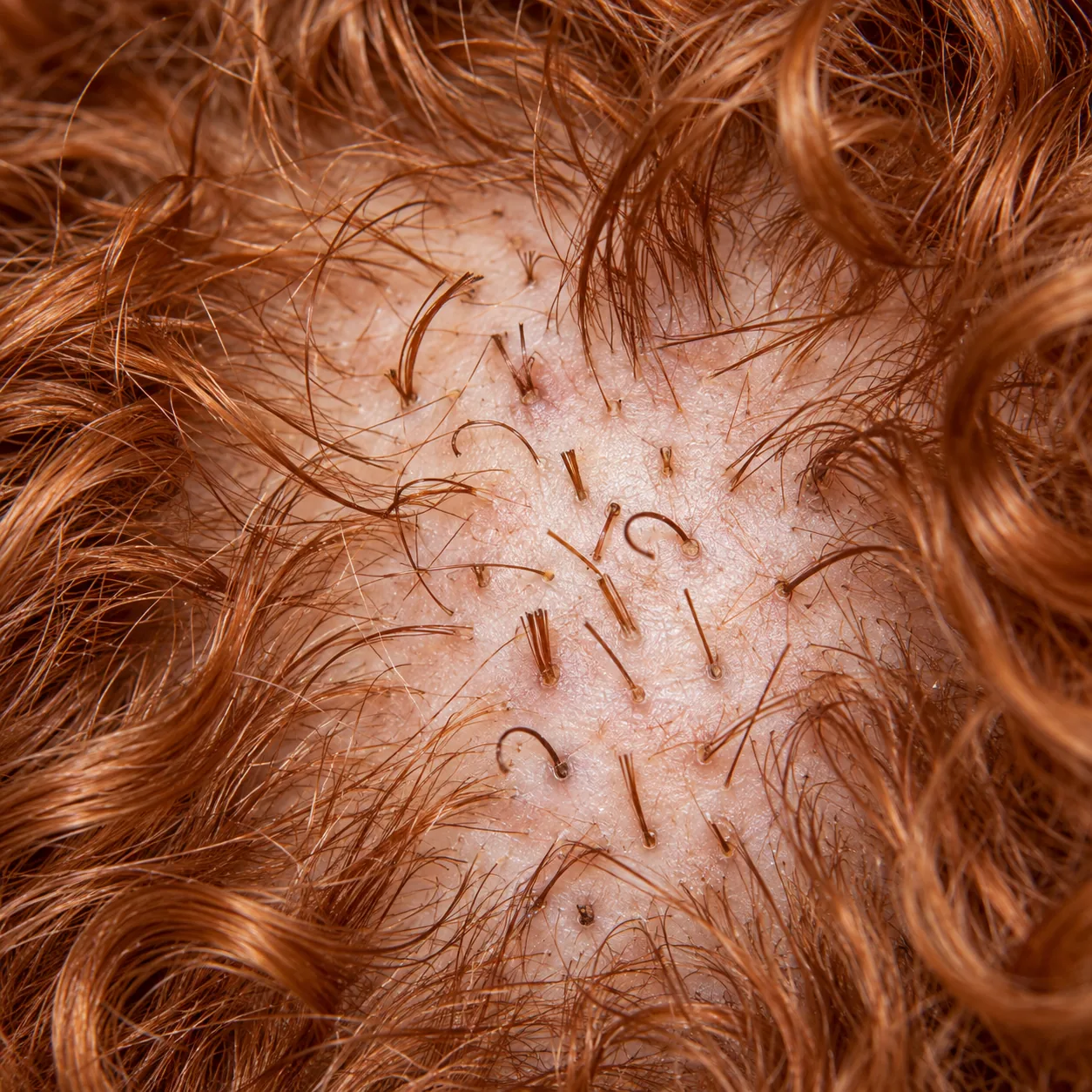
Trichotillomania is a body-focused repetitive behavior involving pulling hair from the scalp, brows or lashes. On the scalp it creates areas with hairs at many different lengths, irregular borders, and skin that usually looks otherwise healthy.
Follicles are often intact and capable of regrowing, particularly when the area has had time without pulling, though long-standing pulling in one spot can cause lasting damage.
Our role here is limited and clear: we assess the scalp, document follicle status at 200x, and support recovery of the areas that can recover. Behavioral support is its own field, and we stay in ours. You will not be judged in this room. Nina Ross Atlanta is in Sandy Springs, serving all of Metro Atlanta.
What you might be noticing
Tap the one that sounds like you to see why it happens and how we figure it out.
Hairs at all different lengths in one areaVaried hair shaft lengths within a patch✋🏾
Hairs at many lengths in one area are commonly linked to hairs being removed at different times, with regrowth at different stages.
We read the area at 200x for open follicles and new hairs emerging, which shows how much can recover.
The patch has an odd shapeIrregular, geometric patch borders✋🏾
Irregular borders help separate this pattern from the smooth, round patches of alopecia areata.
We map the area at 200x so you have a clear, photographed picture of your scalp.
Broken hairs rather than smooth bald skinFractured shafts at varied heights✋🏾
Hairs broken at different heights, rather than smooth skin, are commonly linked to repeated mechanical stress on the shaft.
We check whether shafts are fracturing at the surface and whether the follicles underneath are intact.
One side more than the otherAsymmetric distribution, often dominant hand side✋🏾
An uneven pattern, often heavier on one side, is common with this condition.
We photograph both sides at the same points, so any recovery is measured rather than guessed.
The skin itself looks fineAbsence of scale, erythema or scarring✋🏾
Healthy-looking skin is a good sign. It usually means the follicles themselves have not been scarred.
We confirm at 200x that openings are present, which is what recovery depends on.
What causes it
This is a recognized behavior pattern, never a character flaw or a hygiene issue. It commonly begins in adolescence and comes and goes over time.
Repeated pulling injures the follicle. Occasional pulling usually allows recovery. Years of pulling in one spot can leave lasting change.
Broken hairs and repeated trauma can leave the area irritated or prone to bumps, and that part we can treat directly.
What we see that others miss
At 200x we document three things: whether follicular openings remain, whether new hairs are emerging, and whether shafts are fracturing at the surface. Those findings tell us how much recovery potential an area has, without any need to discuss the behavior itself.
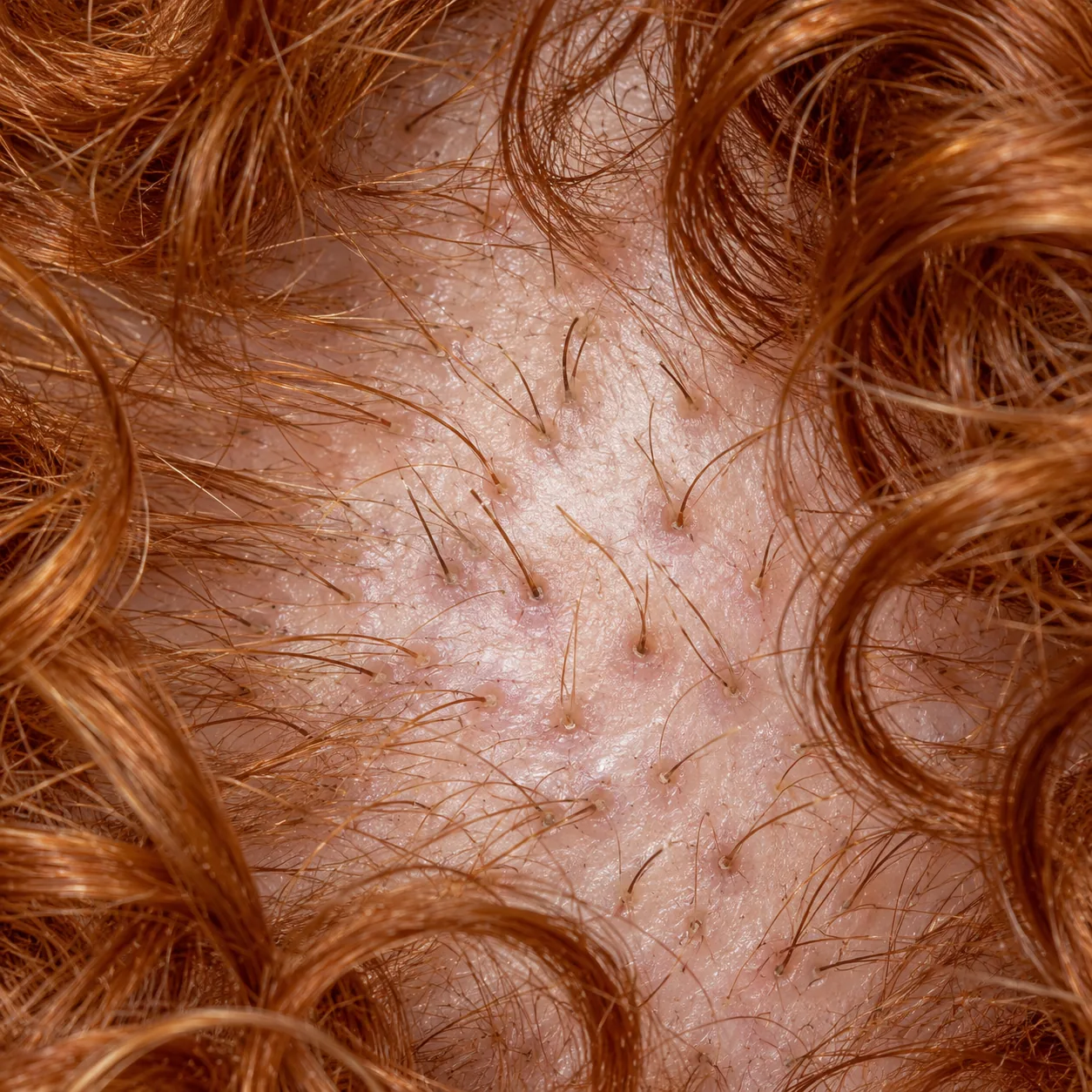
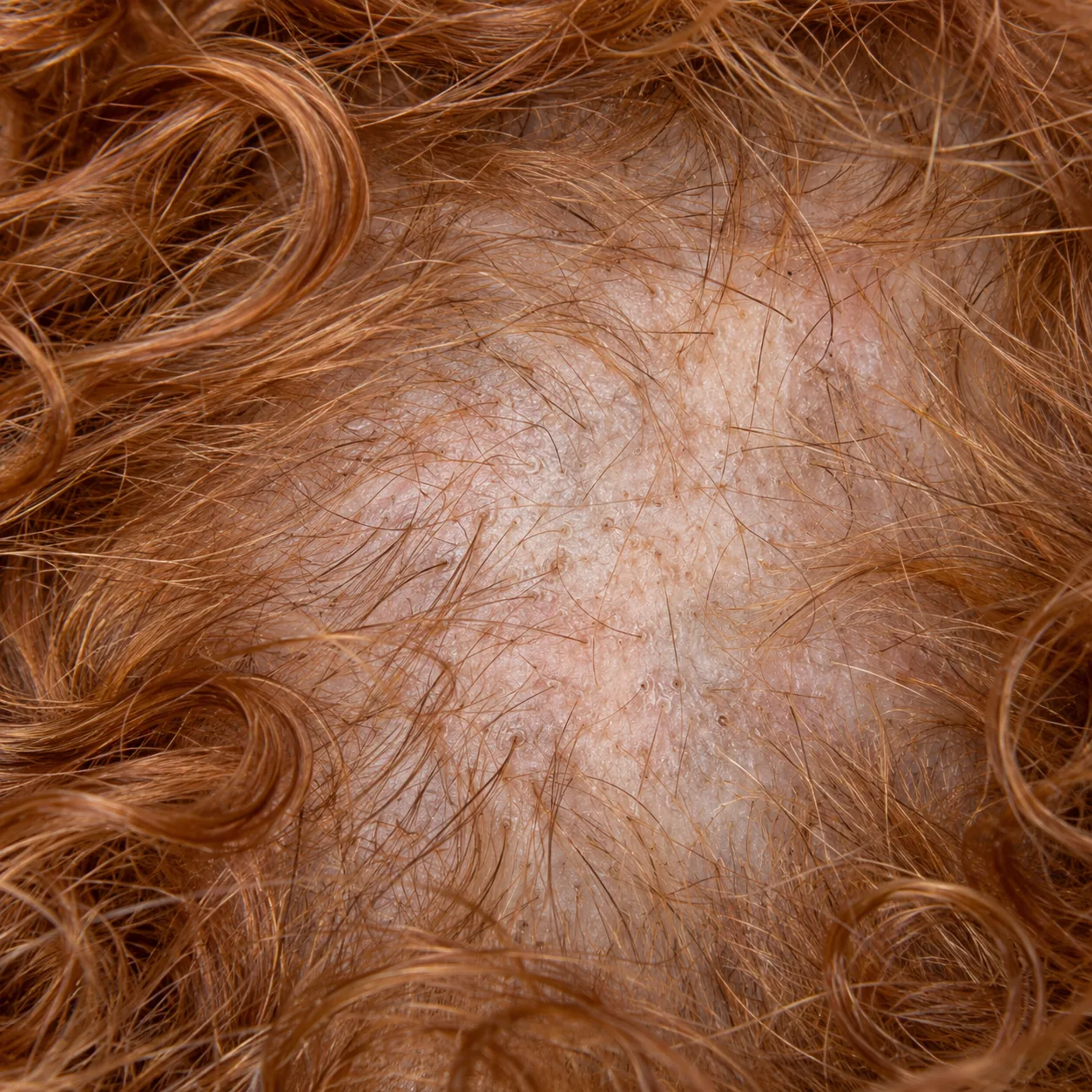
You get a clear picture of your scalp, photographed and repeatable, and that is the whole scope of what we do here.
How we treat it
We assess follicle status at 200x so you know which areas are intact and which have been changed. From there we support the scalp with a restorative program and, where appropriate, microneedling to encourage recovery in areas that have had rest. We do not offer behavioral guidance, and we will never ask you to explain yourself.
A structured in-house program that treats the scalp and the systems behind it.
Controlled micro-channels that improve delivery of topicals into the scalp.
One visit. Real answers.
Our promiseYou'll leave actually seeing what's happening, your scalp at 200x, the systems behind it, with your report the next day. If you don't, the $99 is on us.
Fully HSA/FSA eligible. 0% financing for qualified applicants.
You are welcome here
Pulling is rarely talked about, and it is even less often talked about in Black communities where hair carries so much weight. There is no judgment in this room and no lecture waiting for you.
Relaxers, braids, locs, weaves and heat. Share your full hair history. It is welcomed, never judged.
10 years of specialized care2,500+ clients seenNo judgment
Related conditions
Smooth, round patches that appear quickly. The follicle usually survives.
Tension-driven loss at the edges and part lines. Often reversible early.
Rapid loss during treatment. The follicles usually survive.
Questions, answered
Where follicles are intact, regrowth is common once an area has rest. Long-standing pulling in one spot can cause lasting change, and the scalp read tells us which you have. Results not typical. Individual results will vary.
No. We read the scalp and the follicles, and you share only what you want to share. You will never be asked to explain yourself.
Alopecia areata usually makes smooth, round patches with normal-looking skin. Trichotillomania tends to leave irregular areas with hairs at many different lengths. At 200x the difference is clear.
That is your call. Behavioral support is its own specialty, and many people find it helpful. Our part is the scalp, and we do that part fully.
Yes. You are welcome here exactly as you are. We read the scalp as it is today and support what can recover.
Results not typical. Individual results will vary.
You'll see it, or the $99 is on us. Serving all of Metro Atlanta.
Nina Ross Atlanta, 8735 Dunwoody Place, Suite 290, Sandy Springs, GA 30350. Monday to Saturday, 10:00 AM to 3:30 PM.