Restorative Therapy
A structured in-house program that treats the scalp and the systems behind it.
Home / Conditions / Traumatic / Anagen Effluvium
Traumatic · condition 16 of 18
Rapid loss during treatment. The follicles usually survive.
 Clinically reviewed by Dr. Nina Ross, NDServing all of Metro Atlanta
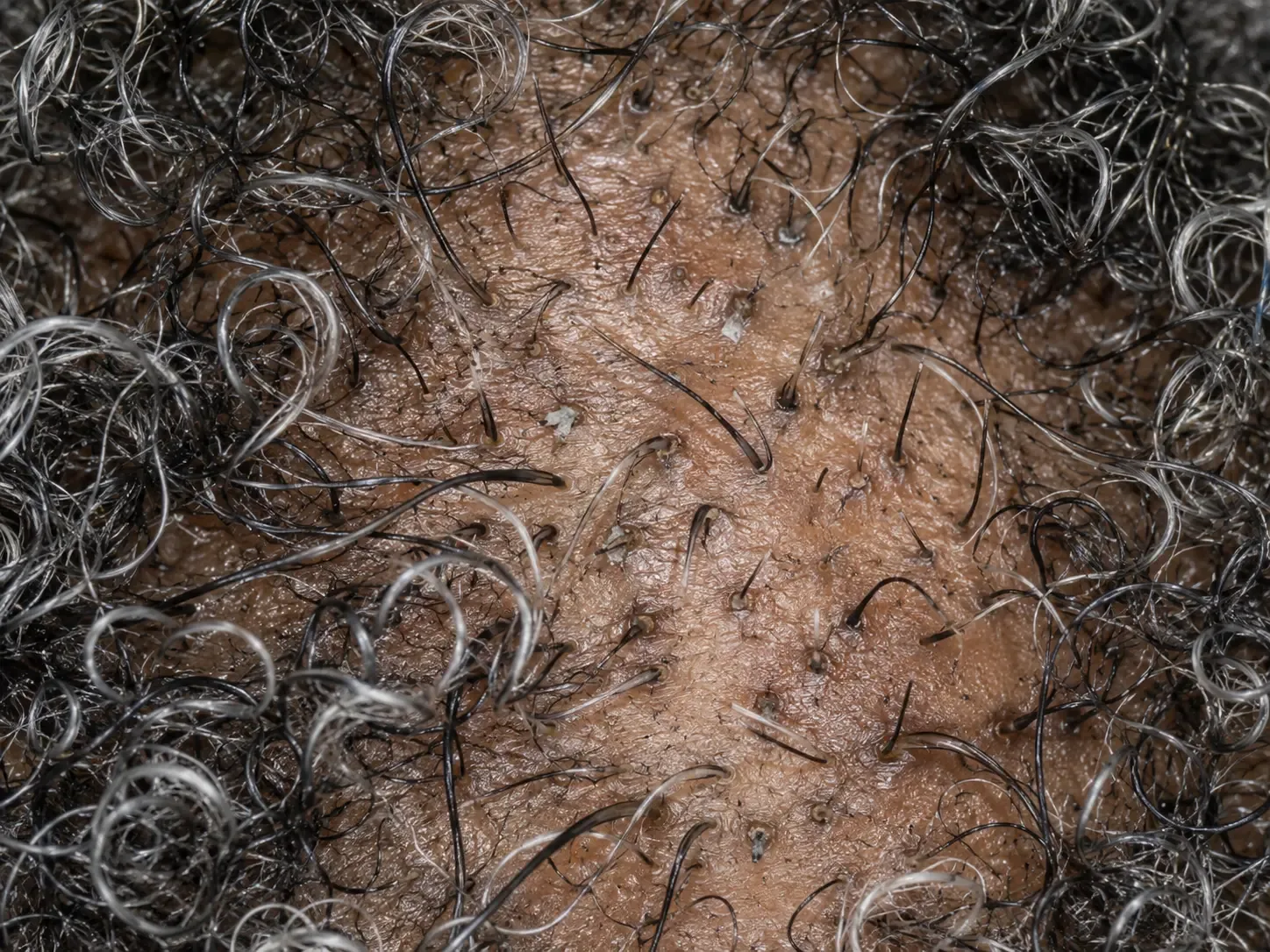
Anagen effluvium is hair loss that happens while follicles are actively growing, most often during chemotherapy or after certain other treatments and exposures.
Because the majority of your scalp hair is in the growth phase at any moment, the loss is rapid and widespread, usually beginning within one to three weeks of treatment starting. The follicle itself is generally not destroyed.
Regrowth commonly begins within a few weeks to a few months after treatment ends, and the first hair back is often a different texture or color before settling closer to your own. If you would like your scalp looked after during or after this, we are here, gently and at your pace. Nina Ross Atlanta, Sandy Springs, serving all of Metro Atlanta.
What you might be noticing
Tap the one that sounds like you to see why it happens and how we figure it out.
It came out fast, everywhereRapid diffuse loss of anagen hairs✋🏾
Most scalp hair is in its growth phase at any moment, so when treatment interrupts growth, the loss is fast and widespread.
When you are ready, a 200x read shows whether the follicles are open and preparing to regrow.
It started right after treatment beganOnset within one to three weeks✋🏾
Loss that begins within one to three weeks of treatment is typical of anagen effluvium.
We note the timing with your treatment dates. It helps us know what stage your scalp is in.
My scalp is tender or sensitiveScalp sensitivity during treatment✋🏾
Tenderness during treatment is common. The scalp is going through a lot alongside the rest of you.
We keep everything gentle and add nothing that irritates, starting with a comfortable scalp routine.
Eyebrows and lashes went tooLoss across other anagen-dominant sites✋🏾
Brows and lashes also have many hairs in their growth phase, so they are often affected at the same time.
Tell us what you have noticed. We take the whole picture into account at your pace.
It grew back curly when it was straightPost-treatment texture change✋🏾
New hair after treatment often arrives with a different texture or color before settling closer to your own.
We read the new growth at 200x and help you care for textured regrowth, whatever form it takes.
What causes it
Treatments that target fast-dividing cells also reach the cells building your hair shaft, so growing hairs break at the scalp.
Localized radiation affects follicles in the treated field, and recovery there depends on the dose and field.
Some exposures produce the same rapid interruption of the growth phase, though this is far less common.
What we see that others miss
At 200x, the earliest regrowth appears as fine, evenly spaced new hairs emerging from open follicles across the whole scalp rather than in patches. Seeing that pattern confirms the follicles are working again, often weeks before there is anything visible to you.
For a lot of people, that confirmation is the useful thing, and it takes one visit.
How we treat it
During treatment the priority is comfort and protection: a gentle scalp routine and nothing that adds irritation. Afterward, when your oncology team says it is appropriate, a restorative program and light-based therapy can support the scalp while regrowth establishes. We move at whatever pace suits you and there is no pressure here.
A structured in-house program that treats the scalp and the systems behind it.
Low level light used to calm scalp inflammation and support the growth phase.
You are welcome here
Regrowth after treatment often arrives with a different curl pattern, and finding someone who knows how to care for textured regrowth should not be difficult. It is not difficult here.
Relaxers, braids, locs, weaves and heat. Share your full hair history. It is welcomed, never judged.
10 years of specialized care2,500+ clients seenNo judgment
Related conditions
Sudden diffuse shedding, usually about three months after a trigger.
Which medications are associated with shedding, and the right next step.
Smooth, round patches that appear quickly. The follicle usually survives.
Questions, answered
In most cases the follicle is not destroyed and regrowth begins within a few weeks to a few months after treatment ends. Your oncology team knows the specifics of your regimen. Results not typical. Individual results will vary.
New hair after treatment often arrives with a different texture or color, and it commonly settles closer to your own over time.
Comfort comes first. A gentle scalp routine and avoiding anything that irritates is the focus while you are in treatment.
Whenever you are ready. Some people come for reassurance that regrowth has started, others once treatment ends. There is no wrong time.
No. Your treatment decisions stay with your oncology team. Our role is looking after your scalp.
One visit. Real answers.
Our promiseYou'll leave actually seeing what's happening, your scalp at 200x, the systems behind it, with your report the next day. If you don't, the $99 is on us.
Fully HSA/FSA eligible. 0% financing for qualified applicants.
Results not typical. Individual results will vary.
You'll see it, or the $99 is on us. Serving all of Metro Atlanta.
Nina Ross Atlanta, 8735 Dunwoody Place, Suite 290, Sandy Springs, GA 30350. Monday to Saturday, 10:00 AM to 3:30 PM.