Red Light Therapy
Low level light used to calm scalp inflammation and support the growth phase.
Home / Conditions / Scarring / Lichen Planopilaris
Scarring · condition 02 of 18
An inflammatory scarring alopecia that often burns or stings before it shows.
 Clinically reviewed by Dr. Nina Ross, NDServing all of Metro Atlanta
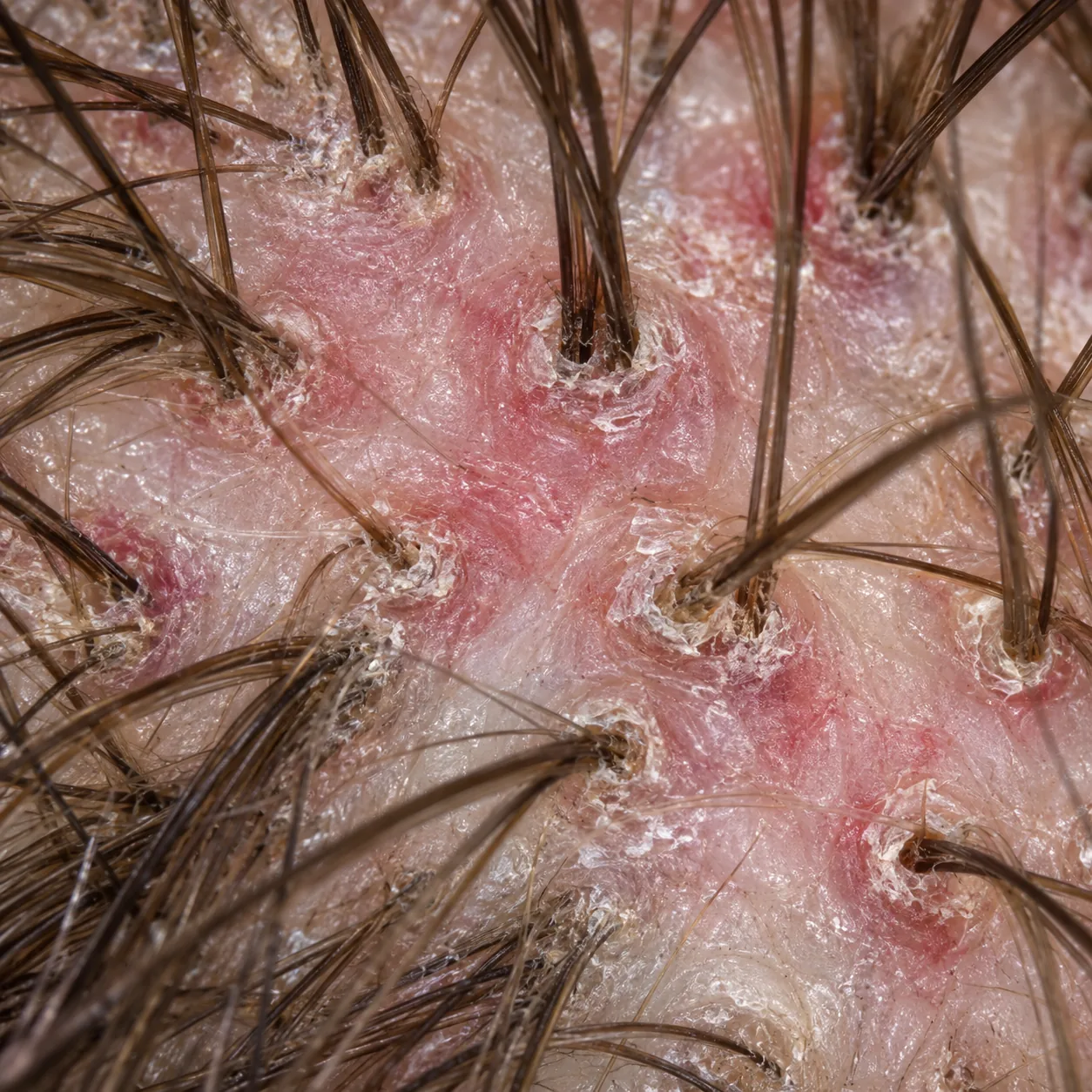
Lichen planopilaris, or LPP, is an inflammatory condition that attacks the upper part of the hair follicle and replaces it with scar tissue. It often announces itself with burning, stinging or itching before there is any visible patch.
On the scalp you may see redness and scale hugging the base of individual hairs, small irregular patches rather than one round area, and hairs that lift out easily at the edge of a patch.
Like other scarring alopecias, follicles already lost to scar will not regrow, so the goal is stopping the active inflammation and protecting the hair around it. We read your scalp at 200x at Nina Ross Atlanta in Sandy Springs. Serving all of Metro Atlanta.
What you might be noticing
Tap the one that sounds like you to see why it happens and how we figure it out.
My scalp burns or stingsTrichodynia, burning sensation✋🏾
In LPP, immune activity at the upper part of the follicle is commonly linked to burning, stinging or itching. It often starts before there is any visible patch, which is why so many people are told nothing looks wrong.
We read the exact area that burns at 200x, looking for redness and scale at the base of individual hairs. That way we read the spot you feel, not only the spots you can see.
There is flaking wrapped around single hairsPerifollicular scale✋🏾
Scale that hugs the base of one hair at a time is commonly linked to inflammation at that follicle. It behaves differently from the loose, all-over flaking of a dry or oily scalp.
Magnification shows whether scale is wrapped around individual hairs or spread across the surface. That difference points toward LPP or toward a surface condition like seborrheic dermatitis.
Red rings around the hairsPerifollicular erythema✋🏾
A ring of redness around a hair is commonly linked to active inflammation at that follicle. Redness reads differently on deeper skin tones and is regularly missed.
We read your scalp under magnification instead of judging by surface color, and mark the follicles where inflammation is still active.
Patches with odd shapes, not circlesIrregular, coalescing patches✋🏾
LPP tends to make small irregular patches that can join together over time, rather than one round area. Smooth, round patches are more often linked to alopecia areata.
We map the borders at 200x and compare the pattern with CCCA, which usually starts at the crown and spreads outward, before anyone names it.
Hairs come out with a slight tugPositive pull test at the active margin✋🏾
At the active edge of a patch, inflamed follicles can let go of hairs more easily. That edge is where the condition is still working.
We find the active margin, photograph the same points, and re-check them at follow-ups so you can see whether the border has stopped moving.
What causes it
The immune system targets the stem cell region of the follicle. Once that region is lost, the follicle cannot rebuild itself.
Some people with LPP also have lichen planus on the skin, nails or inside the mouth. Tell us if you have noticed changes there.
A frontal pattern of LPP is described more often around and after menopause.1 Thyroid conditions are also reported alongside it.2
What we see that others miss
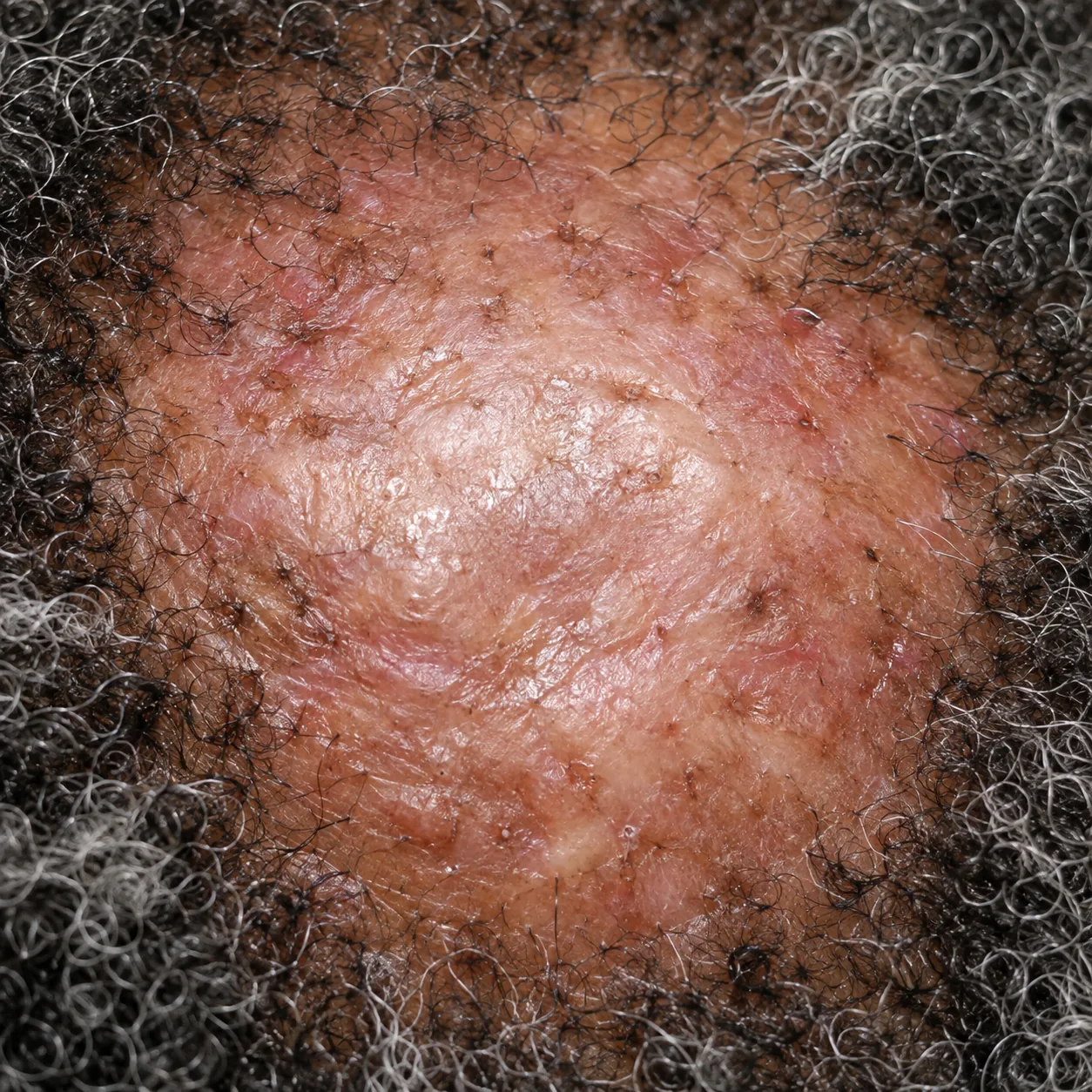
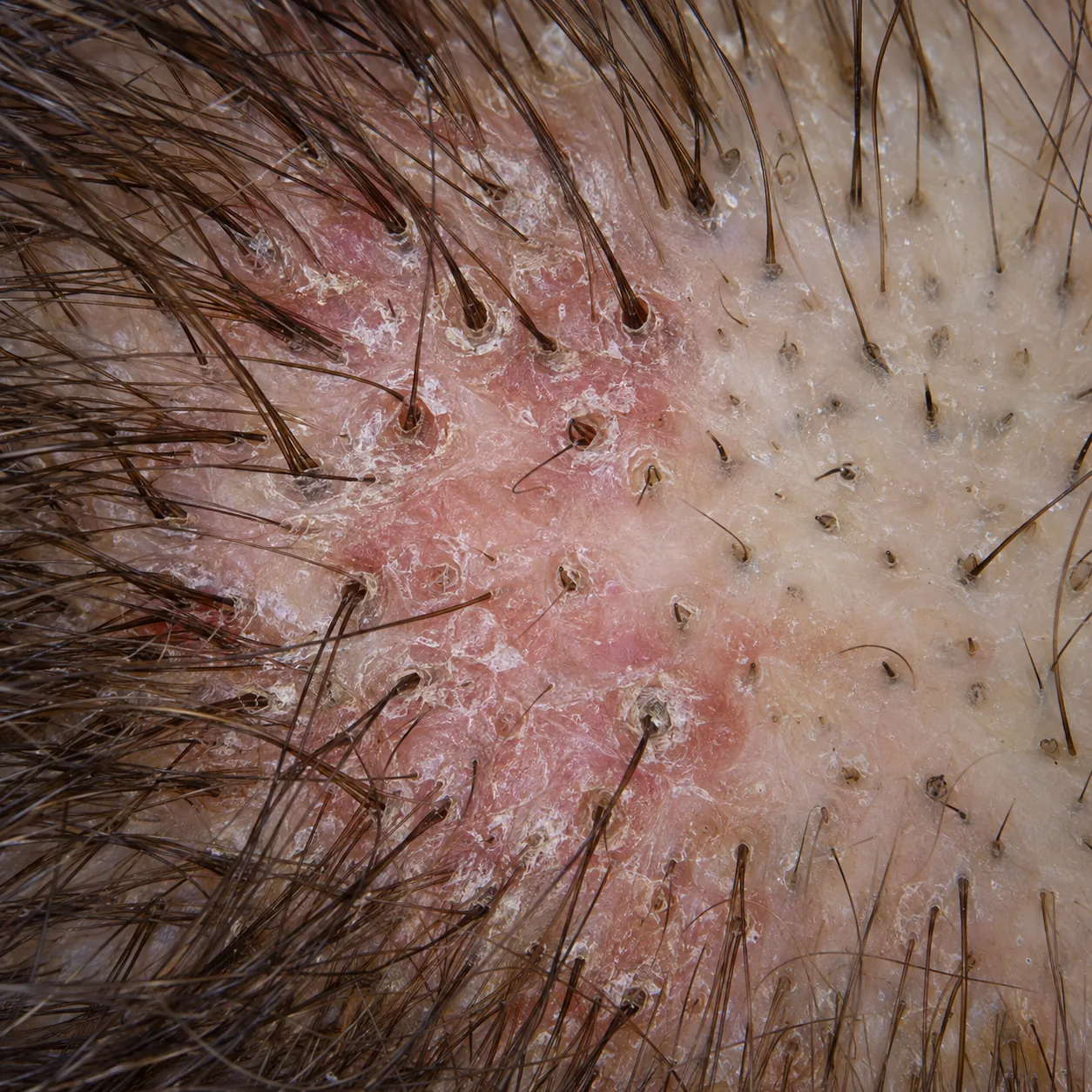
| At 200x | CCCA | Lichen planopilaris |
|---|---|---|
| Where it shows | The crown, spreading outward | Anywhere on the scalp |
| Around the follicle | White halos | Scale at the base of each hair, with redness |
| Shape | A smooth center where openings are gone | Patches with irregular borders |
At 200x the two conditions look different, and that distinction changes what we treat first, which is why we look before anyone names it.
How we treat it
Our first job is finding the active margin and calming it. We use trichoscopy to mark where inflammation is still working, use light-based and restorative support to settle it, and re-photograph the same points so you can see whether the border has stopped moving.
Low level light used to calm scalp inflammation and support the growth phase.
A structured in-house program that treats the scalp and the systems behind it.
One visit. Real answers.
Our promiseYou'll leave actually seeing what's happening, your scalp at 200x, the systems behind it, with your report the next day. If you don't, the $99 is on us.
Fully HSA/FSA eligible. 0% financing for qualified applicants.
You are welcome here
Redness reads differently on deeper skin tones and is regularly missed. We read your scalp under magnification instead of judging by surface color, and your styling history is welcome information, never a lecture.
Relaxers, braids, locs, weaves and heat. Share your full hair history. It is welcomed, never judged.
10 years of specialized care2,500+ clients seenNo judgment
Related conditions
Central centrifugal cicatricial alopecia. Starts at the crown and spreads outward, quietly.
An immune condition of skin, nails and mouth that can reach the follicle.
Tender, sometimes pus-filled bumps sitting right on the follicle.
Questions, answered
No. Both scar, but they behave differently. CCCA usually starts at the crown and spreads outward in a circle. LPP tends to make irregular patches with scale and redness right at the base of the hairs, and it often burns.
Follicles already lost to scar will not regrow. The goal is stopping the active inflammation and protecting the hair around it, which is why reading the active margin early matters.
LPP often announces itself with burning, stinging or itching before there is any visible patch. The inflammation is already working at the follicle, which is why a 200x read of the spot you feel matters.
Yes. Your styling history is welcome information here. We read which areas are active and talk through what is gentlest on them, so you can keep wearing the hair you love.
We re-photograph the same points at 200x at each visit, so you can see whether the border has stopped moving.
You'll see it, or the $99 is on us. Serving all of Metro Atlanta.
Nina Ross Atlanta, 8735 Dunwoody Place, Suite 290, Sandy Springs, GA 30350. Monday to Saturday, 10:00 AM to 3:30 PM.