Restorative Therapy
A structured in-house program that treats the scalp and the systems behind it.
Home / Conditions / Hormonal / Hormonal Hair Loss
Hormonal · condition 05 of 18
Four hormones do most of the work. When they move, your hair reports it.
 Clinically reviewed by Dr. Nina Ross, NDServing all of Metro Atlanta
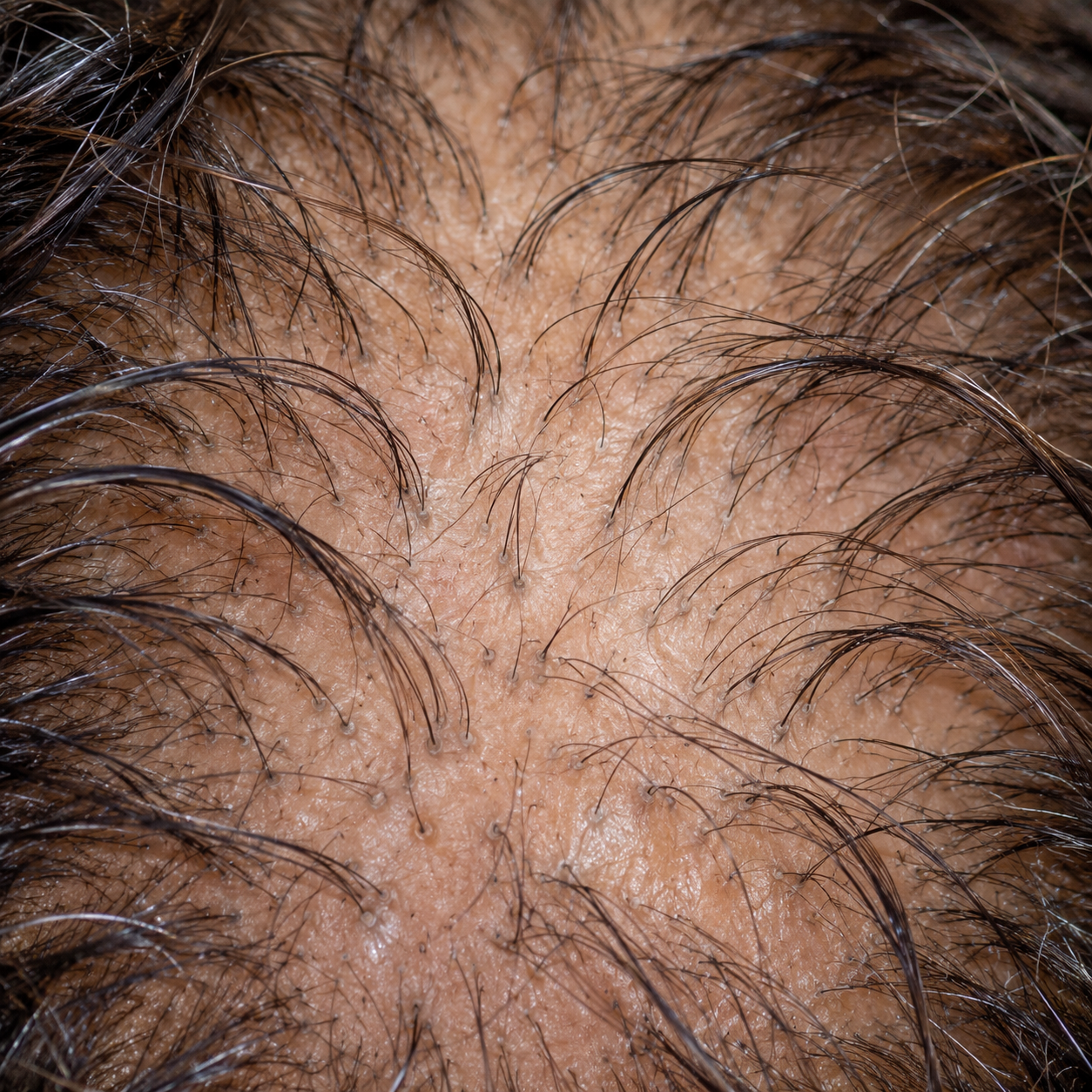
Four hormones do most of the work in hair growth: estrogen, thyroid hormone, DHT and cortisol. Estrogen holds hair in its growth phase, which is why hair often feels thickest in pregnancy and thinner after birth or through menopause.
Thyroid hormone sets the pace of the growth cycle, so both an underactive and an overactive thyroid can cause shedding. DHT, a derivative of testosterone, shrinks sensitive follicles at the crown and temples over time.
Cortisol, your stress hormone, pushes hairs out of growth and into shedding early. Hormonal hair loss usually looks like diffuse thinning through the top and a widening part rather than a bald patch. At Nina Ross Atlanta in Sandy Springs we read your scalp at 200x and look at the systems behind it. Serving all of Metro Atlanta.
What you might be noticing
Tap the one that sounds like you to see why it happens and how we figure it out.
My part keeps getting widerDiffuse central thinning✋🏾
A widening part is commonly linked to hormonal shifts affecting follicles through the top of the scalp, especially DHT sensitivity or lower estrogen support.
We read the part at 200x for hairs of different thicknesses side by side, the signature of hormonal thinning.
My ponytail is half the size it wasReduced overall density and hair caliber✋🏾
A smaller ponytail usually means both fewer hairs and finer hairs, which is commonly linked to hormonal change over time.
We compare the crown with the back of your head, which is usually spared, to see how much has changed.
I shed for months after something changedTelogen shift following hormonal change✋🏾
Birth, perimenopause, a thyroid change or a stressful stretch can shift many follicles into shedding at once.
We separate shedding from thinning at 200x, and look at the systems behind it in-house through our functional medicine work.
My hairline at the temples is recedingAndrogen-sensitive frontotemporal loss✋🏾
Recession at the temples is commonly linked to DHT sensitivity in the follicles there. Inherited sensitivity matters more than the amount of hormone alone.
We look for miniaturized hairs at the temples at 200x and compare them with an unaffected area.
New hair on my chin or jawTerminal facial hair with androgen excess✋🏾
New coarse hair on the chin or jaw is commonly linked to higher androgen activity, which can also thin the scalp. It is often discussed alongside PCOS.
Tell us about it at your visit. It helps us read your scalp pattern and decide which systems to look at.
What causes it
Postpartum, perimenopause and menopause all lower estrogen support for the growth phase, so more hairs enter shedding at the same time.
Both underactive and overactive thyroid disrupt the growth cycle. Thyroid-related shedding is diffuse rather than patchy.
DHT miniaturizes sensitive follicles. Inherited sensitivity, more than the amount of hormone alone, determines who thins.
Sustained cortisol pushes follicles out of growth early. It shows up as a shedding wave a few months after the stressful period.1
What we see that others miss
Hormonal thinning has a signature under magnification: hairs of noticeably different thicknesses sitting side by side in the same area, which is called variability in shaft caliber. That single finding separates hormonal miniaturization from a plain shedding episode, where the hairs that remain are all still full thickness.
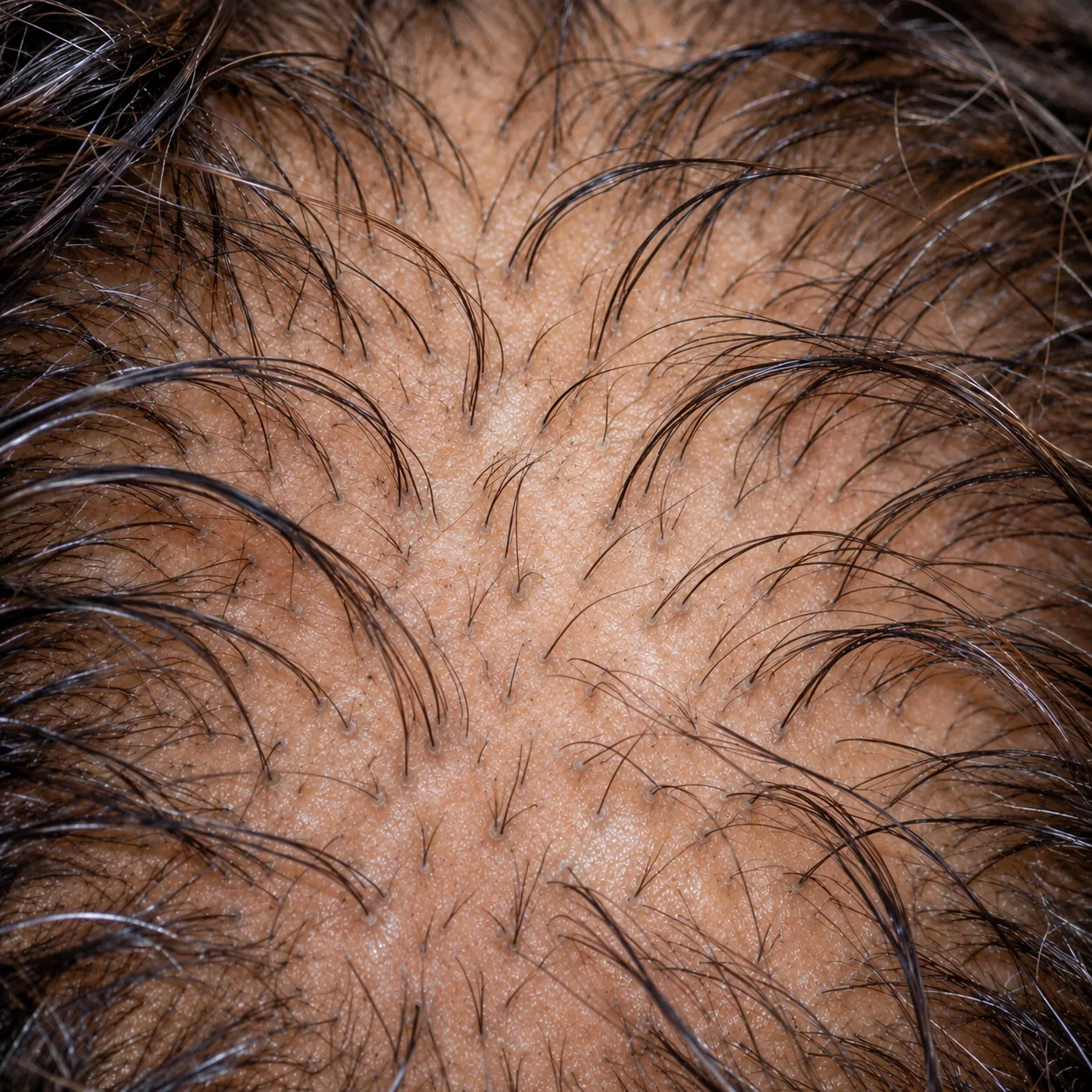
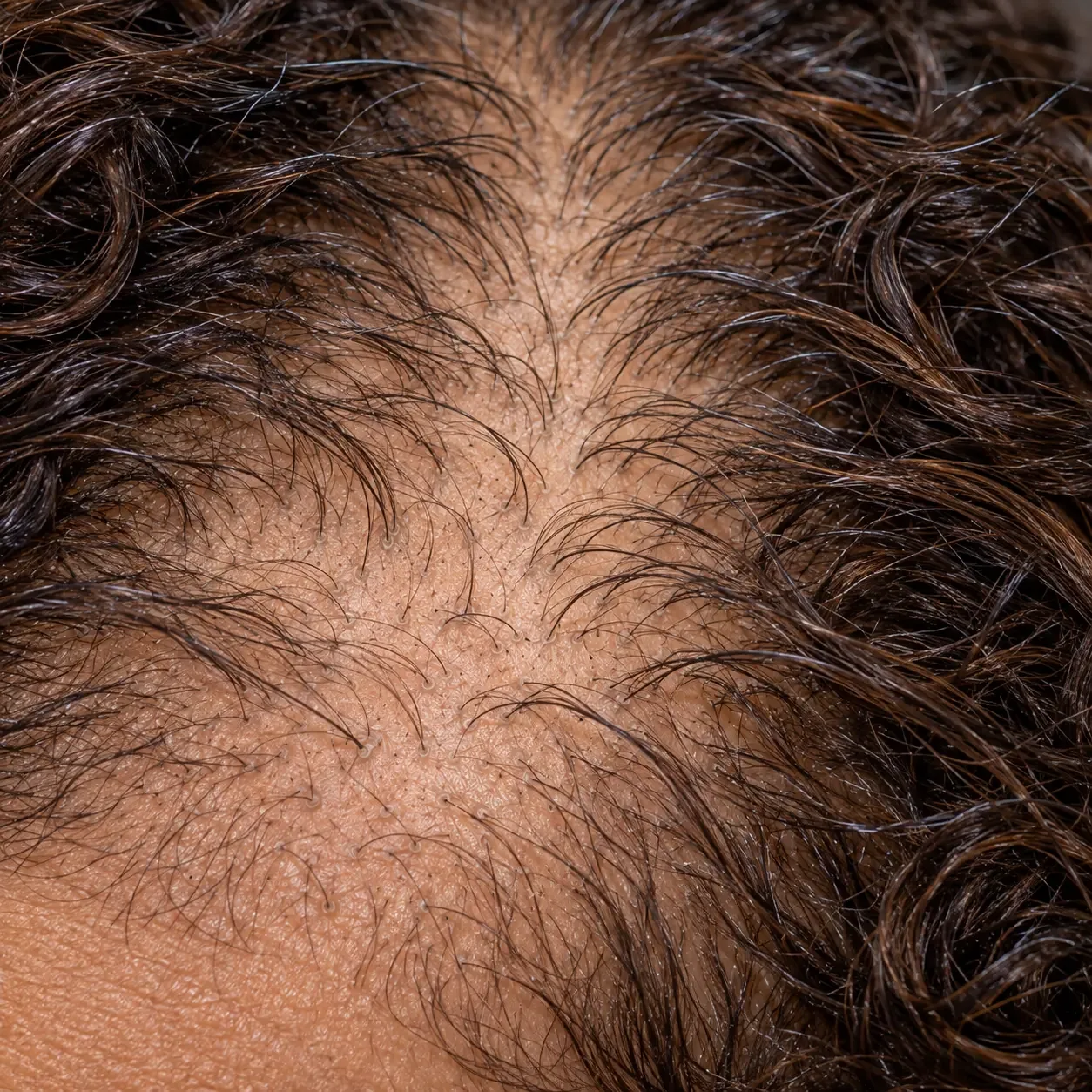
Seeing shorter, finer new hairs return from the same openings tells us the follicles are still active.
How we treat it
We start by seeing which pattern your scalp actually shows at 200x, since diffuse thinning, miniaturization and shedding look different under magnification. From there care combines a restorative program, nutrient support where your labs point to it, and light-based therapy. Functional medicine work happens in-house alongside the scalp work.
See how our functional medicine work fits in →The four hormones that matter →
A structured in-house program that treats the scalp and the systems behind it.
Targeted nutrient support when your labs show what the follicle is missing.
Low level light used to calm scalp inflammation and support the growth phase.
One visit. Real answers.
Our promiseYou'll leave actually seeing what's happening, your scalp at 200x, the systems behind it, with your report the next day. If you don't, the $99 is on us.
Fully HSA/FSA eligible. 0% financing for qualified applicants.
You are welcome here
Black women are frequently told a widening part is a styling problem. It can be both. We read tension patterns and hormonal patterns as separate findings, and we tell you which one your scalp is actually showing.
Relaxers, braids, locs, weaves and heat. Share your full hair history. It is welcomed, never judged.
10 years of specialized care2,500+ clients seenNo judgment
Related conditions
Higher androgens thin the crown and thicken hair where you did not ask for it.
The shedding that starts around month three. It is real, and it does end.
The hormone behind pattern thinning, and how to tell if it is your driver.
Questions, answered
There is no single one. For thinning at the crown and temples, DHT sensitivity leads. For sudden shedding, thyroid, estrogen and cortisol are the usual suspects. Which one is driving yours is what we are looking for.
Shedding usually settles once the trigger passes, and follicles producing finer hair can often be supported back toward thicker hair when the driver is addressed. How much returns depends on the stage we see at 200x. Results not typical. Individual results will vary.
Sometimes. If your scalp read and history point to a hormonal or nutrient driver, testing helps confirm which one, and that work happens in-house.
The hormones work the same way. What differs is how often a widening part gets blamed on styling. We read tension and hormonal patterns as separate findings and tell you which one your scalp is showing.
Hair grows slowly, so change takes months to see. We photograph the same points each visit, so you compare against your own baseline instead of a memory.
Results not typical. Individual results will vary.
You'll see it, or the $99 is on us. Serving all of Metro Atlanta.
Nina Ross Atlanta, 8735 Dunwoody Place, Suite 290, Sandy Springs, GA 30350. Monday to Saturday, 10:00 AM to 3:30 PM.