Restorative Therapy
A structured in-house program that treats the scalp and the systems behind it.
Home / Conditions / Other / Medication Hair Loss
Other · condition 18 of 18
Which medications are associated with shedding, and the right next step.
 Clinically reviewed by Dr. Nina Ross, NDServing all of Metro Atlanta
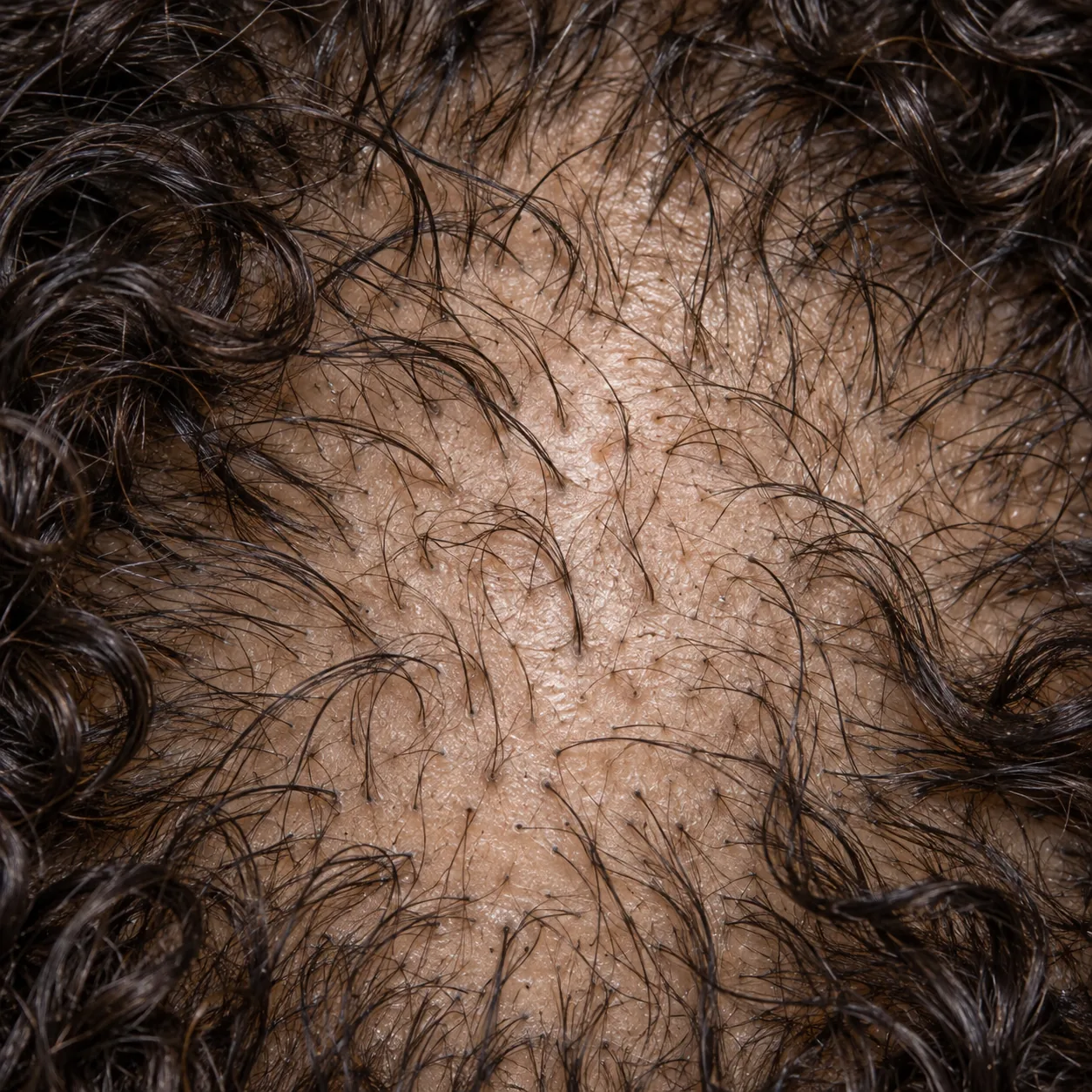
Several widely used medications are associated with hair shedding, including some blood thinners, beta blockers, retinoids, certain antidepressants, hormonal contraceptives, thyroid medications, anticonvulsants and weight loss medications.
The mechanism is usually telogen effluvium, where a group of follicles shifts into resting phase and releases about two to three months later. That delay is why people rarely connect a new prescription to the shedding that follows.
The single most important thing to know: never stop or change a prescription on your own. Talk with the prescriber who knows your full picture. Meanwhile, a scalp read at 200x can confirm whether what you are seeing is shedding at all or something else running alongside it. Nina Ross Atlanta, Sandy Springs, serving all of Metro Atlanta.
What you might be noticing
Tap the one that sounds like you to see why it happens and how we figure it out.
It started a couple months after a new prescriptionLatency consistent with telogen effluvium✋🏾
Shedding two to three months after starting a medication fits the timing of telogen effluvium, the usual way medications affect hair.
We line up your prescription dates with when the shedding started, and confirm the pattern at 200x.
Shedding all over rather than a patchDiffuse non-patterned loss✋🏾
Medication-related shedding is usually diffuse across the whole scalp rather than in one area.
We compare several areas at 200x to confirm it is diffuse shedding and check for pattern thinning alongside it.
More hair on the pillow and in the combIncreased daily shed count✋🏾
A rise in daily shedding is commonly linked to more follicles than usual releasing from the resting phase together.
We look at shed hairs and the follicles still growing, which tells us whether this is shedding or breakage.
My hair feels thinner but looks normal at the rootsReduced density with intact follicles✋🏾
Thinner hair with healthy-looking roots is common in shedding, because the follicles themselves are intact.
We record hair thickness and density at 200x, so any change is measurable against your baseline.
It settled after my dose changedImprovement following medication adjustment✋🏾
Shedding that eases after a prescriber adjusts a dose supports the link, though the condition being treated can also play a part.
We photograph the same points over time, so the effect of any change your prescriber makes is visible.
What causes it
The medication pushes follicles into resting phase. The shed appears two to three months later and usually settles once the driver is addressed.
Thyroid disease, autoimmune conditions and depression can all affect hair themselves, so the medication is not automatically the cause.
Some medications affect absorption of iron, zinc or B vitamins, and that depletion can extend a shedding episode.
What we see that others miss
Medication-related shedding is judged largely on timing, and timing is hard to argue from memory.
We photograph the same scalp points at 200x and record hair caliber and density, so if your prescriber adjusts something, the effect is measurable rather than anecdotal.
That baseline is also what rules pattern thinning in or out, which changes what you should be asking about in the first place.
How we treat it
We confirm at 200x whether this is a shedding pattern, a pattern thinning, or both, then look at nutrient status in-house. Your report gives you something concrete to bring to your prescriber, which is far more useful in that conversation than a description of what you have been noticing. Nobody here will advise you to stop a medication.
A structured in-house program that treats the scalp and the systems behind it.
Targeted nutrient support when your labs show what the follicle is missing.
One visit. Real answers.
Our promiseYou'll leave actually seeing what's happening, your scalp at 200x, the systems behind it, with your report the next day. If you don't, the $99 is on us.
Fully HSA/FSA eligible. 0% financing for qualified applicants.
You are welcome here
Being told hair loss is a normal side effect and left there happens often, and it happens more to Black patients. Your report is documentation you can take into that appointment.
Relaxers, braids, locs, weaves and heat. Share your full hair history. It is welcomed, never judged.
10 years of specialized care2,500+ clients seenNo judgment
Related conditions
Sudden diffuse shedding, usually about three months after a trigger.
Four hormones do most of the work. When they move, your hair reports it.
Rapid loss during treatment. The follicles usually survive.
Questions, answered
Associations have been described with some blood thinners, beta blockers, retinoids, certain antidepressants, hormonal contraceptives, thyroid medications, anticonvulsants and weight loss medications. Association is not certainty for your case.
No. Never stop or change a prescription on your own. Medication decisions stay with your prescriber. Our role is identifying the pattern and giving you a clear baseline to bring to that conversation.
If a prescriber changes a medication, shedding from telogen effluvium usually settles over the following months. Your baseline photos show whether it is. Results not typical. Individual results will vary.
Timing is the main clue, and the condition being treated or a nutrient gap can also play a part. The 200x read and your history help separate them.
Get a baseline, check nutrient status, and support the scalp while you and your prescriber decide on next steps.
You'll see it, or the $99 is on us. Serving all of Metro Atlanta.
Nina Ross Atlanta, 8735 Dunwoody Place, Suite 290, Sandy Springs, GA 30350. Monday to Saturday, 10:00 AM to 3:30 PM.