Restorative Therapy
A structured in-house program that treats the scalp and the systems behind it.
Home / Conditions / Hormonal / Excess DHT
Hormonal · condition 07 of 18
The hormone behind pattern thinning, and how to tell if it is your driver.
 Clinically reviewed by Dr. Nina Ross, NDServing all of Metro Atlanta
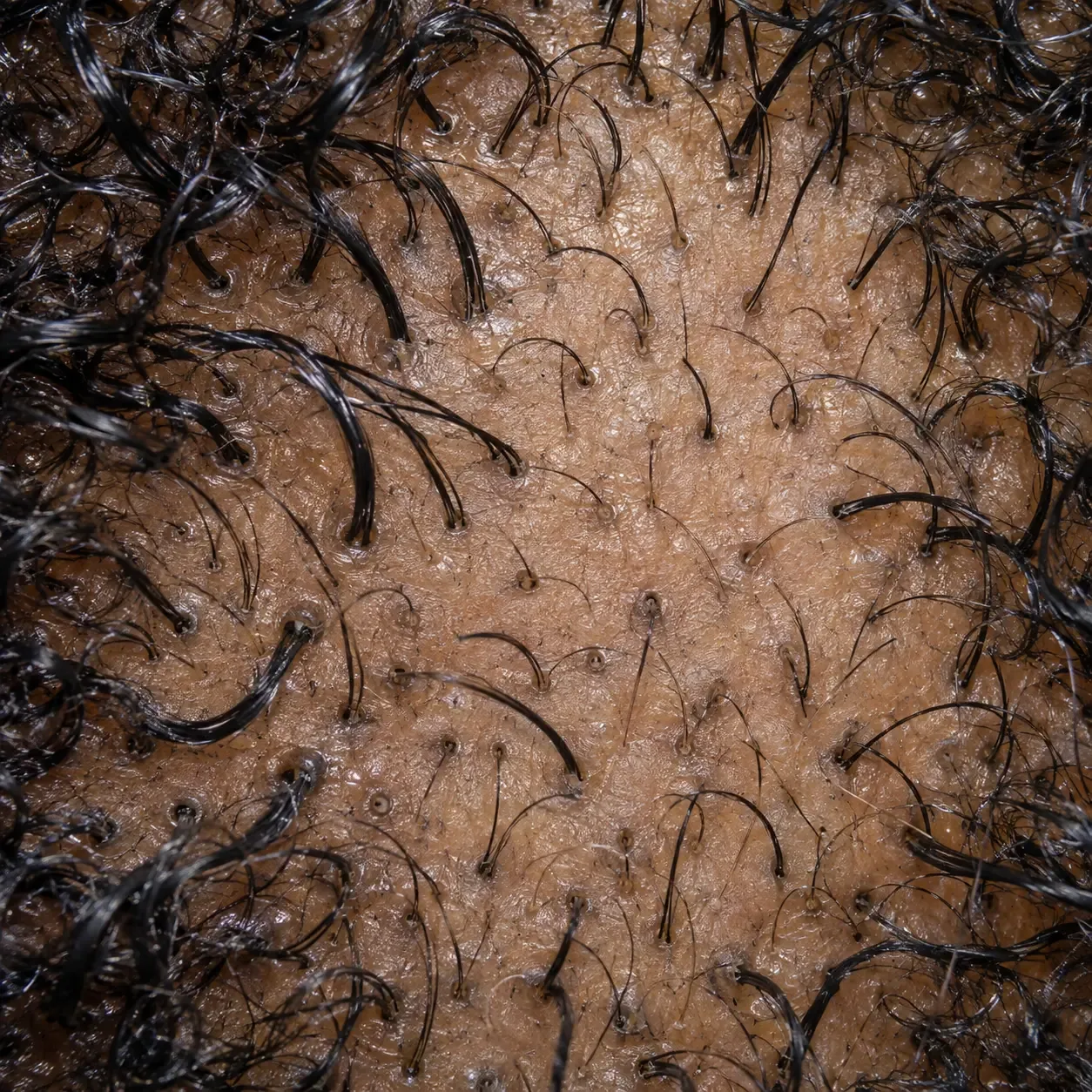
DHT, or dihydrotestosterone, is made from testosterone by an enzyme called 5-alpha reductase. In follicles that are genetically sensitive to it, DHT shortens the growth phase a little more with every cycle.
The hair those follicles produce gets finer, shorter and lighter until it stops surfacing. This is why DHT-driven loss follows a pattern at the crown, part and temples while the back and sides stay dense.
Sensitivity matters more than the amount of hormone circulating, so normal lab values do not rule DHT out. The reliable read is what the follicles look like under magnification. We do that at 200x at Nina Ross Atlanta in Sandy Springs. Serving all of Metro Atlanta.
What you might be noticing
Tap the one that sounds like you to see why it happens and how we figure it out.
The hair on top is finer than the backRegional miniaturization✋🏾
Finer hair on top with dense hair at the back is commonly linked to DHT-sensitive follicles, which sit at the crown, part and temples.
We read both zones at 200x in the same session. The difference in hair thickness is the finding.
My temples are moving backFrontotemporal recession✋🏾
Recession at the temples is commonly linked to DHT shortening the growth phase of sensitive follicles there.
We look for miniaturized hairs at the temples and compare them with the back of your head.
Hairs are shorter and will not grow longShortened anagen phase✋🏾
When hair stops growing past a certain length, it is commonly because the growth phase has shortened. DHT shortens it a little more each cycle.
We read hair length and thickness at 200x to see how far the cycle has shifted.
I can see scalp through the top in bright lightReduced density over the vertex✋🏾
Seeing scalp in bright light usually means fewer hairs per opening and finer hairs, both commonly linked to ongoing DHT pressure.
We count hairs per follicular opening at 200x, which drops before thinning is obvious.
It runs in my familyInherited androgen sensitivity✋🏾
Follicle sensitivity to DHT is inherited, so family history is useful information about your pattern and pace.
Tell us who in your family thinned and where. It helps us read your stage and set a baseline.
What causes it
The receptor sensitivity of your follicles is inherited. Two people with identical hormone levels can have entirely different outcomes.
This enzyme converts testosterone to DHT locally in the scalp, so activity at the follicle matters more than the number on a blood panel.
PCOS and insulin resistance increase androgen activity, which increases the DHT load reaching sensitive follicles.
What we see that others miss
Long before you see scalp, the follicles are already producing thinner hairs. That change is measurable at 200x.
We look at how many hairs share a single follicular opening and how much their thicknesses vary within one small area. Both drop as DHT pressure continues.
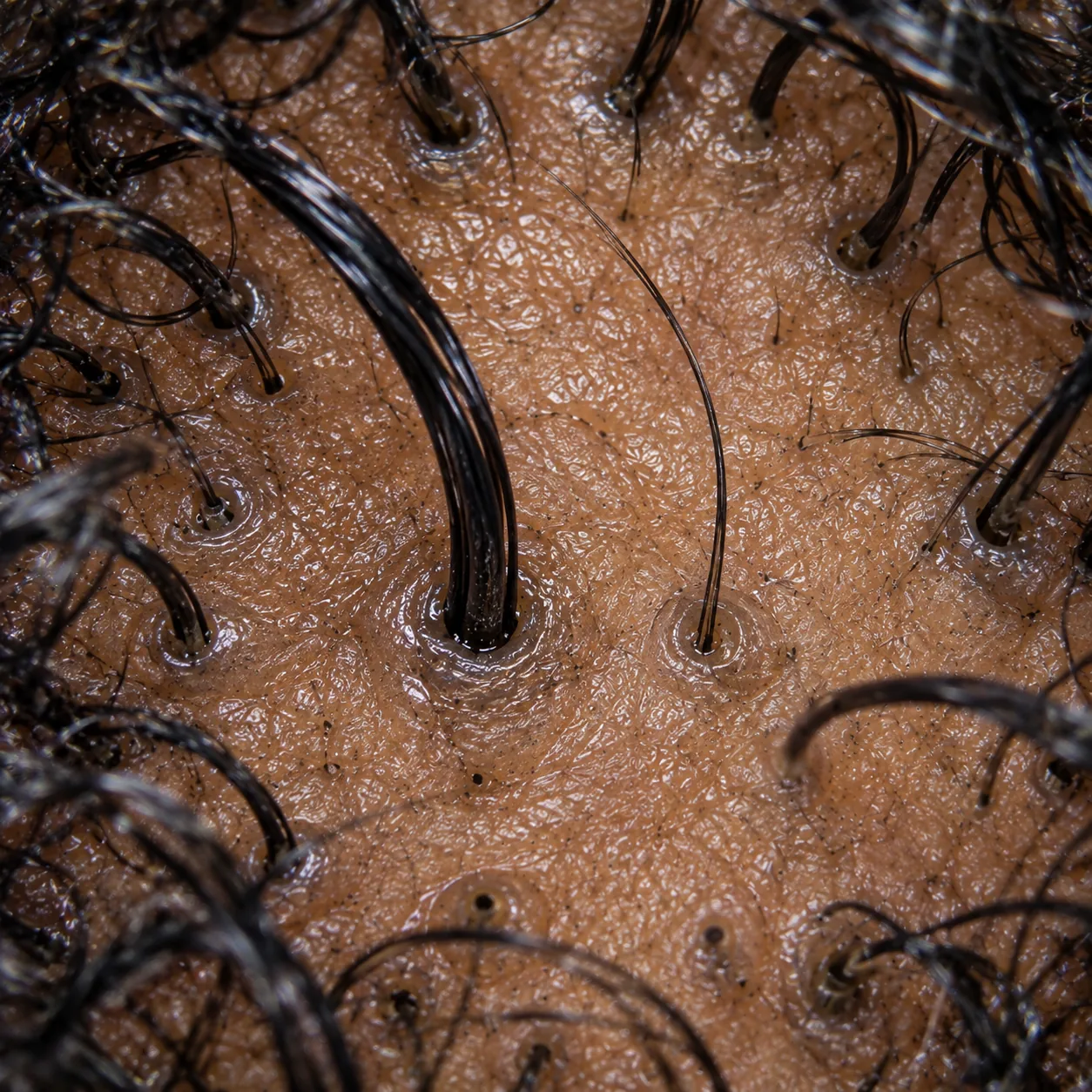
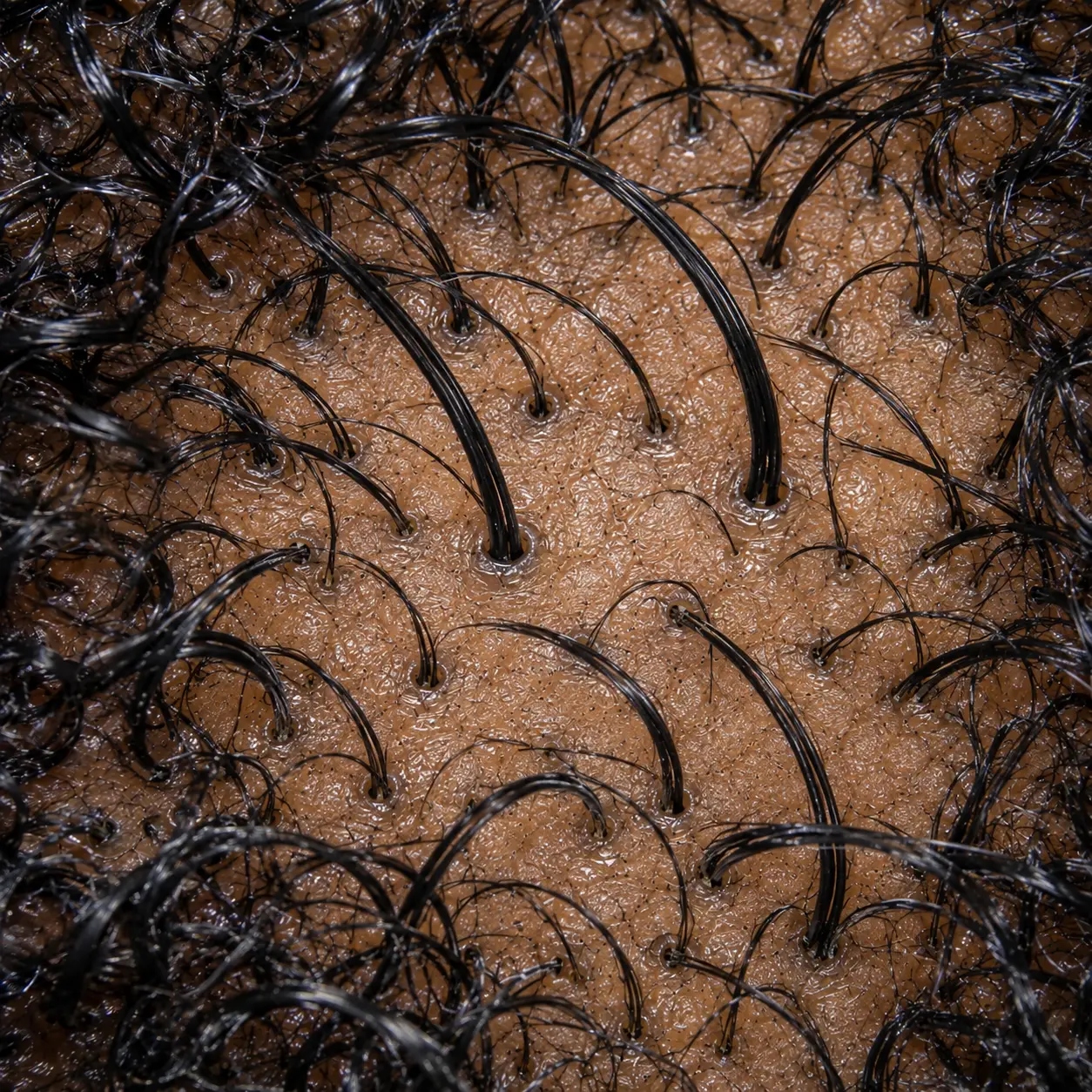
Catching that stage is the difference between holding density and trying to rebuild it.
How we treat it
We document miniaturization at 200x and compare the affected zone to the back of your head, which gives us your baseline. Care combines a restorative program with growth signal therapy for follicles that are still producing, plus attention to the systemic drivers that raise androgen activity.
A structured in-house program that treats the scalp and the systems behind it.
Growth signals placed into the scalp to wake follicles that are still viable.
Concentrated growth signals applied to the scalp to support follicles that are still active.
One visit. Real answers.
Our promiseYou'll leave actually seeing what's happening, your scalp at 200x, the systems behind it, with your report the next day. If you don't, the $99 is on us.
Fully HSA/FSA eligible. 0% financing for qualified applicants.
You are welcome here
Pattern thinning under textured hair hides behind volume until it is advanced. We look at the scalp itself rather than judging by how full your hair looks styled.
Relaxers, braids, locs, weaves and heat. Share your full hair history. It is welcomed, never judged.
10 years of specialized care2,500+ clients seenNo judgment
Related conditions
Predictable pattern, variable speed. The earlier you read it, the more you keep.
The widening part and the thinner ponytail, explained honestly.
Higher androgens thin the crown and thicken hair where you did not ask for it.
Questions, answered
Yes. Sensitivity at the follicle is the deciding factor, and that does not show up on a standard panel. The scalp read is what answers it.
Follicles still producing fine hair can often be supported back toward thicker hair. Follicles that stopped producing a long time ago are a much harder ask, and we tell you which you have. Results not typical. Individual results will vary.
Male pattern baldness is DHT-driven miniaturization in men, following a predictable pattern. Excess DHT activity can drive thinning in women too, usually along the part and crown.
Only if DHT is actually your driver, and only for follicles that are still producing. That is why we read the follicles first.
We photograph the same zones at 200x each visit and compare them with the back of your head, so change is measured against your own baseline.
Results not typical. Individual results will vary.
You'll see it, or the $99 is on us. Serving all of Metro Atlanta.
Nina Ross Atlanta, 8735 Dunwoody Place, Suite 290, Sandy Springs, GA 30350. Monday to Saturday, 10:00 AM to 3:30 PM.