
Do DHT Blockers Actually Stop Hair Loss
A widening part or temples that keep creeping back may well involve DHT. Before you buy another blocker, it is worth understanding why this hormone attacks follicles at all, and what actually changes the outcome.
You Have Read The Ads And You Are Not Sure
The part is wider than it was. The temples have crept back. Somewhere in the middle of researching it you started seeing DHT blockers everywhere, and the pitch always sounds the same.
What DHT Actually Does To Your Follicles
So the fair question is whether any of this is real or whether it is another bottle with good marketing. The science behind DHT is real. It is also relevant for a lot of Black women whose pattern gets read as something else entirely. What follows is the part underneath the hype.
The Problem With Most DHT Blockers
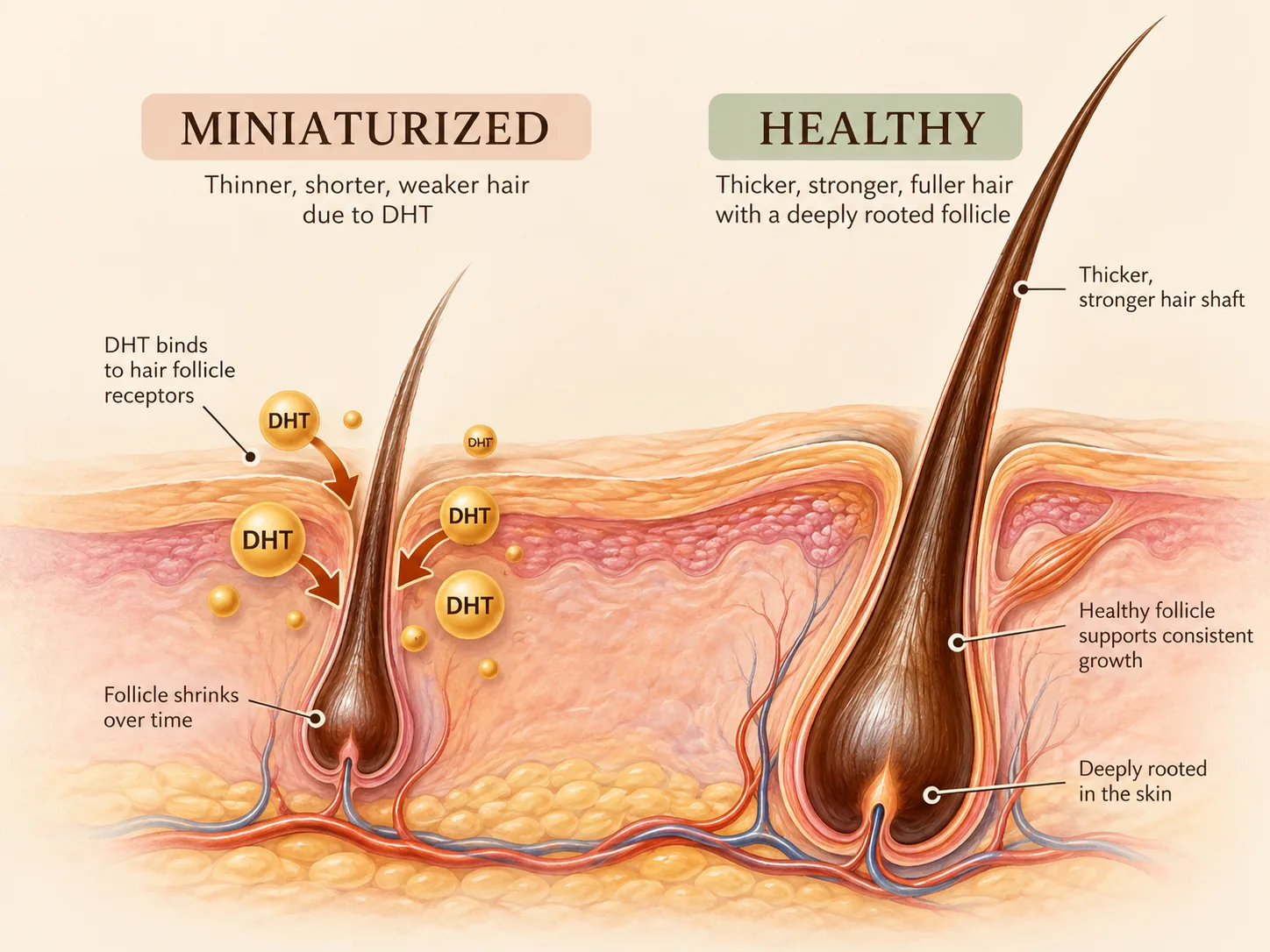
Think of DHT as a bully that only picks on certain follicles. Genetic sensitivity decides who it targets, which is why two people with similar hormone levels can have very different hair.
Answers Before Blockers
Where a follicle is sensitive, DHT attaches to it and the growth phase shortens with each cycle. The hair that comes back is thinner and shorter than the one before it. That is miniaturization, and left long enough the follicle stops producing hair altogether.
When DHT Blockers Actually Make Sense
Once testing confirms DHT sensitivity is the primary driver rather than a side character, there are three places blockers earn their spot.
What a DHT pattern can look like
- A part that continues to widen
- Thinning at the temples or hairline
- Loss of volume that styling products do not change
- Finer, shorter hairs appearing in a patterned area
Those signs make DHT a reasonable question. They do not prove it is the only driver. Inflammation, nutrient issues, stress, and other hormonal changes can exist beside a DHT-sensitive pattern.
Why genetic sensitivity matters
DHT does not affect every follicle in the same way. The article's bully comparison is useful because the target matters: genetically sensitive follicles can gradually produce finer and shorter hairs, while other follicles may remain unchanged.
- Sensitivity is presentCertain follicles are more vulnerable to DHT.
- Miniaturization beginsThe hairs produced become finer and shorter.
- The pattern becomes visibleThe part, temples, crown, or overall volume begins to change.
- The full picture is reviewedWe decide whether DHT is central, contributing, or not the best explanation.
Why a blocker can be only part of the plan
A blocker is aimed at one pathway. It does not automatically settle scalp inflammation, replace missing nutrients, or explain a stress-related shed. If the plan ignores those parts of the picture, even a reasonable DHT strategy can feel disappointing.
Pattern before product. The goal is not to block a hormone because it appears on a label. It is to know whether DHT is acting on your follicles and what else is happening beside it.
How we decide whether DHT is central
| Evidence we review | Question it helps answer |
|---|---|
| Location of thinning | Does the distribution resemble a patterned loss? |
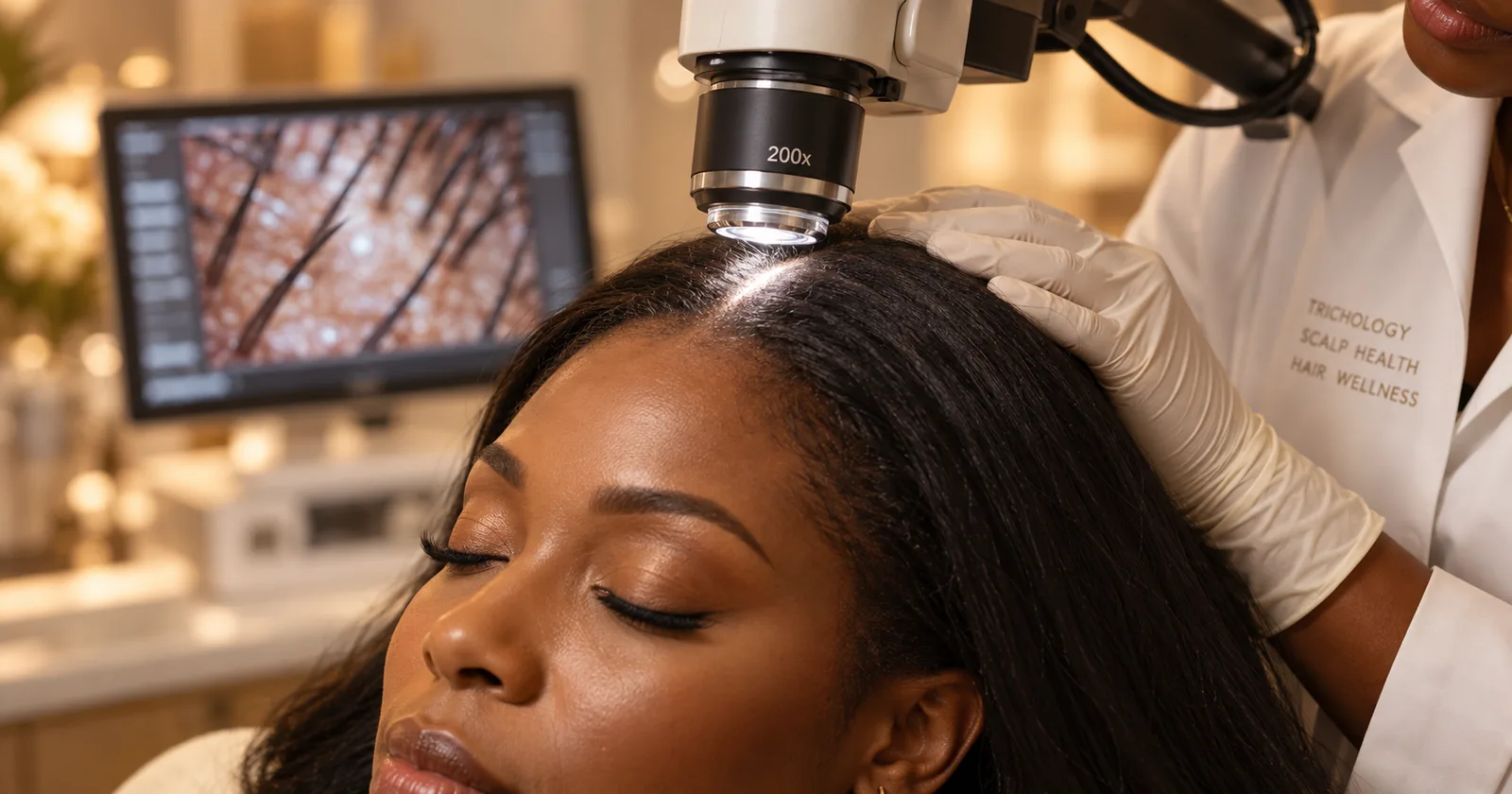
| Hair caliber at 200x | Are hairs in the area becoming finer and shorter? |
| Scalp condition | Is inflammation or another surface issue present too? |
| Health and shedding timeline | Did another whole-body change arrive before the hair change? |
When those pieces agree, a DHT-focused step can be placed in context. When they do not, buying a stronger blocker is unlikely to answer the real question.
A clear pattern gives you a better decision than a louder product claim. That is how we move from fear-driven shopping to a plan you can understand.
Not sure this is you? See your scalp at 200x.
Book My $99 DiscoveryFrequently asked questions
What does DHT do to hair follicles?
DHT can attach to genetically sensitive follicles and gradually miniaturize them. The hairs those follicles produce become finer and shorter, which can make the part, temples, crown, or overall volume look different over time.
What signs make DHT worth discussing?
A widening part, thinning at the temples or hairline, loss of volume, and finer hairs in a patterned area are clues discussed here. They are not proof that DHT is the only cause.
Why might a DHT blocker not be enough?
A blocker addresses one pathway. It does not automatically settle scalp inflammation, replace missing nutrients, or explain stress-related shedding. Those factors can overlap with a DHT-sensitive pattern and may need their own attention.
How does Dr. Nina decide if DHT is central?
She reviews the distribution, hair caliber at 200x, scalp condition, and health timeline. When those pieces agree, a DHT-focused step can be considered in context rather than chosen from marketing alone.

Written and reviewed by
Double Board Certified Trichologist. PhD in Functional Drugless Medicine. Master Cosmetologist. Founder and Clinical Director of Nina Ross Atlanta, with 10 years of specialized care and 2,500+ clients seen.