
The Itch Is Irritation, Not Progress
If your scalp burns and itches every time you apply minoxidil, it is telling you something. Before you power through another week of it, it is worth understanding what that signal actually means.
You Followed The Instructions Exactly
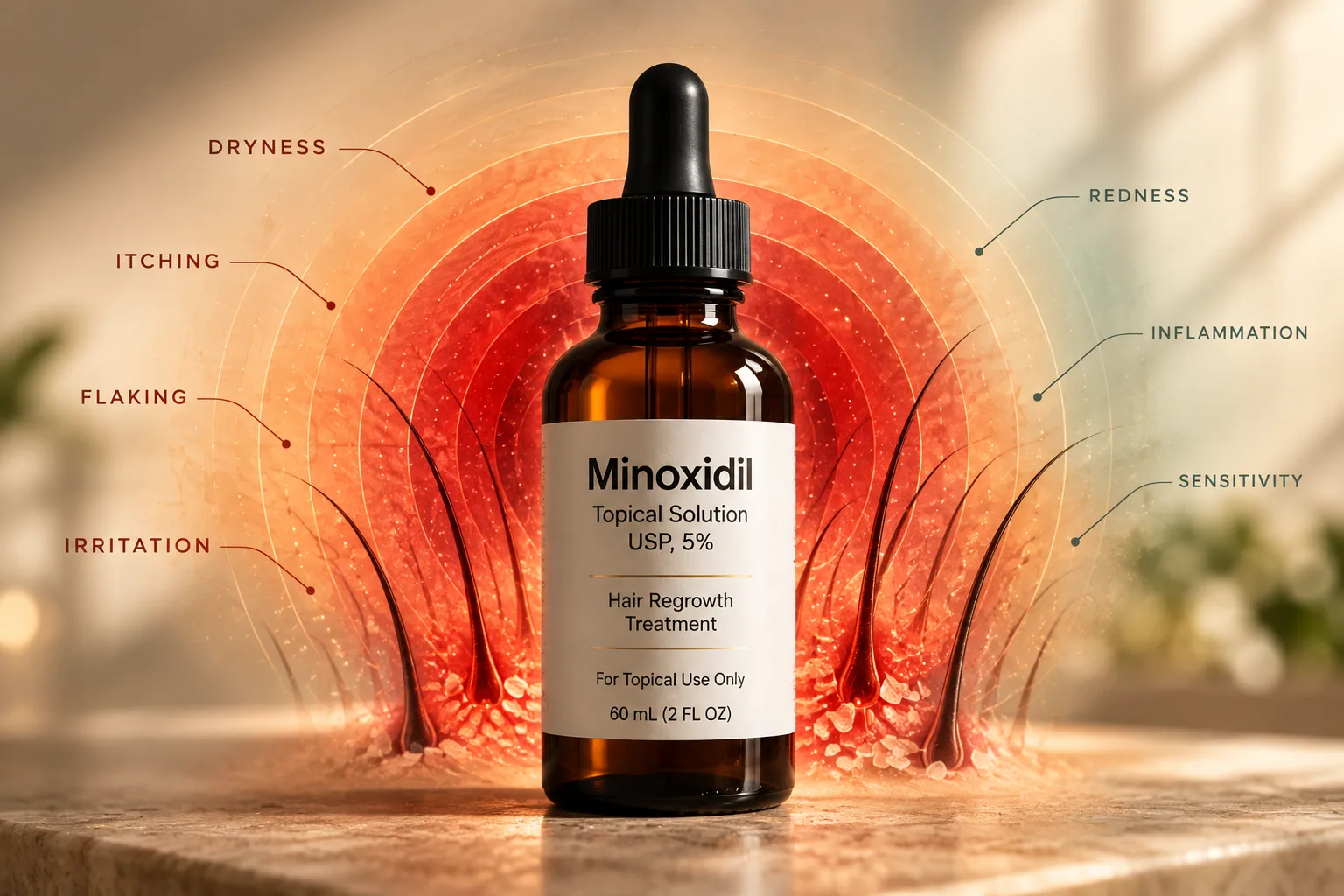
You bought the minoxidil. You applied it the way the box said. And now your scalp is on fire, red and flaky, and you cannot think about much else.
Why Minoxidil Irritates The Scalp
The question that follows is always the same. Is this normal? Is this how I know it is working?
Minoxidil And Black Hair, What The Studies Miss
It is not a badge of efficacy. Sensitive scalps react, and in our work with Black women's scalps in particular this comes up often enough that it deserves a proper answer rather than a shrug.
Hair Loss Is Not A Minoxidil Deficiency
Most of the research behind these products was not carried out on textured hair. The scalp environment is often drier to begin with, which changes how an alcohol based topical lands.
When Minoxidil Might Make Sense
Braids and weaves can leave inflammation behind, and that is not a criticism of how anyone wears their hair. It is simply part of the picture that has to be read before a product goes on top of it.
What may be causing the reaction
| Part of the formula | What the article identifies |
|---|---|
| Alcohol base | Can dry an already sensitive scalp |
| Propylene glycol | Helps the drug penetrate and can irritate the scalp barrier |
| Minoxidil itself | May not be the part of the formula causing the reaction |
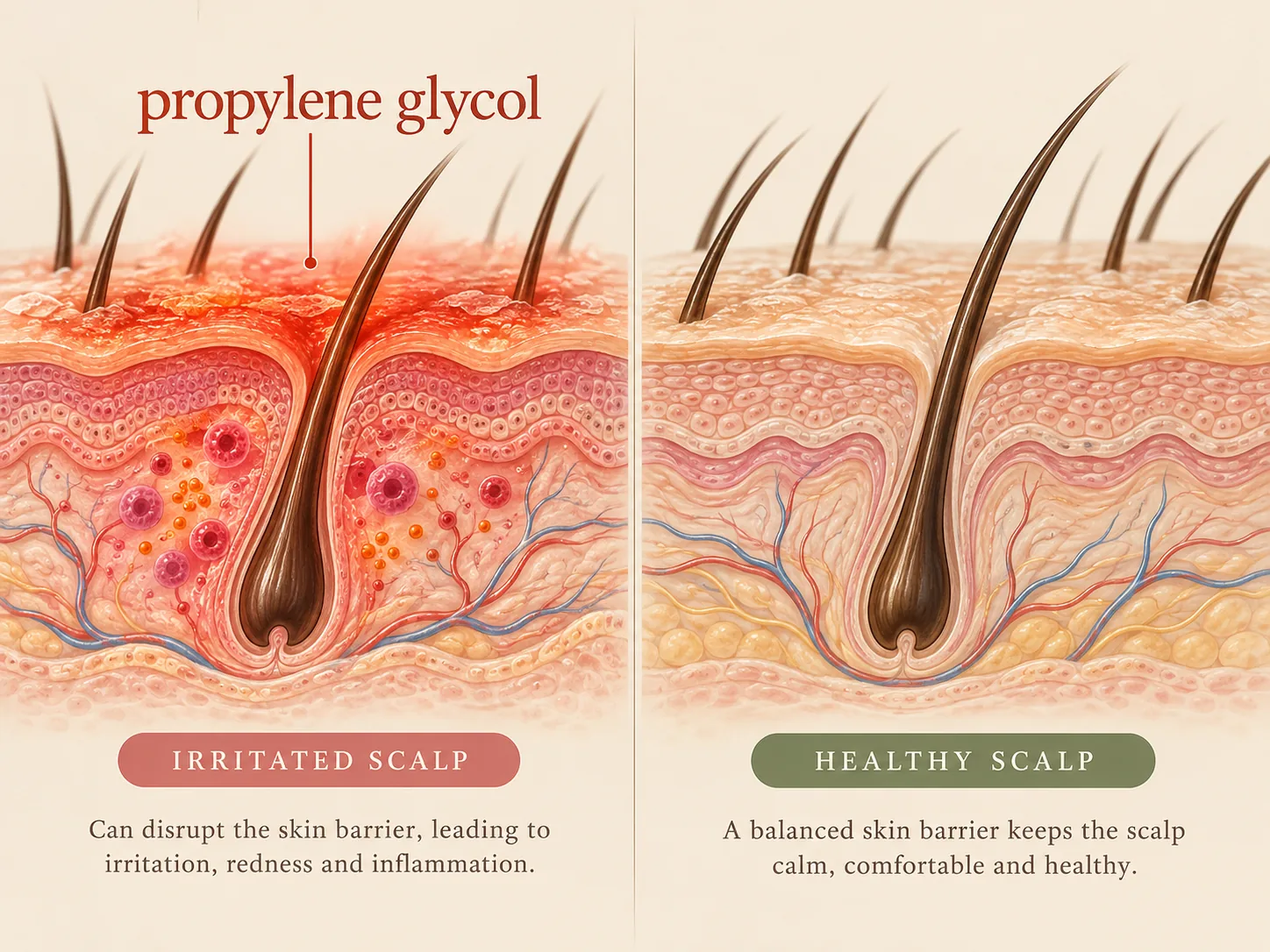
That distinction matters because stopping the itch starts with understanding what the scalp is reacting to. Continuing through burning, redness, and flaking without that answer can leave the surface more inflamed.
Why the scalp environment comes first
Hair growth does not happen separately from the skin around the follicle. If the scalp is already dry, irritated, or carrying inflammation from a styling history, another drying topical may make the environment harder to tolerate.
- Burning or intense itching after application
- New redness or visible flaking
- A scalp that was already sensitive before treatment
- Inflammation after braids or weaves
- No clear answer yet for the underlying hair-loss pattern
Itch is information. Severe or persistent irritation deserves medical attention. Do not keep applying a product simply because discomfort has been presented as normal.
Hair loss is not one condition
Minoxidil can support growth in some patterns, but it does not explain why the loss began. A widening part, traction at the edges, inflammation on the scalp, and diffuse shedding are different pictures. Putting the same topical over all of them does not make them the same condition.
That is why we read the scalp before deciding where minoxidil belongs. The useful question is not whether the product is good or bad. It is whether it fits the pattern and whether the scalp can tolerate the formula.
What to bring to the conversation
- The exact product and formula you used
- How often you applied it
- How quickly the irritation appeared
- Photos of the scalp before and after the reaction, if available
- Your styling history and the pattern you were trying to treat
A careful review can separate the reaction from the original hair concern. Once those are no longer tangled together, a gentler and more appropriate next step becomes possible.
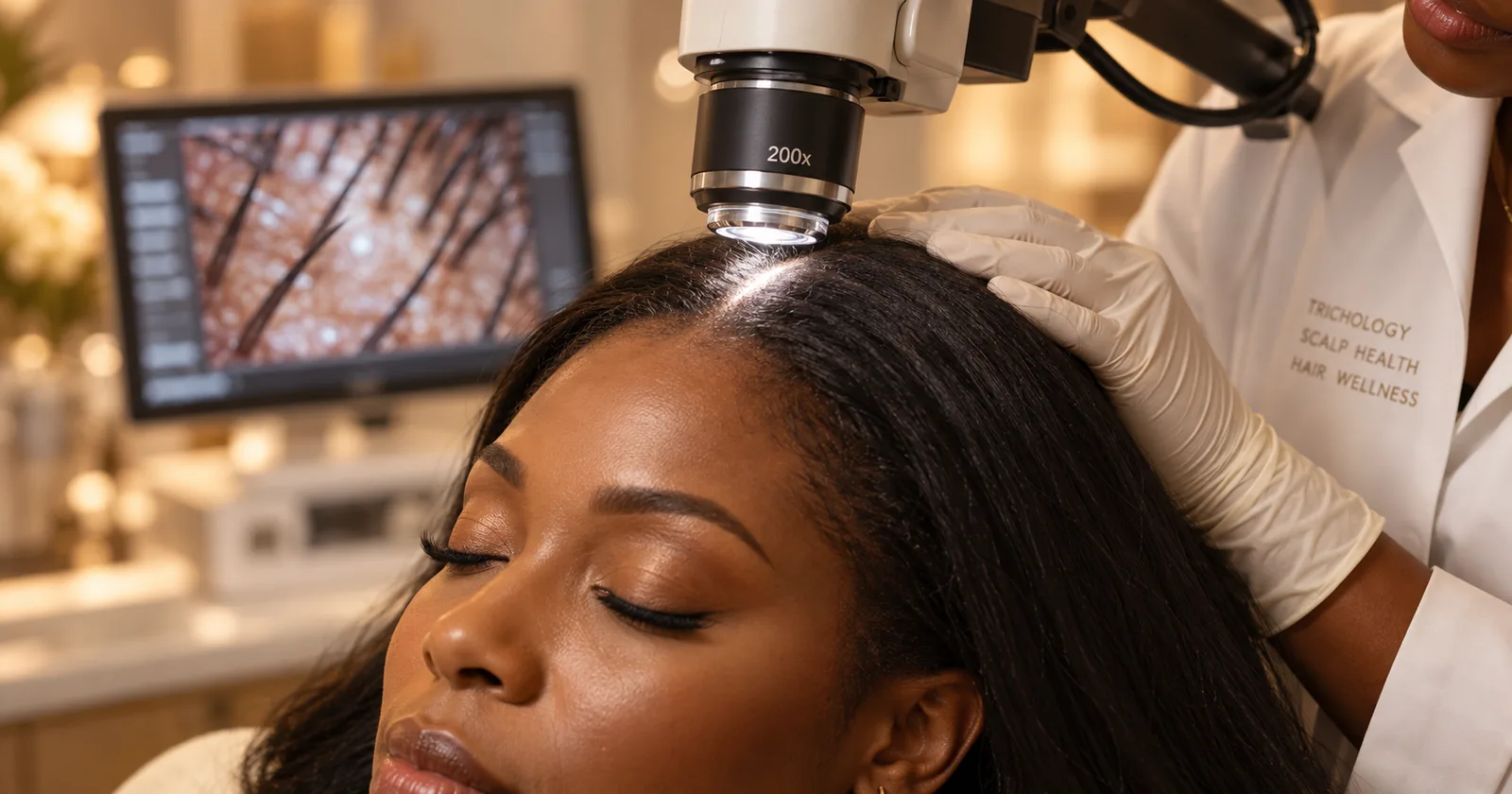
Not sure this is you? See your scalp at 200x.
Book My $99 DiscoveryFrequently asked questions
Is itching a sign that minoxidil is working?
No. Burning, intense itching, redness, and flaking are signs that the scalp may be irritated. Persistent or severe symptoms deserve medical attention rather than being treated as a normal price of progress.
Which part of minoxidil can irritate the scalp?
The article identifies the alcohol base and propylene glycol as possible irritants. The medication itself may not be the part causing the reaction, which is why the exact product and formula matter.
Why can textured hair routines change the conversation?
A scalp may already be dry, sensitive, or inflamed after certain styling experiences. That context should be discussed without judgment before another drying topical is placed on top of the existing environment.
When might minoxidil still fit a plan?
It may support growth in some patterns, but the original cause and scalp tolerance need to be understood first. The useful question is whether it fits your pattern and whether the chosen formula can be used comfortably.

Written and reviewed by
Double Board Certified Trichologist. PhD in Functional Drugless Medicine. Master Cosmetologist. Founder and Clinical Director of Nina Ross Atlanta, with 10 years of specialized care and 2,500+ clients seen.