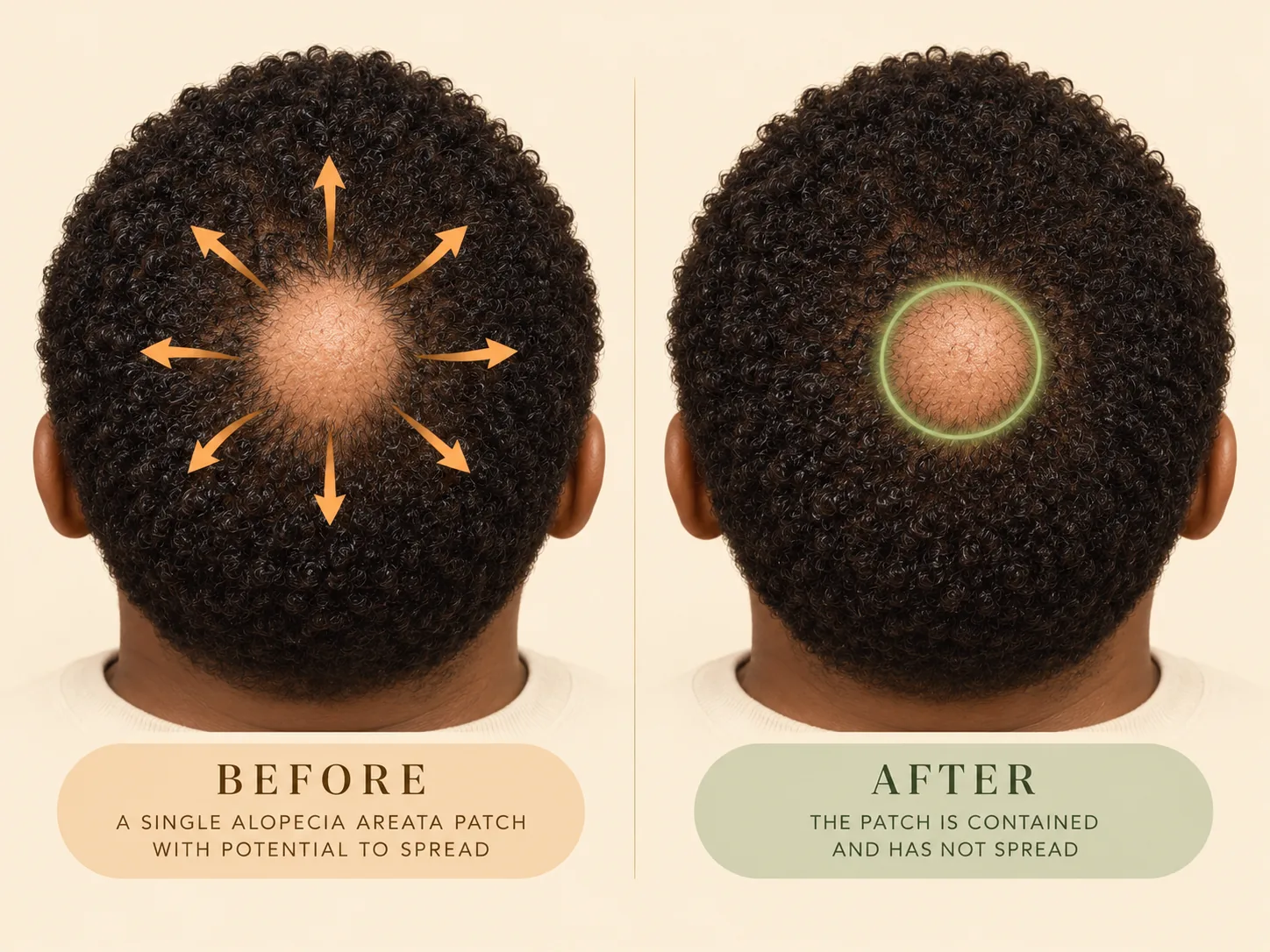

What Actually Stops The Spread
You found a smooth, coin-sized patch, and the fear that follows is about the next one. Calming the attack happening inside is how you protect the hair you still have.
Your Immune System Is Attacking Your Own Follicles
Alopecia areata is friendly fire. The immune system, which is supposed to be defending you, identifies your hair follicles as a threat and attacks them.
Hidden Triggers That Fuel The Flare
The inflammation that follows pushes those follicles to shut down, and the hair sheds in the smooth round patch you noticed. The follicle underneath is usually still alive.
Why Typical Treatments Fall Short, And What To Do Instead
So the real question is not how to force hair back onto one patch. It is how to calm the immune system enough that new patches stop appearing.
How We Tell Whether The Spread Is Still Active
Until your own triggers are identified, treatment stays a game of whack-a-mole, where each patch is handled as it appears and nothing changes underneath.
Your Body Has Not Handed You A Life Sentence
Corticosteroids can genuinely help in the short term by reducing inflammation around the follicle. Used alone, without ever asking why the attack started, they are a band-aid over an active process.
What active spread can look like
The most important question is whether the immune attack still appears active. A new smooth patch, a patch that is enlarging, or more patches appearing changes the conversation from regrowing one area to protecting the follicles that remain.

That does not mean you can determine activity from a mirror alone. It means the timeline matters and the scalp deserves a close read rather than a wait-and-see guess.
Why one patch is not the whole story
Treating only the visible circle can feel productive because it gives you one place to focus. But the article's central point is that alopecia areata is an immune process. If new areas continue to appear, the problem is larger than the first patch.
| Question | What it helps us understand |
|---|---|
| Are new patches appearing? | Whether the pattern may still be moving |
| Is an existing patch changing? | Whether it needs a fresh scalp read |
| What changed before the first patch? | Where the history may guide the next question |
| What has already been tried? | Whether care has focused on the patch, the immune process, or both |
Where short-term relief fits
Corticosteroids can reduce inflammation around the follicle in the short term. That can be an important part of care. It is not the same as understanding why the immune attack began or whether it still appears active.
Keep care connected. Do not stop prescribed treatment based on an article. Use the questions here to have a more complete conversation with your treating clinician.
What we want the first visit to answer
- Does the pattern still look active?
- Are the follicles still present in the affected area?
- Does the history point to a larger body question worth exploring?
- What care is already reducing inflammation?
- How will change be documented over time?
Alopecia areata can feel unpredictable, but the appointment does not have to feel vague. A careful baseline and a clear next question give you a steadier place to begin.
Not sure this is you? See your scalp at 200x.
Book My $99 DiscoveryFrequently asked questions
What causes alopecia areata patches?
This article describes alopecia areata as an immune process in which inflammation around the follicles makes them shut down and shed. That is why the visible patch is smooth and can appear suddenly.
How can I tell if it may still be spreading?
New patches, an enlarging area, or continued change are reasons to arrange a fresh evaluation. They do not establish activity on their own, but they make the timeline and close scalp read especially important.
Do corticosteroids help alopecia areata?
They can reduce inflammation around the follicle in the short term and may be an important part of care. The article's point is that short-term relief and understanding the larger immune process are related but different goals.
What should the first evaluation answer?
It should document the baseline, assess whether the pattern appears active, look at whether follicles remain in the area, review what has already been tried, and decide which larger health questions, if any, deserve investigation.

Written and reviewed by
Double Board Certified Trichologist. PhD in Functional Drugless Medicine. Master Cosmetologist. Founder and Clinical Director of Nina Ross Atlanta, with 10 years of specialized care and 2,500+ clients seen.