How To Choose A Trichologist Near You
When the shedding is frustrating you and the mirror is scaring you, the instinct is to search. Pause for a few minutes first. What you do before you search decides whether you find someone who will actually diagnose your hair, or one more bottle of hope.
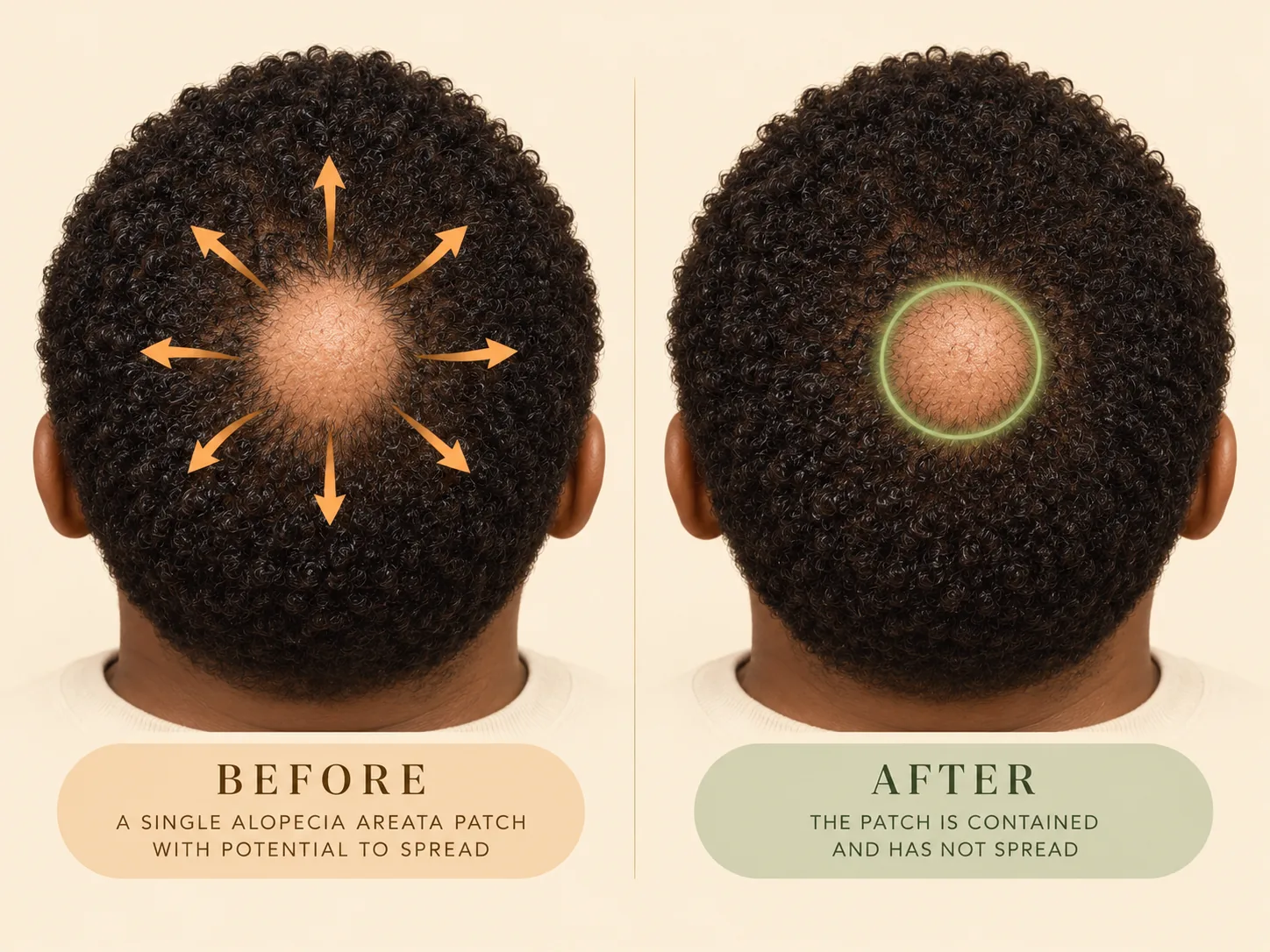
The Part Is Wider Than It Was
Maybe it is the part that keeps opening up, or edges that are thinner than they were last year, or a scalp that has not felt right in months.
Why "Near Me" Is Riskier Than It Looks
There is a pit in your stomach about it, and the pull to fix it today is strong. The risk in that moment is landing with someone who gives general advice, or a plan built for straight, fine hair, and losing another year.
Get Your Story Straight Before You Search
Search is a business. The top of the page is usually paid placement or strong search optimization, and neither one is evidence that the practice understands CCCA, traction alopecia, hormonal loss, or textured hair.
What To Look For On Their Website
Proximity is worth something. It is not worth years of frustration with someone who cannot read what is happening on your scalp.
Red Flags Worth Walking Away From
Write these five things down. It takes ten minutes, and walking in prepared sorts the root cause practices from the product pushers fast.
Write your five-point case file
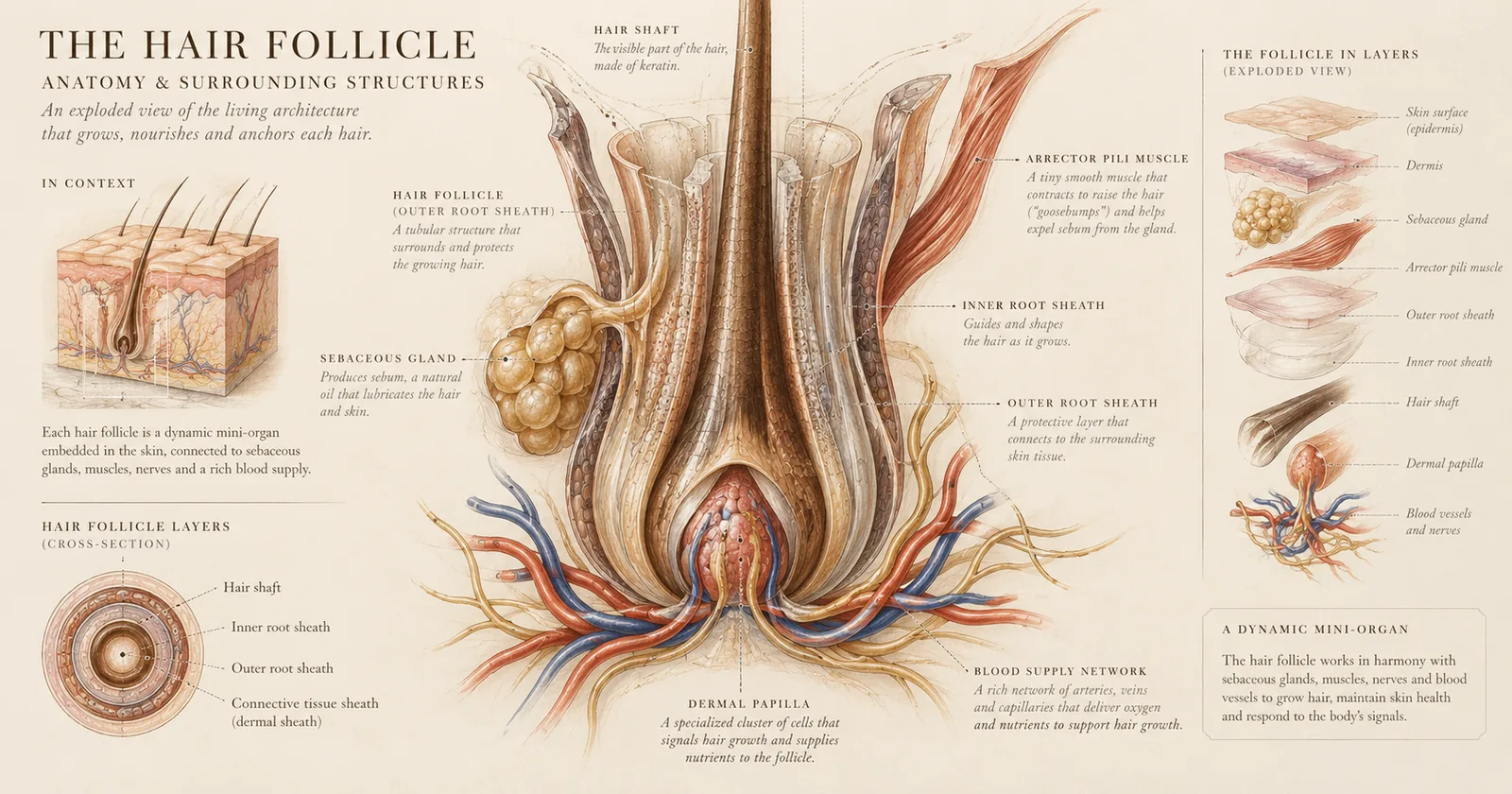
Before you open another search result, put your own story in order. A short record makes the consultation more useful and helps you notice whether the person listening is asking about the whole pattern or simply steering toward a product.
- Where the loss is concentrated
- When you first noticed the change
- How the scalp feels between wash days
- Your recent styling history
- What changed in your health, stress, cycle, medication, or routine
You do not need to solve the cause yourself. You are giving the practitioner enough context to ask a better next question.
What a useful website should show
Look for specific language about the patterns you are concerned about, especially CCCA, traction alopecia, hormonal loss, and textured hair. General hair-growth language cannot tell you whether the practitioner can recognize the differences between them.
- Clear credentials and scope of care
- Condition-specific education instead of vague promises
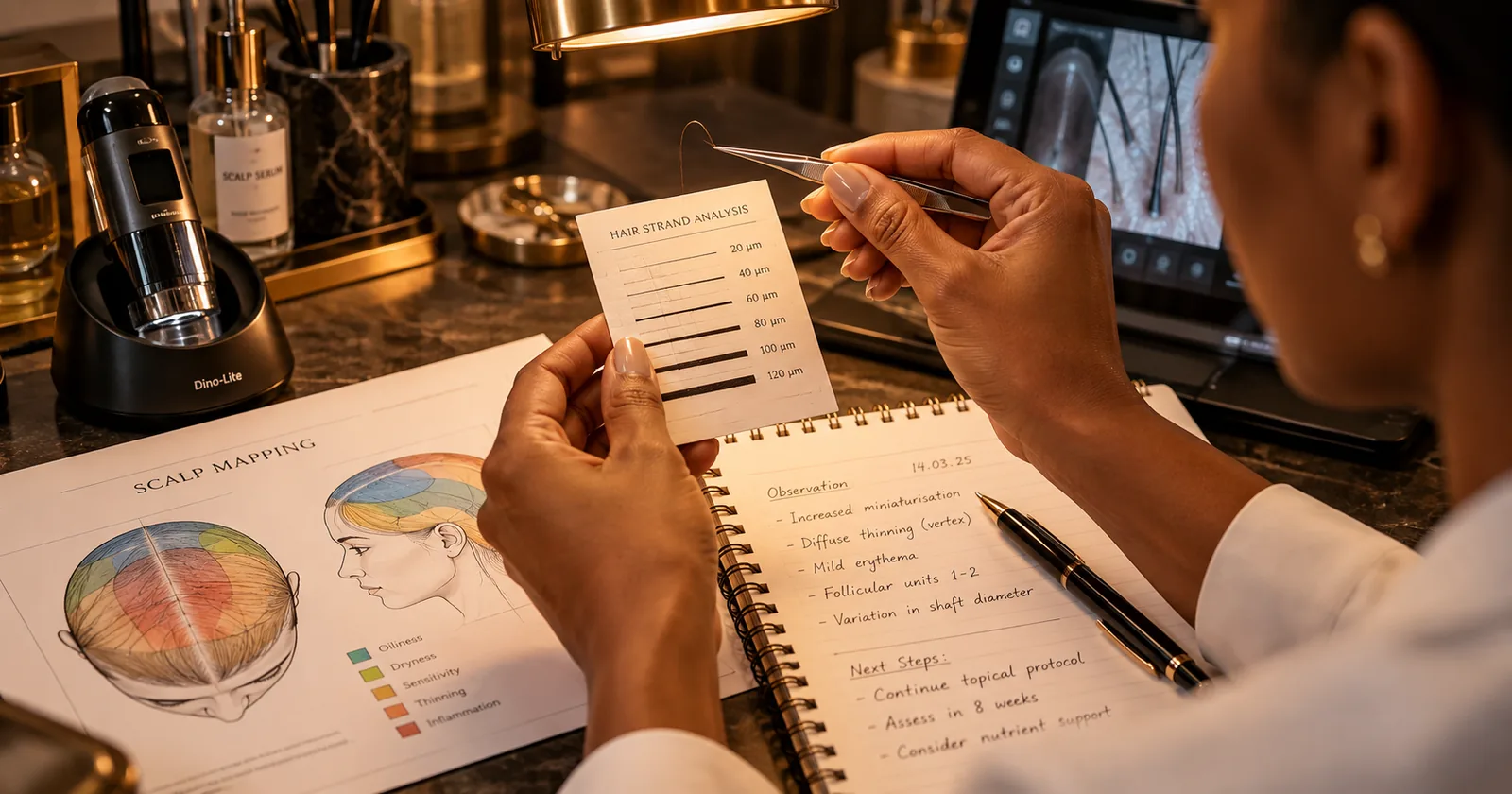
- A real explanation of how the scalp is examined
- Evidence that textured hair is part of the practice, not an afterthought
- A first visit built around evaluation before treatment
Red flags to take seriously
Be cautious when every visitor appears to receive the same answer, the consultation begins with a product package, or no one asks when and where the change started. A plan offered before the pattern is read is still a guess.
Your consultation should make sense. The closest office is not automatically the right fit. Choose the person who can explain what they see and why the next step follows.
The right appointment should leave you with clearer questions, a documented scalp picture, and a next step you understand. That is worth more than a high search ranking.
Not sure this is you? See your scalp at 200x.
Book My $99 DiscoveryFrequently asked questions
How do I choose a trichologist near me?
Start with your own timeline, then look beyond distance and search position. Choose a practitioner who explains credentials, discusses the patterns relevant to you, examines the scalp closely, and does not select treatment before hearing the history and reading the pattern.
What should I write down before the appointment?
Record where the loss is concentrated, when it began, how the scalp feels, your recent styling history, and any health, stress, cycle, medication, or routine change that came before it. You do not need to diagnose yourself. This gives the practitioner better context.
What should a trichologist's website explain?
Look for specific education about the concerns you are researching, a clear description of the evaluation, and evidence that textured hair is part of the practice. Vague growth language and a long product list do not show that different patterns can be recognized.
What are warning signs during a consultation?
Be cautious if the visit begins with a product package, every client appears to receive the same answer, or no one asks where and when the change started. A useful consultation should establish a baseline and explain why the next step follows.

Written and reviewed by
Double Board Certified Trichologist. PhD in Functional Drugless Medicine. Master Cosmetologist. Founder and Clinical Director of Nina Ross Atlanta, with 10 years of specialized care and 2,500+ clients seen.