PRP Therapy
Growth signals placed into the scalp to wake follicles that are still viable.
Home / Conditions / Traumatic / Traction Alopecia
Traumatic · condition 14 of 18
Tension-driven loss at the edges and part lines. Often reversible early.
 Clinically reviewed by Dr. Nina Ross, NDServing all of Metro Atlanta
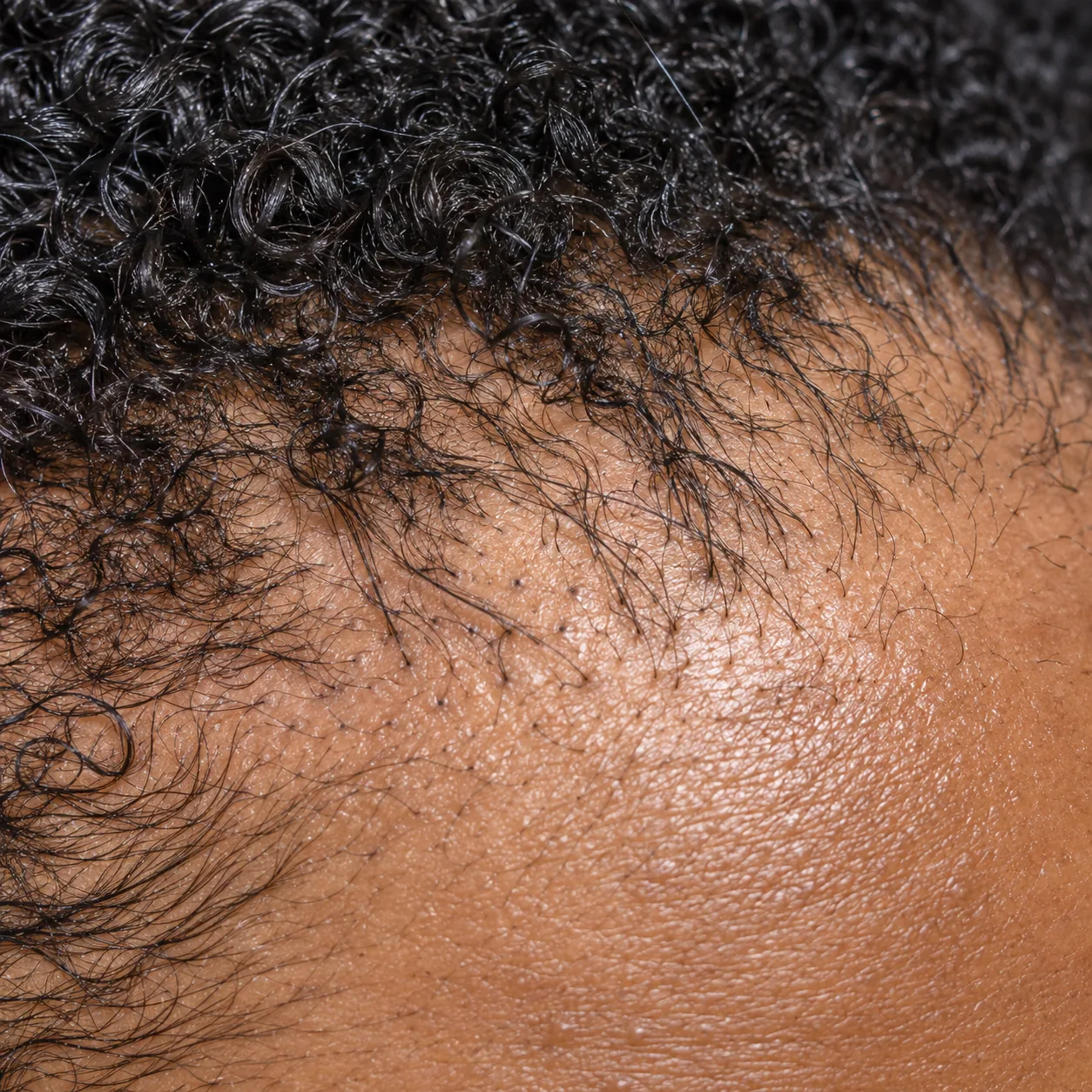
Yes, traction alopecia is frequently reversible when it is caught early.
Tension from styling pulls repeatedly on the same follicles, and in the early stage those follicles are irritated but intact, so relieving the tension and supporting the scalp can bring the hair back. The picture changes once scarring sets in.
When follicular openings are gone, that hair will not fully return, although the area around it can often be protected and improved. The way we tell the difference is trichoscopy at 200x, where we count whether the openings are still present along the hairline and part. This is not about blaming protective styling. We look at your scalp at Nina Ross Atlanta in Sandy Springs, serving all of Metro Atlanta.
What you might be noticing
Tap the one that sounds like you to see why it happens and how we figure it out.
My edges are thinningMarginal alopecia along the frontotemporal hairline✋🏾
Thinning at the edges is commonly linked to repeated tension on the same follicles along the hairline, the area that carries the most pull in many styles.
We count follicular openings along your edges at 200x and compare them with an unaffected area, which tells us how much can come back.
Little bumps after I get my hair doneTension-related follicular papules✋🏾
Small bumps after a fresh install are commonly linked to follicles irritated by tension. They are an early warning sign.
We read the bumps at 200x to tell tension irritation from something like folliculitis.
My hairline moved backRecession with retained fringe hairs✋🏾
Fine hairs left at the very front with loss behind them is characteristic of traction, and it helps separate it from other patterns.
We look for that fringe sign at 200x and map where openings are still present.
It is sore for days after braidsPost-styling scalp tenderness✋🏾
Soreness that lasts for days is commonly linked to more tension than the follicles can comfortably carry.
We read the sore areas for irritation at the follicle, and talk through weight, tightness and how long styles stay in.
Thin lines where the parts wereLinear loss along part lines✋🏾
Thinning along part lines is commonly linked to tension concentrated where the hair is sectioned.
We read the part lines at 200x to see whether follicles there are irritated but intact, or lost.
What causes it
Repeated pulling on the same follicles, from braids, weaves, extensions, tight ponytails or locs, irritates the follicle and eventually damages it.
How heavy the style is and how long it stays in matter as much as how tight it feels on day one.
A follicle already stressed by relaxers or heat is less able to tolerate tension. The combination does more than either alone.
Retained fine hairs at the very front edge with loss behind them is characteristic of traction, and it helps separate it from other patterns.1
What we see that others miss
Reversibility comes down to a count. At 200x we count how many follicular openings remain in the affected hairline and compare them to an unaffected area of your scalp.
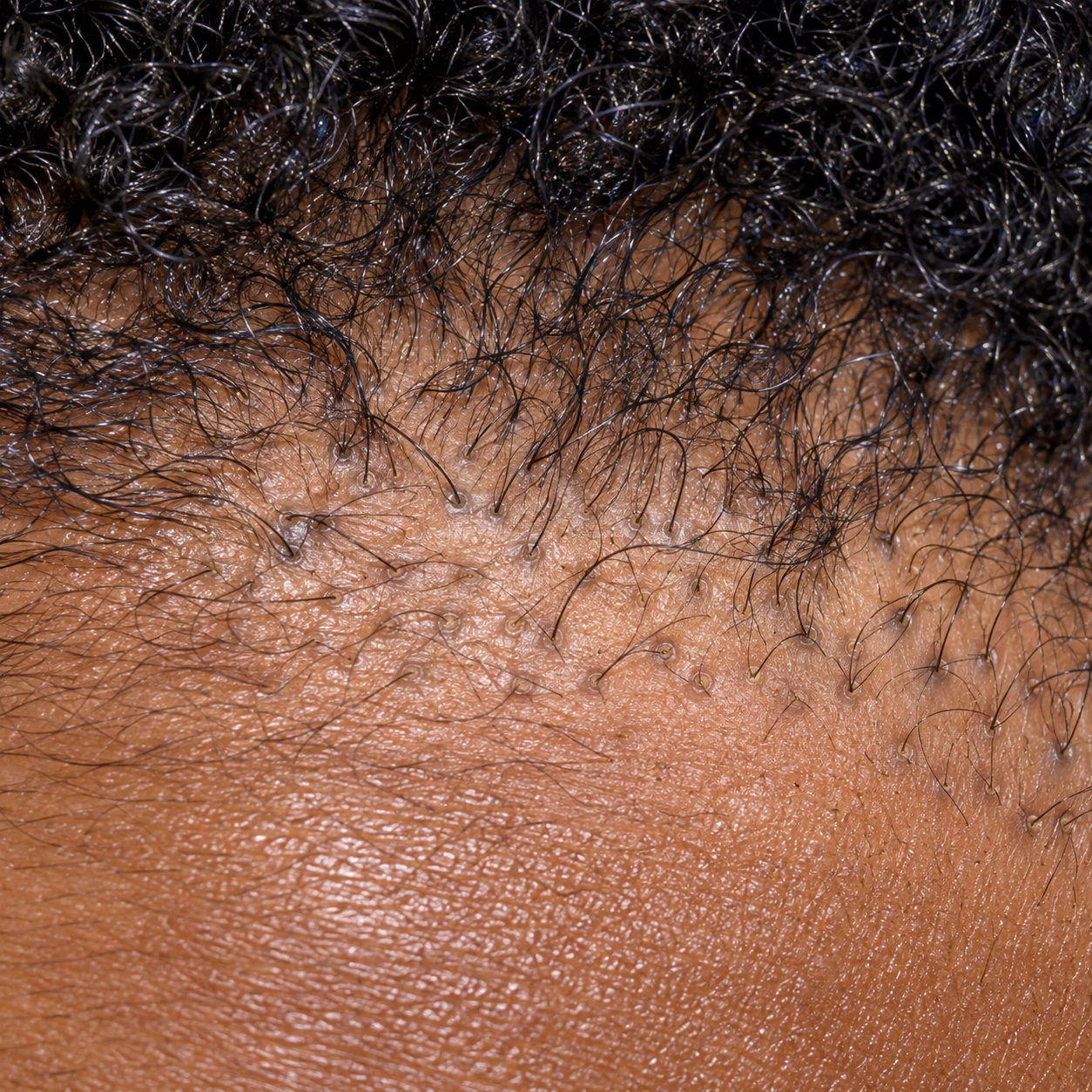
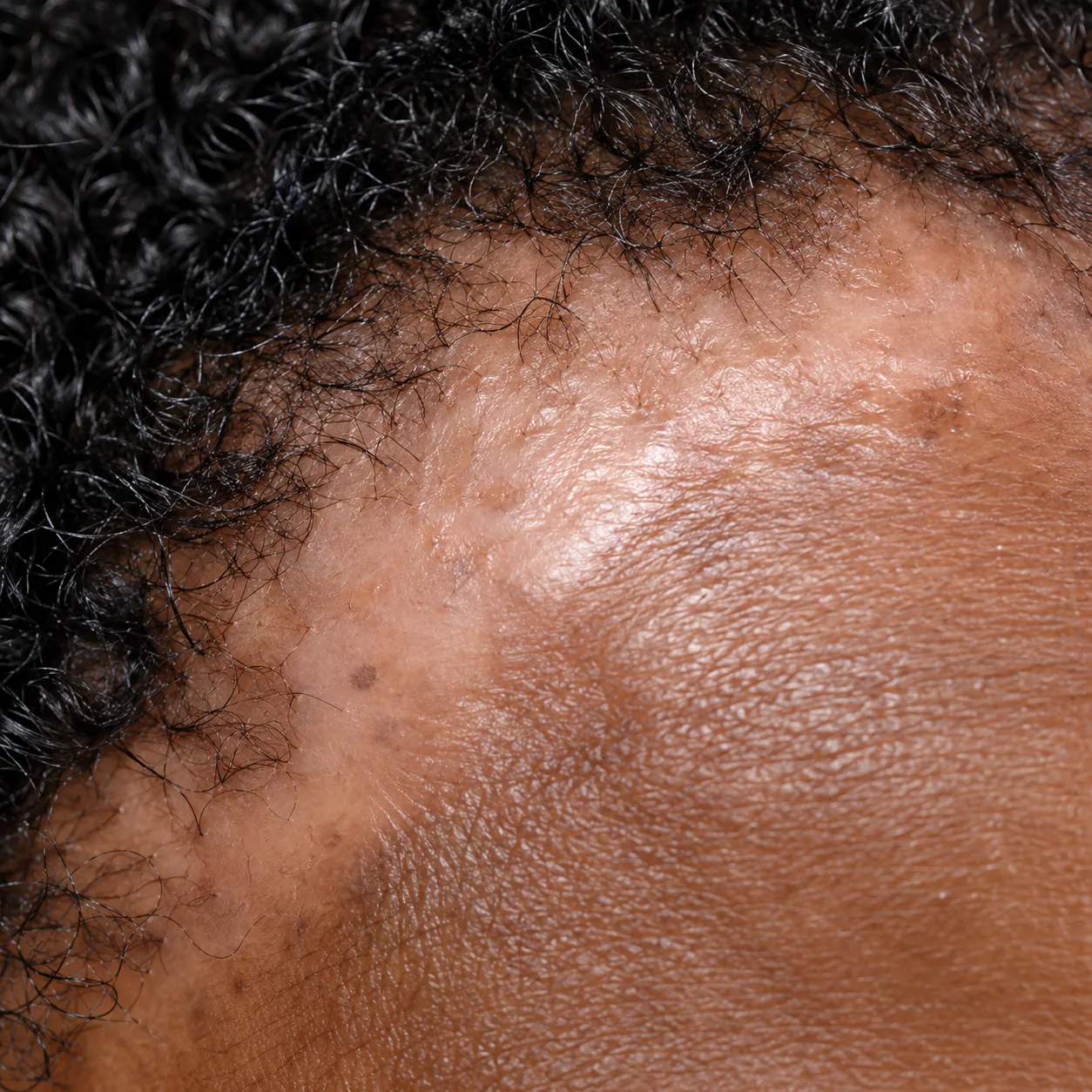
We map the boundary between the two, because that boundary is where treatment does the most good.
How we treat it
First we determine reversibility by counting follicular openings at 200x along the hairline. Where openings remain, we relieve tension and use growth signal therapy and microneedling to support regrowth. Where openings are gone, we protect the surrounding area and tell you honestly what that zone can and cannot do. We work with your styling life and build around the hair you want to wear.
Traction alopecia treatment in Atlanta →Is it too late? Read the full guide →
Growth signals placed into the scalp to wake follicles that are still viable.
Controlled micro-channels that improve delivery of topicals into the scalp.
One visit. Real answers.
Our promiseYou'll leave actually seeing what's happening, your scalp at 200x, the systems behind it, with your report the next day. If you don't, the $99 is on us.
Fully HSA/FSA eligible. 0% financing for qualified applicants.
You are welcome here
Protective styles exist for good reasons, and being told to stop is not care. Your styling history is clinical information here. We read tension patterns, tell you what we see, and build around the hair you want to wear.
Relaxers, braids, locs, weaves and heat. Share your full hair history. It is welcomed, never judged.
10 years of specialized care2,500+ clients seenNo judgment
Related conditions
Central centrifugal cicatricial alopecia. Starts at the crown and spreads outward, quietly.
Tender, sometimes pus-filled bumps sitting right on the follicle.
The widening part and the thinner ponytail, explained honestly.
Questions, answered
Early, very often yes. Once follicular openings are lost to scarring, that hair does not fully return, although the surrounding area can usually be protected. Trichoscopy at 200x is how we tell which stage you are in. Results not typical. Individual results will vary.
No one here will tell you to give up the styles you love. We read the tension pattern, tell you what we see, and build around the hair you want to wear, which often means adjusting weight, tightness or how long a style stays in.
It depends on how many openings remain and how long the tension has been there. We photograph the same points each visit, so you can see the change rather than guess at it.
Soreness after a style is commonly linked to tension pulling on the follicles. Pain that lasts for days is a sign they are carrying more load than they can comfortably handle.
You weren't doing it wrong. Protective styles exist for good reasons, and traction builds quietly over time. What matters now is reading where your hairline is today.
Results not typical. Individual results will vary.
You'll see it, or the $99 is on us. Serving all of Metro Atlanta.
Nina Ross Atlanta, 8735 Dunwoody Place, Suite 290, Sandy Springs, GA 30350. Monday to Saturday, 10:00 AM to 3:30 PM.