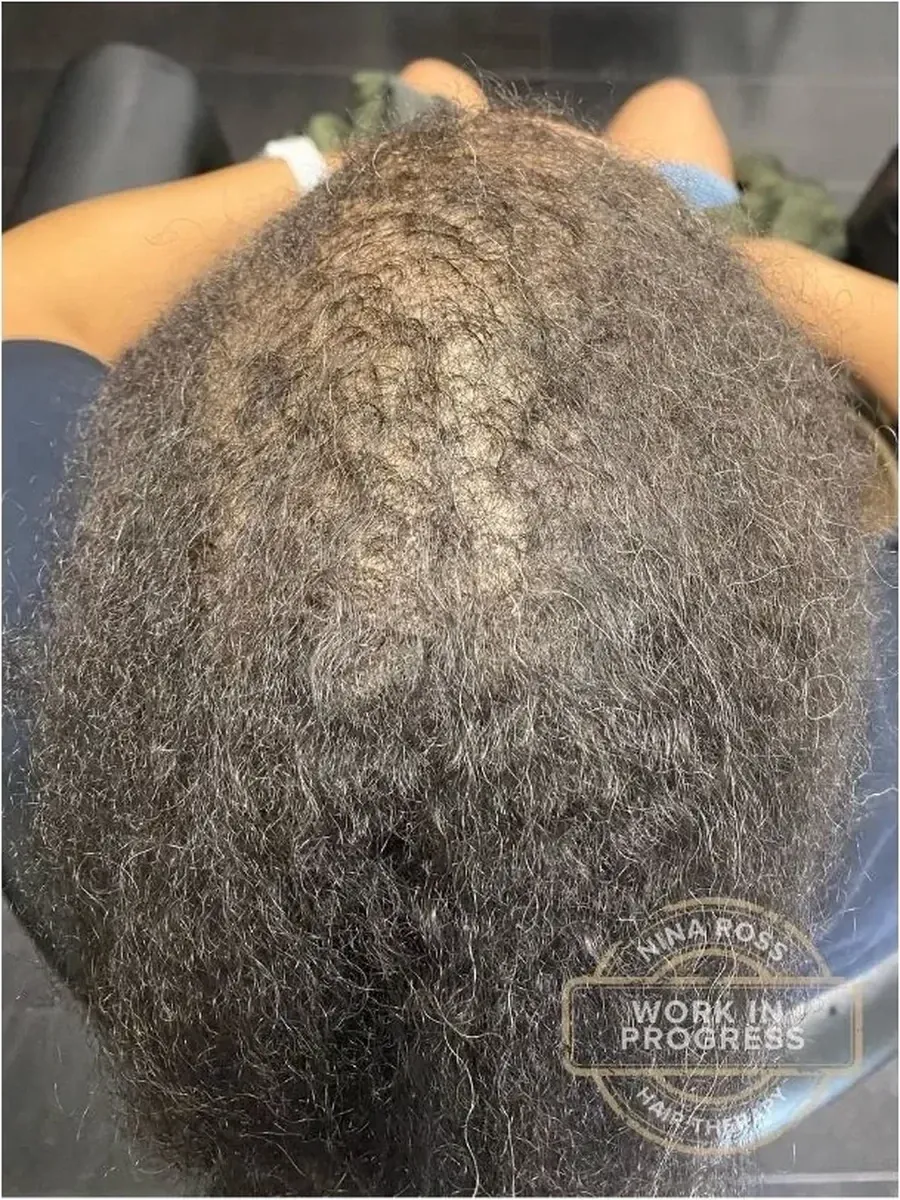

Your Edges Start Coming Back
Fine new hairs along the margin where thinning was visible. Confirmed under magnification, documented visit to visit.
What Traction Alopecia Treatment Delivers.
What Changes When The Right
Follicles Get Support.
Traction alopecia treatment targets the follicles along your hairline, edges, and nape that are still structurally intact. When those follicles receive the right intervention at the right stage, this is what recovery can look like.
Your stage determines what can respond.



Traction alopecia treatment works when it reaches the right follicles at the right stage. The 200x read confirms both.
Proof Before Promises
See What Traction Alopecia Recovery Looks Like
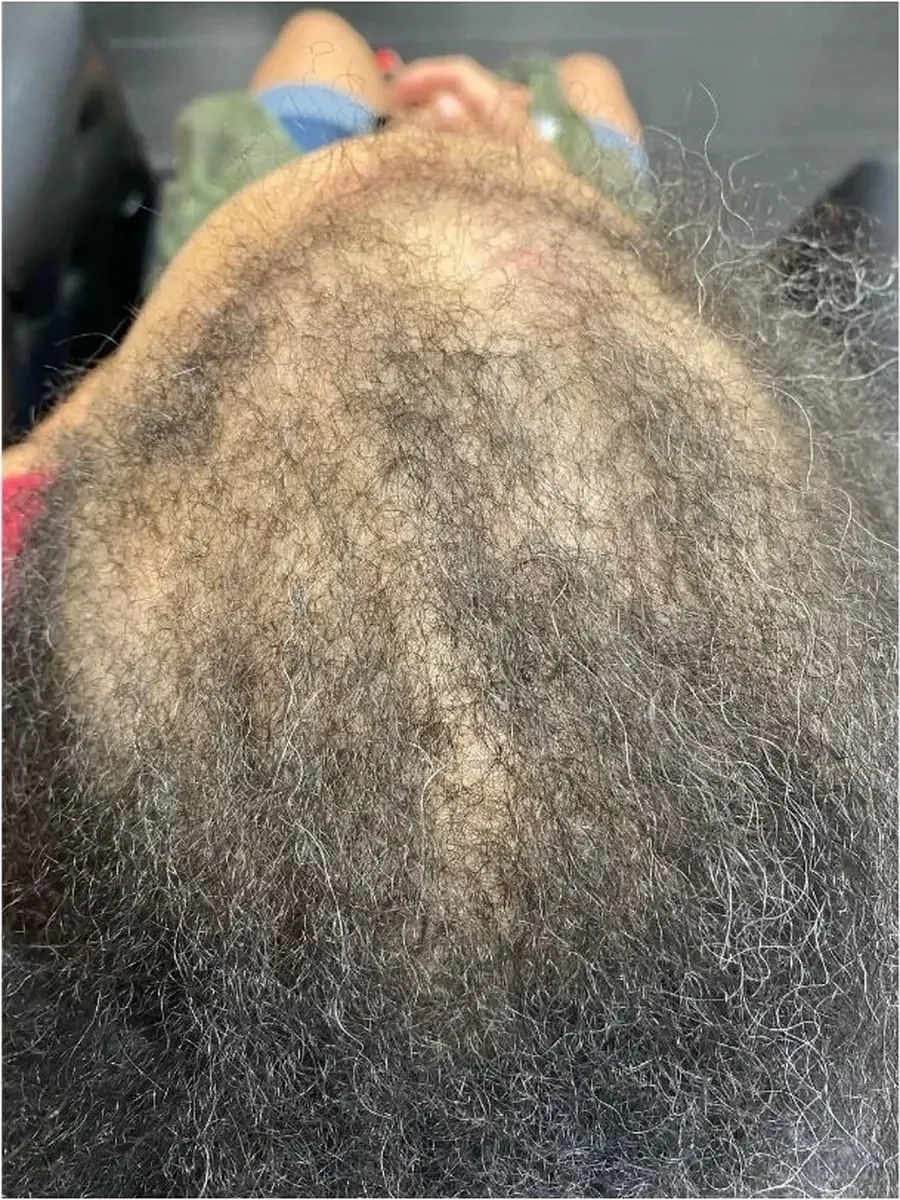
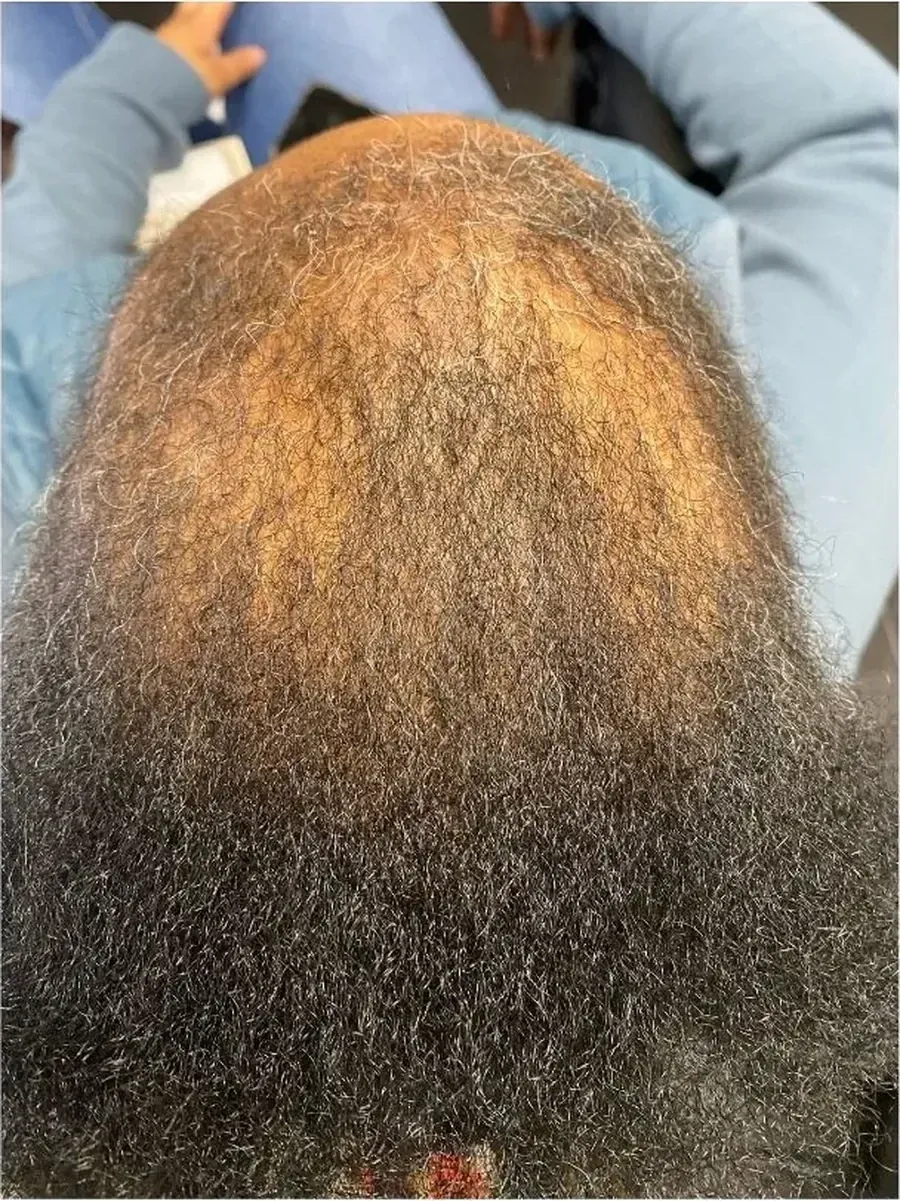
When traction alopecia is caught while the follicles are still there, the hairline can come forward again.
Same angle. Same lighting. Honest timelines.
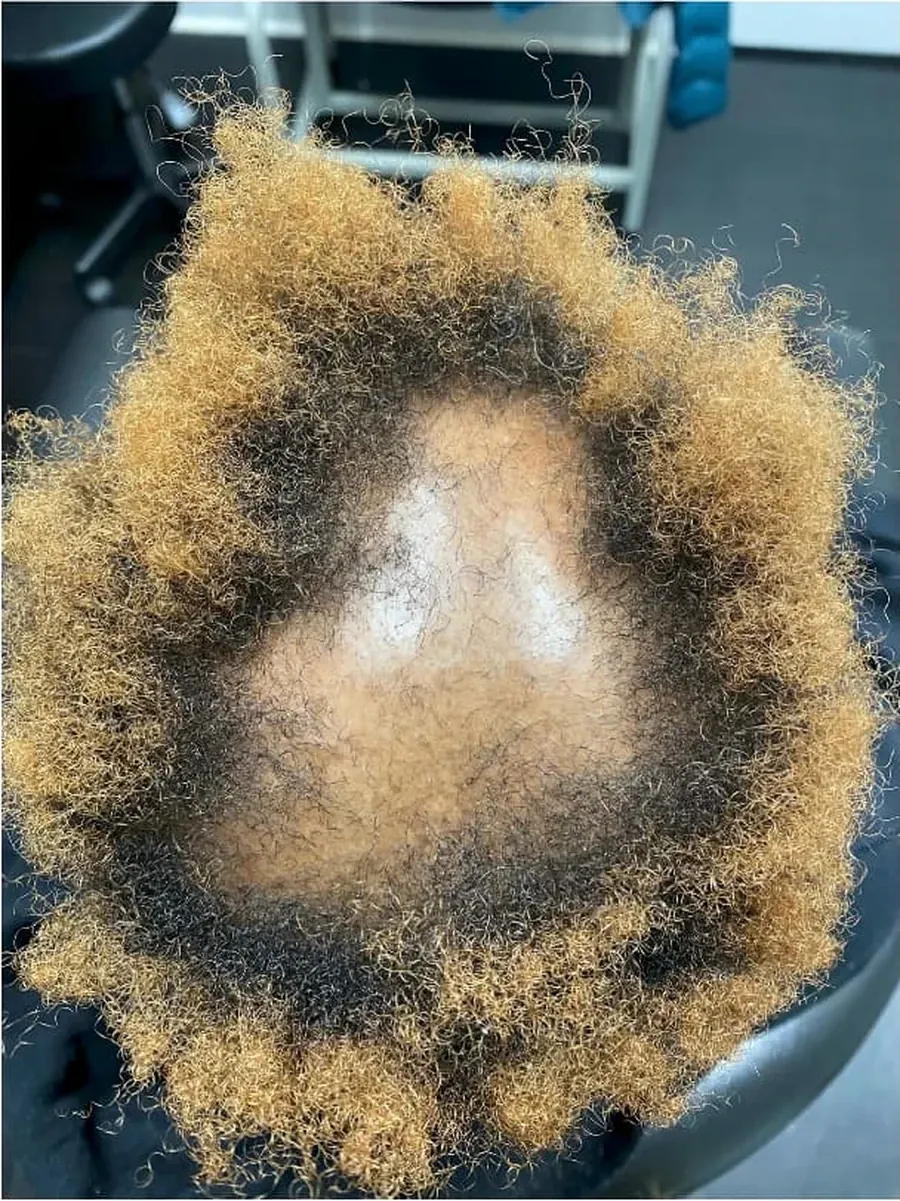
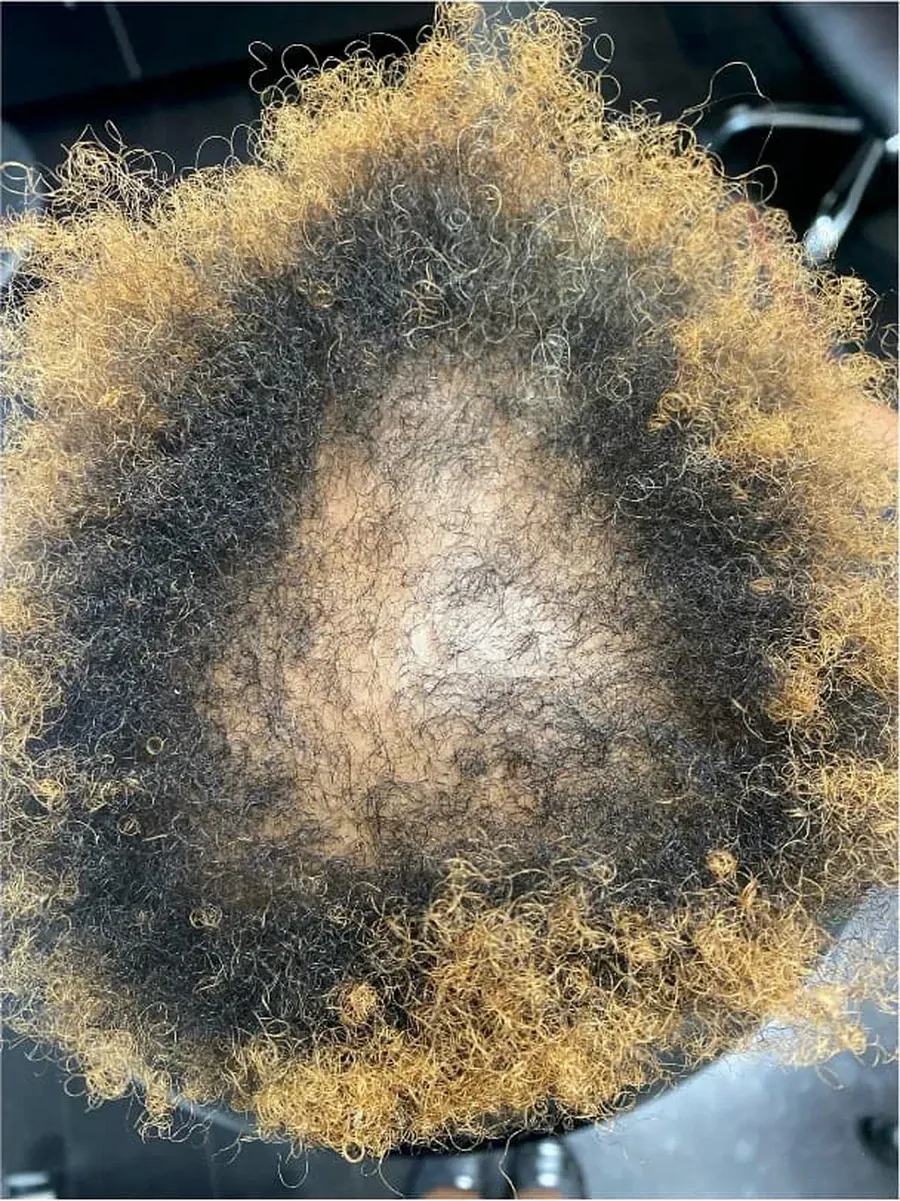
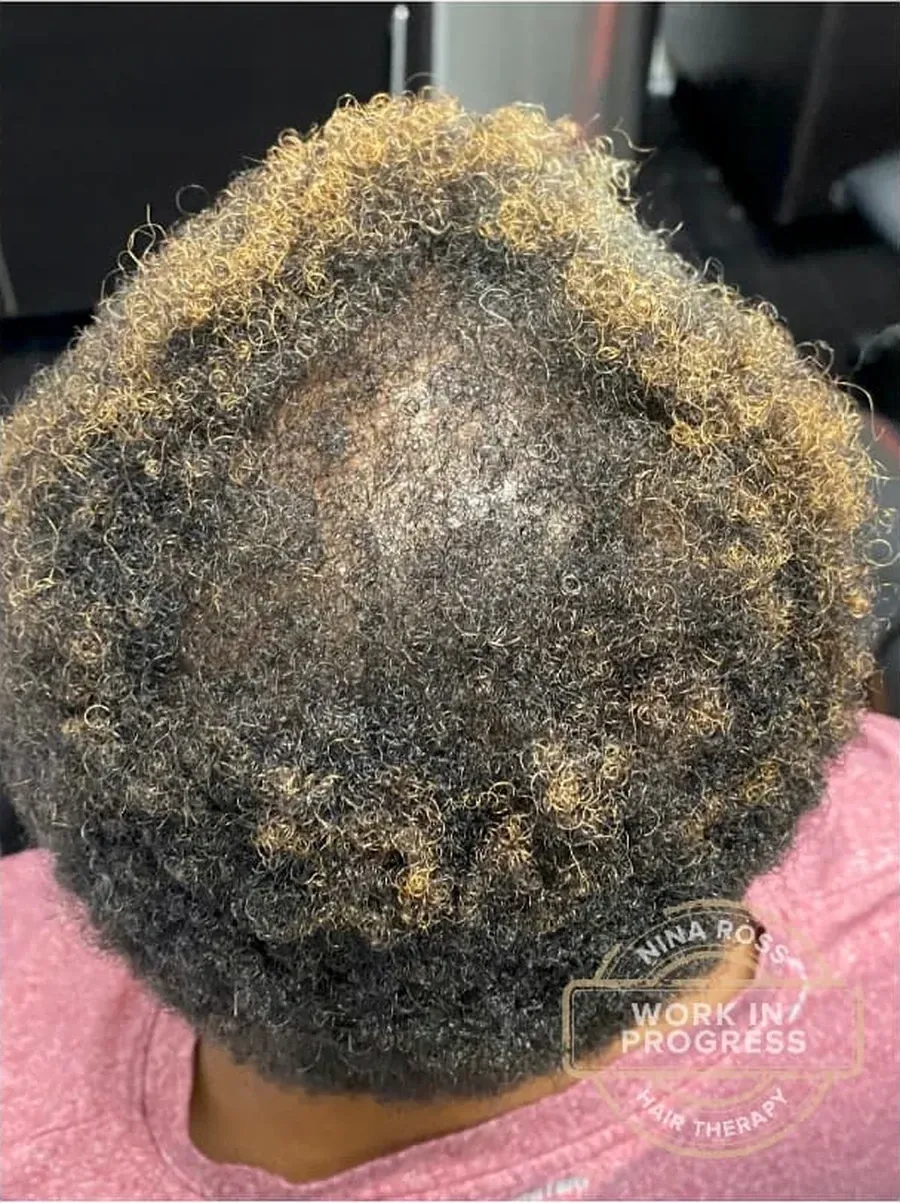
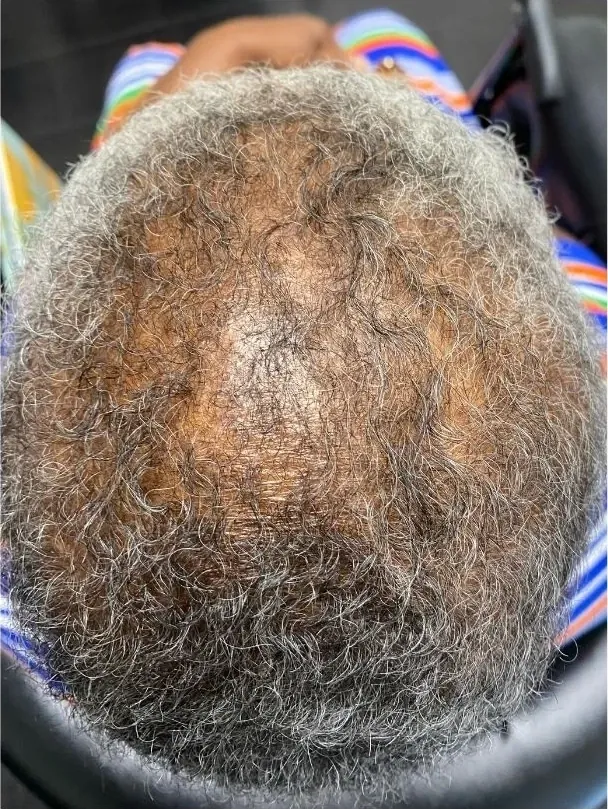
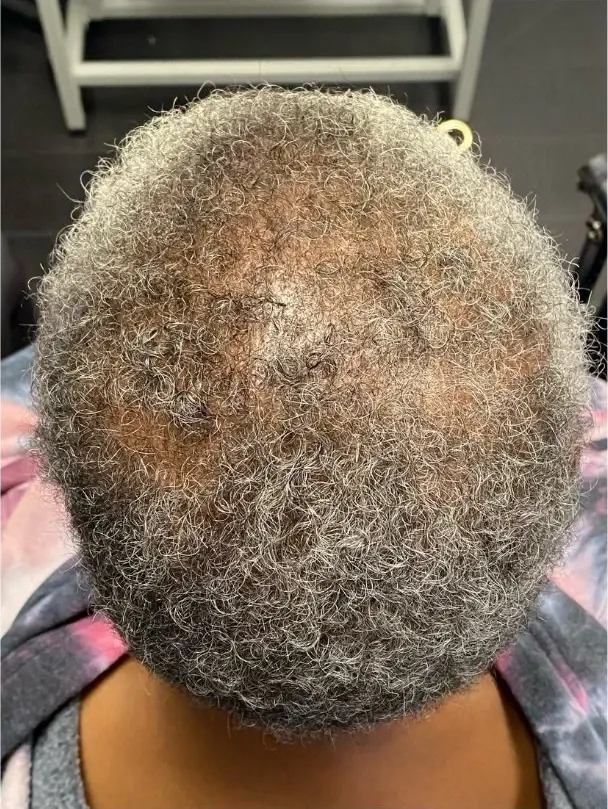
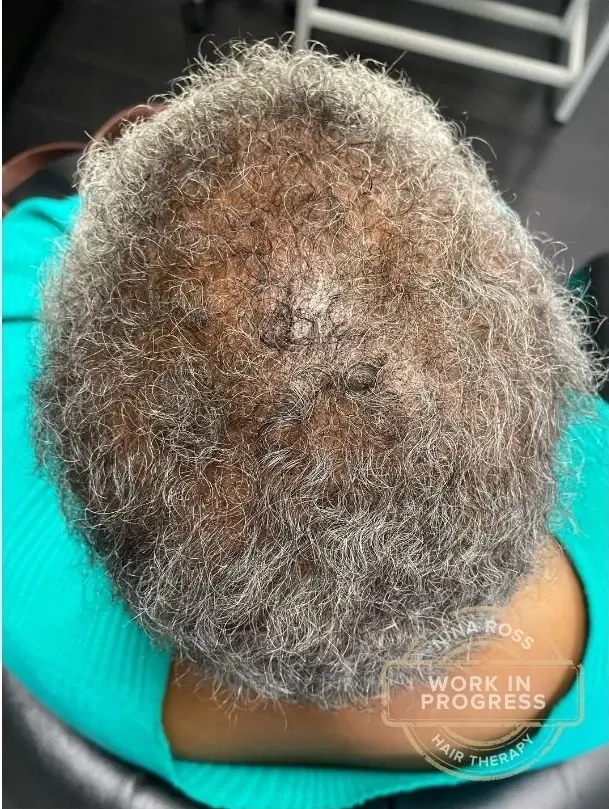
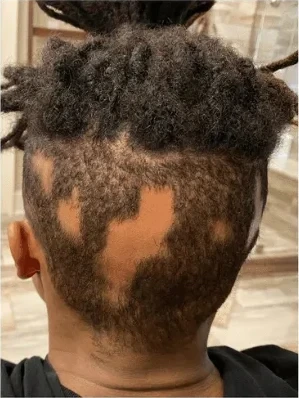
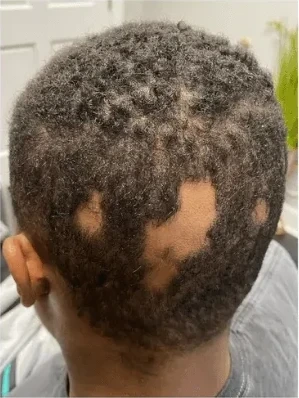
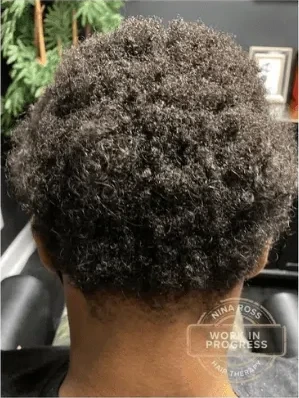
Results vary by individual. Shared with written consent.
Sound Familiar
Start With The One
That Sounds Like You
Tap the one you would say out loud. It takes you straight to the calendar.
“My edges thinned out and they have never come back”
“My hairline has moved back over the years”
“There is a thin fuzzy line where my edges used to be”
“I want traction alopecia treatment but I want to know if it is too late”
Come in with what you are noticing.
We stage your traction alopecia at 200x and tell you what can come back in your first visit.
Start With My $99 Hair & Body DiscoveryWhat Can Compound Traction Alopecia
Tension Is The Primary Driver.
These Make Recovery Harder.
Traction alopecia starts with tension on the follicle. Other factors running alongside it can slow recovery or accelerate progression, so we check the full picture.
You weren't treating it wrong. You were treating the wrong layer.
Watch: Website Introduction 2026
Four Factors We Check
Alongside Tension.
Low Nutrient Stores
Iron, ferritin, zinc, and vitamin D. Low stores can make a stressed follicle more likely to shut down and can slow recovery.
Hormonal Shifts
Thyroid changes, postpartum shifts, and perimenopause can thin hair independently. When they overlap with traction, we identify both.
Chemical Processing
Years of relaxer use can weaken the same margin where braids pull hardest. We consider both forces when staging your hairline.
Inflammation At The Margin
Redness, scale, or tenderness changes the treatment sequence. Calming active inflammation comes first.
Tension is the primary driver. Everything else helps determine how well the follicle can recover, so we check it before treatment begins.
Your Traction Alopecia Has A Stage
Three Stages.
Yours Is Visible At 200x.
Traction alopecia is one of the few types of hair loss where the stage determines the answer. Caught while the follicle is still there, the hairline often comes back.
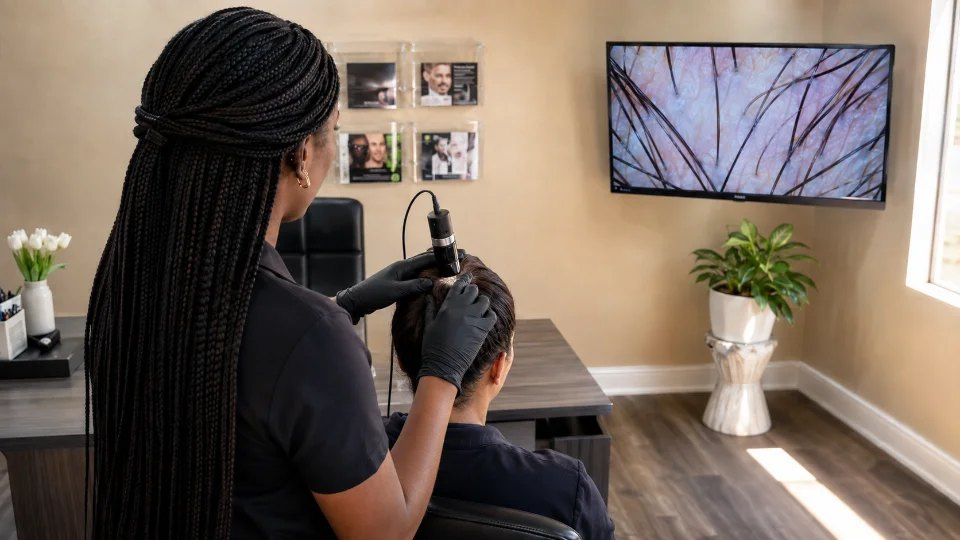
Trichoscopy at 200x shows which stage you have. Your hairline is magnified on screen during the visit, so you and your trichologist examine the affected margin together.
How Traction Alopecia Develops Over Time
What Tension Does
To A Follicle
Load, Repeated Over Years
Sustained pull on the hair shaft transfers force to the follicle. Held long enough and often enough, it can produce a thinner shaft, then a shorter one, then stop producing hair.
It Shows At The Margin First
The hairline, nape, and area behind the ears carry the most tension in many styles. That is why traction alopecia often appears as a band along the edge.
Soreness Is A Signal
Tenderness, small bumps at install, or stinging at takedown can signal that the load is high. Acting early gives traction alopecia treatment its best opportunity.
Your Effort Was Real
You styled your hair the way you learned, often from people who cared about you. Protective styling protects the shaft, but it does not automatically protect the root. Most of us were never told that.
How We Stage Your Traction Alopecia
Our Clinical
Framework At 200x
- 01Every affected margin is photographed from fixed positions and read at 200x. Each position gets its own staging rather than one label for the whole hairline.
- 02We count follicular openings at each position. Openings with fine short hair suggest early traction. Reduced openings suggest intermediate traction. Absent openings across a smooth band suggest advanced scarring.
- 03We assess the transition zone between the affected band and normal density. Its width and remaining viable follicles help determine how much of the line can move forward.
- 04We check for redness, scale, pustules, or tenderness at each position. Active inflammation changes the sequence because it is settled before treatment adds activity.
- 05Those findings become a plan written by position. Your nape may be recoverable while a temple has scarred, so one yes-or-no answer for the whole hairline is rarely accurate.
- 06The same positions are photographed at review visits and compared with your baseline. Continuing or adjusting treatment is decided from documented images.
How We Treat Traction Alopecia
Treatment Matches
The Stage
An early margin and a scarred band require different approaches. Everything below is performed in-house by certified trichologists, with protocols set from your 200x staging.
PRP Therapy For Traction Alopecia
Growth factors from your own blood are placed where follicles along the margin are still viable, including the transition border of an advanced case.
Microneedling For Traction Alopecia
Controlled micro-injury supports repair signaling and paired therapies. Depth is reduced and spacing widened along thinned edges to protect the margin.
Tension Modification Protocol
A styling plan that reduces load at affected margins while keeping styles you feel good in. We work with your stylist or your own routine.

Traction Alopecia Treatment For Textured Hair
The Condition That Affects Black Hair Most
Braids, cornrows, sew-ins, tight ponytails, locs, and weaves can contribute when tension is sustained at the margin over years. That history is clinical information, and it is treated that way here.



We Are Well-Versed In Us.
The factors that shape Black hair across a lifetime. Each one informs your traction alopecia treatment plan.
Relaxer HistoryWhat chemical processing may have done to the same follicles tension was pulling on.
Protective StylingHow tight, how often, and how long. The timeline behind what you see now.
Hormonal ShiftsPostpartum, thyroid, and perimenopause. When hormonal thinning overlaps with traction, both are addressed.
Nutrient StatusIron, vitamin D, and other markers that affect whether stressed follicles can hold on.
Men’s Traction PatternsThinning from tight durags, compression caps, or locs. The same staging process applies.
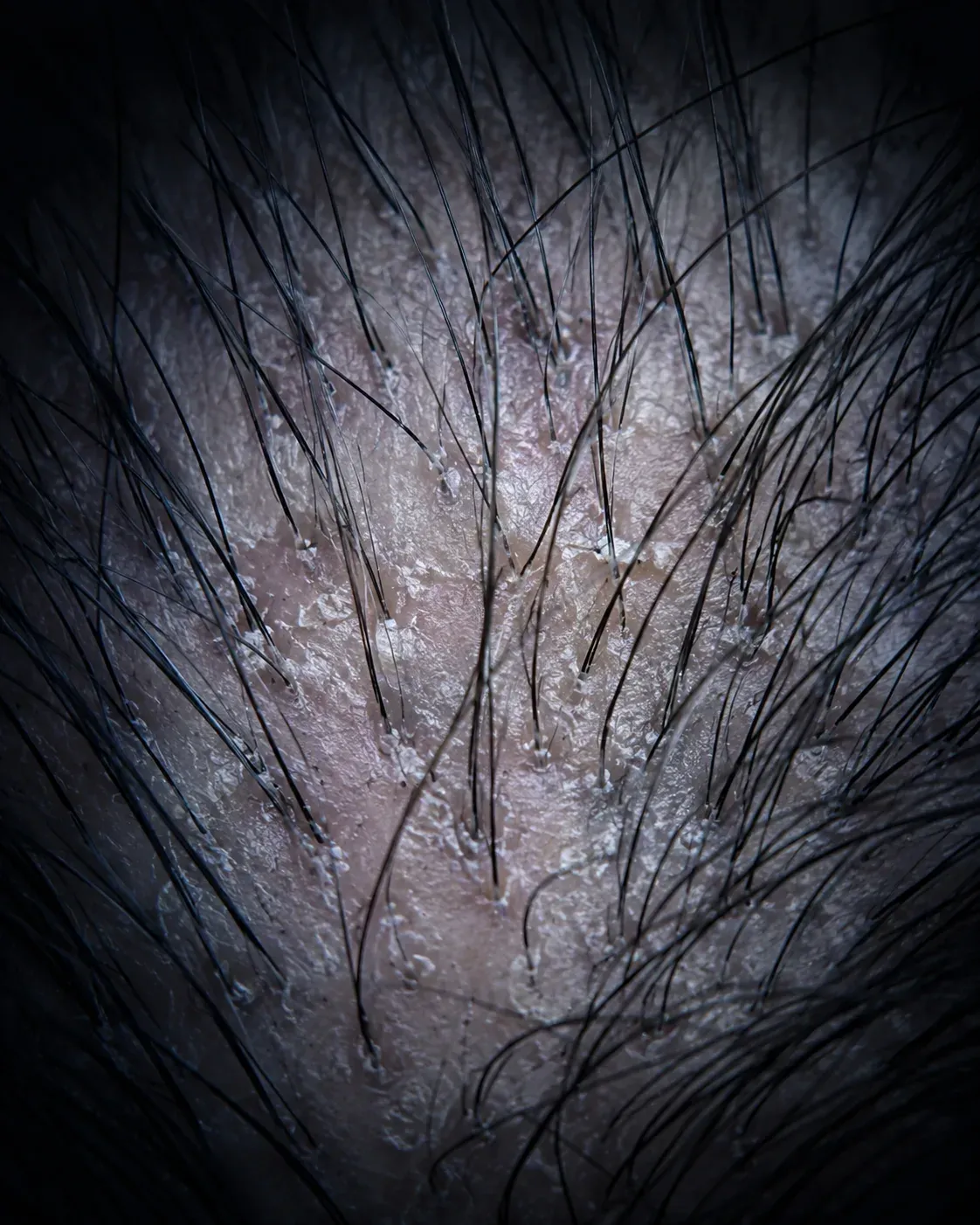
200x magnification.
See what's happening under the hair you can see.
Find Out What Stage Your Traction Alopecia Is In
Your Edges, Staged Before Treatment Begins
The Discovery is how your traction alopecia gets staged. You see your hairline at 200x, leave knowing which follicles are still viable, and receive your written report the next day.
Everything You Get.
The $99 Hair & Body Discovery.
One visit. You see what's happening. Next day, it's in writing.
Your One-on-One Traction Alopecia Assessment
30 focused minutes with a certified trichologist. Your edges, your hairline, your staging.
The 200x Margin Read
Your hairline magnified live on screen. You see follicular openings, scarring, and the transition zone yourself.
A Full-Body Biofeedback Scan
The Part Nobody's Ever Given You
Your Traction Alopecia Staging Report
Which sections can recover, which have scarred, and what to do next. In writing, in your inbox, the next business day.
No Prep
One Visit
Same Week
No Judgment
Serving All of Metro Atlanta
Our Promise
By the end you'll be seeing what's happening for yourself, your scalp at 200x and the systems behind it, with your report the next day. If you don't, the $99 is on us.
Who Oversees Your Traction Alopecia Treatment
Dr. Nina Ross, ND, Double Board Certified Trichologist

“Traction alopecia has stages. My job is to show you yours and build the plan around what can still respond.”
Dr. Nina Ross
Dr. Nina Ross is a naturopathic doctor with a PhD in Functional Medicine and double board certification in trichology. As Clinical Director, she sets and oversees every traction alopecia treatment protocol this practice runs.
Certified trichologists perform the evaluations and treatments. Everything is handled in-house, from the first 200x staging through the treatment series itself. One team, one location. 10 years of specialized care. 2,500+ clients seen.
- Double Board Certified Trichologist
- PhD In Functional Medicine
- Naturopathic Approach
- Position-By-Position Staging
In Their Words
Reviews From Clients Across The Metro
“I had tried everything for years. Nothing worked. Within months at Nina Ross, I saw new baby hairs. At 40 weeks, I had the confidence I thought I lost forever.”
Coretta, Atlanta
“Doctors told me nothing could be done. Nina Ross slowed my CCCA and actually gave me new growth. I only wish I had started sooner.”
Tasha, Decatur
“I was skeptical after wasting money elsewhere. The scalp imaging alone told me more than two years of guessing.”
Danielle R., Sandy Springs
Reviews are shared with client permission.
Results not typical. Individual results will vary.
Areas We Serve.
Traction Alopecia Treatment For Black Folks Across Metro Atlanta.
Our office sits just off GA-400 in Sandy Springs, minutes from the Perimeter, with free parking at the building.
Clients drive in from Atlanta, Decatur, Roswell, Alpharetta, Marietta, Dunwoody, and Brookhaven for traction alopecia treatment with a trichologist who stages the hairline at 200x first.
Open Monday through Saturday, 10:00 AM to 3:30 PM. Same-week appointments are available, and your report arrives the next business day.
01Sandy SpringsOur home. Off GA-400 near the Perimeter.
02Atlanta20 to 30 minutes from Midtown and Buckhead.
03DunwoodyUnder 10 minutes.
04BrookhavenAbout 15 minutes.
05RoswellAbout 15 minutes via GA-400.
06MariettaAbout 25 minutes via I-285.
07DecaturAbout 30 minutes via I-285.
08AlpharettaAbout 20 minutes via GA-400.
Questions, Answered.
Questions About
Traction Alopecia Treatment
If your question is not here, call us. You will talk to a real person.
Can traction alopecia be reversed?
It depends on the stage. Early traction alopecia, where follicular openings are still visible at 200x, is often reversible. Intermediate cases are partly recoverable. Advanced cases with scarring are manageable, and the focus shifts to protecting the viable border. We stage yours and tell you which category each section of your hairline falls in.
What causes traction alopecia?
Sustained tension on the hair follicle over time. Tight braids, cornrows, sew-ins, ponytails, weaves, locs, and extensions can contribute when the pull at the margin is repeated over months or years. The hairline, nape, and area behind the ears are often affected first.
How long does traction alopecia treatment take?
It varies by stage. Early-stage recovery can show visible progress in 8 to 12 weeks. Intermediate cases take longer. We photograph from fixed positions every visit so progress is measured against your own baseline. Results vary by individual.
What does traction alopecia look like?
A receding hairline, thinning edges, a thin fuzzy band where full edges used to be, or a smooth band with no hair at the margin. At 200x, we can see whether follicular openings are still present, which helps determine what can come back.
Can I still wear braids if I have traction alopecia?
It depends on your staging and the tension at the margin. Part of traction alopecia treatment is a styling plan that reduces load on the affected follicles while keeping styles you feel good in. We work with your routine.
Is traction alopecia permanent?
Only where the follicle has scarred and the opening is gone. Early and intermediate traction alopecia can still have viable follicles that may respond to treatment. The 200x read shows which areas have scarred and which may recover.
Do you treat traction alopecia in men?
Yes. We evaluate thinning associated with tight durags, compression caps, locs, or other repeated tension at the hairline using the same 200x staging process.
What is the best treatment for traction alopecia?
Treatment is matched to the stage. PRP therapy delivers growth factors to follicles that are still viable. Microneedling supports repair signaling at the margin. Both are adjusted for traction edges, and the plan is built from your 200x staging.
How much does traction alopecia treatment cost?
Treatment is discussed after your traction alopecia is staged at the $99 Hair & Body Discovery. We confirm which sections of your hairline may respond before recommending a plan, so you invest with clarity.
How is your traction alopecia treatment different from other clinics?
We stage each affected margin individually at 200x before recommending treatment. We tell you which sections may respond, which have scarred, and build a position-specific plan from what your hairline shows.
Your First Step.
Find Out What Stage Your Traction Alopecia Is In
One visit. Your hairline at 200x. Every margin staged position by position. Your full traction alopecia report in writing the next day.
Start My $99 Hair & Body Discovery
Your first step is one visit where you find out whether your edges can come back.
(678) 561-4522
8735 Dunwoody Place, Suite 290 · Sandy Springs, GA 30350