
What if you're already doing everything right?
You eat well. You take your vitamins. And you're still finding hair in the brush, in the shower and on your clothes.
Iron and biotin get all the airtime in these conversations. Potassium almost never does, and for some women it's the missing link.
How does a potassium deficiency trigger shedding?
Follicles behave like plants. They need the right environment before anything you feed them can be used.
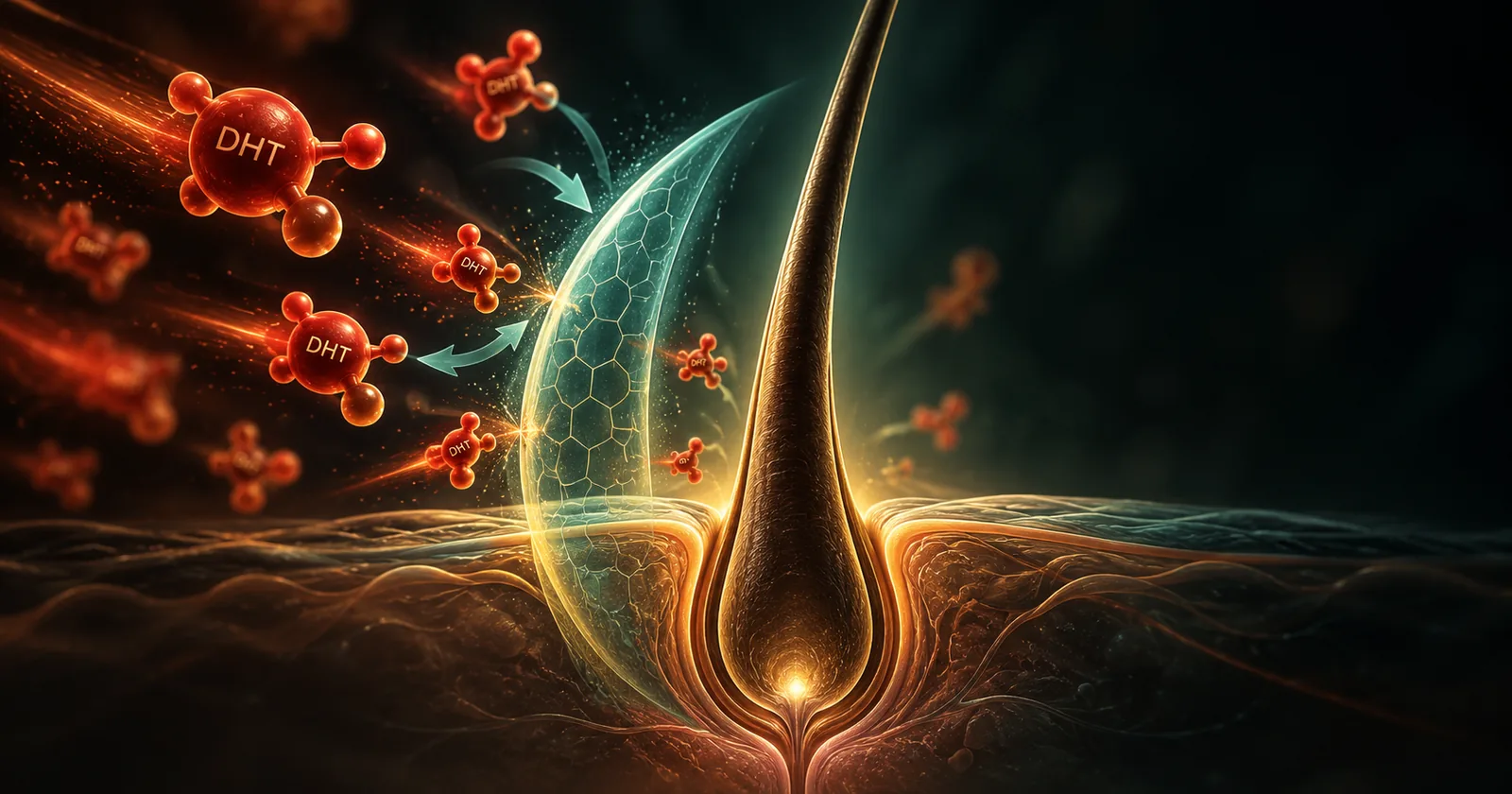
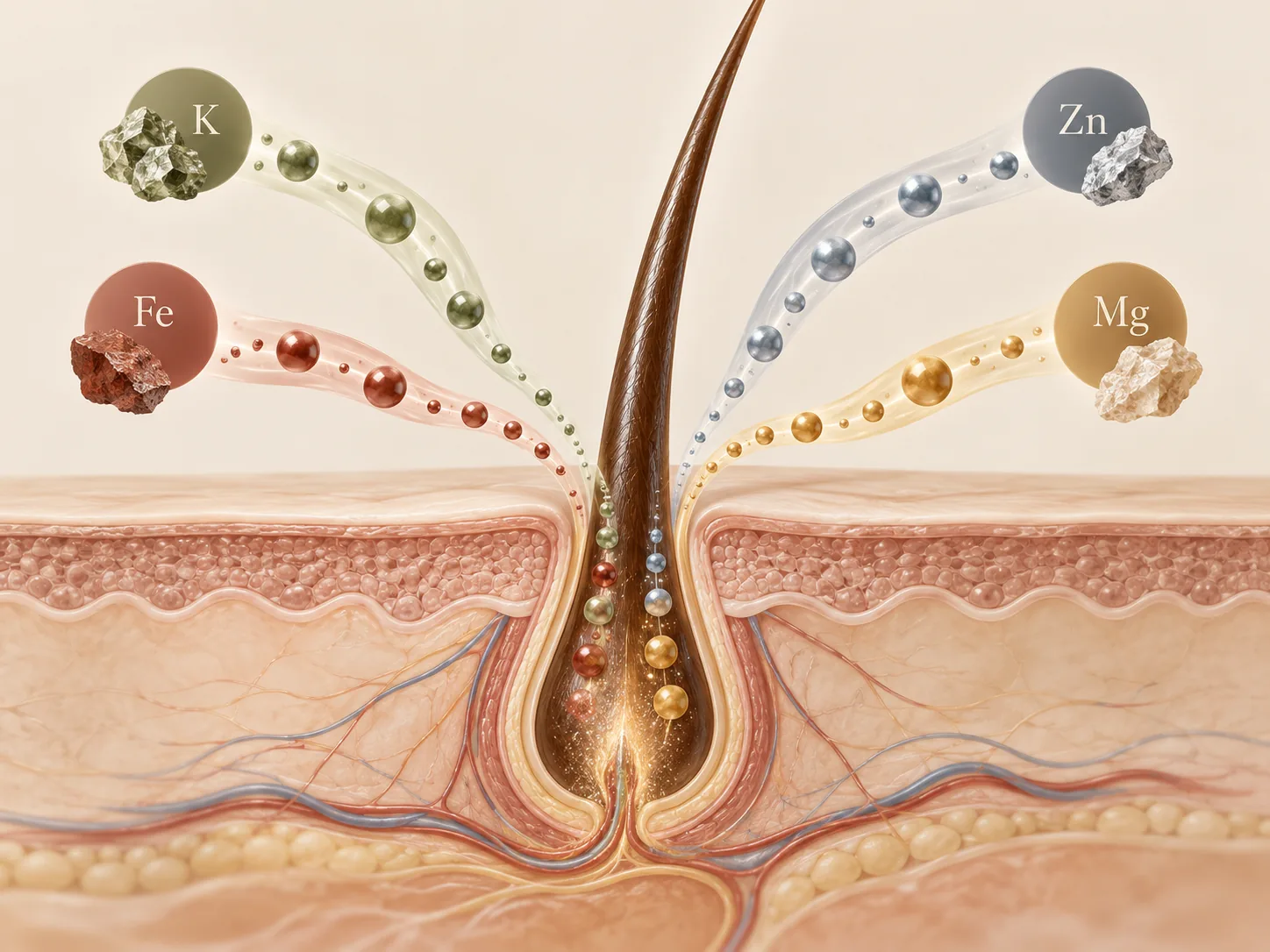
When potassium runs low, sodium accumulates around the follicles. That buildup blocks the uptake of other nutrients, including iron and zinc, so the follicle ends up starving while surrounded by food.2
The follicle ends up starving while surrounded by food.
Dr. Nina Ross, ND
A nutrient blockade is a stressor, and the body responds by moving hair out of its growing phase. That's telogen effluvium, the diffuse thinning across the whole scalp so many women describe.3
- Deficiency buildsPotassium runs low; other nutrients get blocked.
- Months passThree months or more, often with no visible change.
- Shedding startsDiffuse, all over. What you see today started well before today.
What are the signs of low potassium?
- Unexplained fatigue
- Muscle weakness or cramping
- Trouble sleeping
- Heart palpitations or a fluttering feeling
- Tingling or numbness in the hands or feet
None of this is a diagnosis you can make from a list. It's a reason to look deeper, and functional medicine lab testing is how we check mineral status properly instead of assuming.4
How do you correct low potassium?
Food as the foundation
Spread potassium-rich foods across your day rather than relying on one item.
Fruit
- Melons
- Bananas
- Apricots
- Peaches
Vegetables
- Spinach
- Kale
- Mushrooms
- Broccoli
- Sweet potatoes
Proteins and beans
- Salmon
- Turkey
- Chicken
- Lima beans
- Black beans
Grains and dried fruit
- Brown rice
- Figs
- Raisins
Supplementing, once testing shows a real deficit
Once a real deficit has built, diet alone often falls short, because absorption sets its own limit on what you actually take in.5 In our plans, potassium and magnesium are paired in capsule form, because magnesium helps the body use potassium, and they're supported with D3 for follicle health.6
Safety first. Talk to your doctor before supplementing potassium if you have kidney issues or take blood-pressure medication.
How long does it take to see a change?
It took months to deplete, so it takes months to replenish and let the hair cycle reset. That's biology, not a lack of effort on your part.
This type of shedding is usually temporary with a consistent plan. Most women can expect their hair to return toward its normal rhythm within about six months.7 Results not typical. Individual results will vary.
The real question is whether potassium is the whole story for you, or whether hormones, other nutrients or inflammation are also in play. That's what testing is for.
What not to conclude from symptoms
Fatigue, cramping, sleep changes, palpitations, tingling, and shedding can each have more than one explanation. Seeing several together makes the potassium question worth asking. It does not make the answer automatic.
That distinction protects you from correcting the wrong thing. The history, scalp pattern, and focused testing have to agree before potassium belongs at the center of the plan.
Test the question. Use symptoms to form a better question, not to choose your own dose.
Not sure this is you? See your scalp at 200x.
Book My $99 DiscoveryHow do we decide whether potassium belongs in your plan?
We start with your history
Before a mineral goes into a plan, we go through how the shedding started, what changed three to six months before it, what you eat and what you already take. That conversation usually tells us whether potassium is even the right question.
Then we read the scalp at 200x
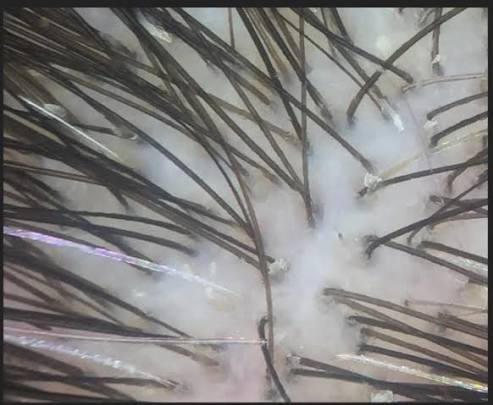
On screen, while you watch, we look at which of two pictures you have. They call for very different plans.
| What we see at 200x | Diffuse thinning | Concentrated thinning |
|---|---|---|
| Where | Across the whole scalp | One area |
| Pattern | Telogen pattern | With surface change |
| Where we look next | If history agrees: mineral status and absorption | A very different plan |
Labs only when they're warranted
If the history and the read point inward, mineral status and absorption are worth testing properly, alongside hormones and inflammatory markers. If they don't, more supplements aren't the answer, and we'll say so.
Correction, not just more bananas
Food is the foundation, and it's often too slow on its own once a real deficit has built. When correction is needed, we tell you what we're correcting and why.
Frequently asked questions
Can low potassium cause hair loss?
It can contribute. When potassium runs low, sodium can build up around the follicles and block the uptake of nutrients like iron and zinc. That stress is commonly linked to telogen effluvium, a diffuse, all-over shedding.
How long does it take for hair to grow back after fixing a potassium deficiency?
It took months to deplete, so it takes months to replenish and let the hair cycle reset. With a consistent approach, most women can expect their hair to return toward its normal rhythm within about six months. Results not typical. Individual results will vary.
What are the signs of low potassium?
Unexplained fatigue, muscle weakness or cramping, trouble sleeping, heart palpitations, and tingling or numbness in the hands or feet. None of these is a diagnosis on its own. They are a reason to test.
Should I take potassium supplements for hair loss?
Only once testing shows a real deficit. Food is the foundation, but a significant deficiency often needs targeted correction. Talk to your doctor before supplementing potassium if you have kidney issues or take blood-pressure medication.
What foods are highest in potassium?
Melons, bananas, apricots, peaches, spinach, kale, mushrooms, broccoli, sweet potatoes, salmon, turkey, chicken, lima beans, black beans, brown rice, figs and raisins. Spread them across the day rather than relying on one item.
Is potassium or biotin better for hair growth?
Iron and biotin get most of the airtime, and potassium almost never does. For some women it is the missing link, which is why we test mineral status rather than guess.
References
- [Source needed: low potassium linked to telogen effluvium and a 3+ month lag before shedding] ↩
- [Source needed: low potassium, sodium accumulation and blocked iron/zinc uptake at the follicle] ↩
- [Source needed: physiological stress moving hair into telogen] ↩
- [Source needed: symptoms of low potassium] ↩
- [Source needed: absorption limits of dietary potassium correction] ↩
- [Source needed: magnesium supporting potassium use] ↩
- [Source needed: recovery timeline of telogen effluvium, about six months] ↩

Written and reviewed by
Double Board Certified Trichologist. PhD in Functional Drugless Medicine. Master Cosmetologist. Founder and Clinical Director of Nina Ross Atlanta, with 10 years of specialized care and 2,500+ clients seen.