What A Trichologist For Black Hair Actually Changes
You have sat through the appointments where someone glances at your scalp and prescribes the same thing they prescribe everyone. Imagine a trichologist who already understood what was happening before you finished explaining it.
You Have Been Told To Use Less Heat
You point out your thinning edges or a part that keeps widening, and you get back a suggestion to use less heat or try a different shampoo.
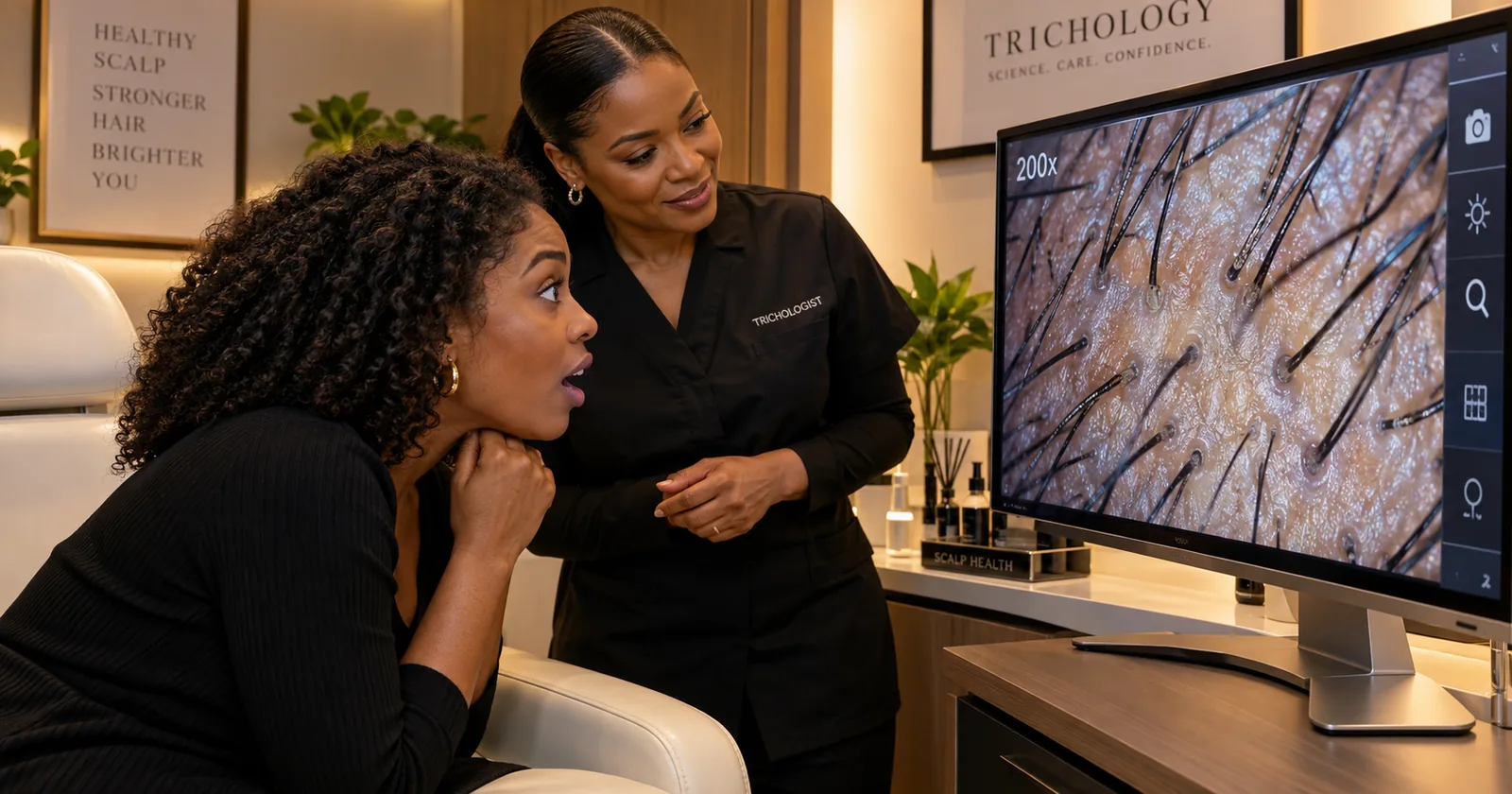
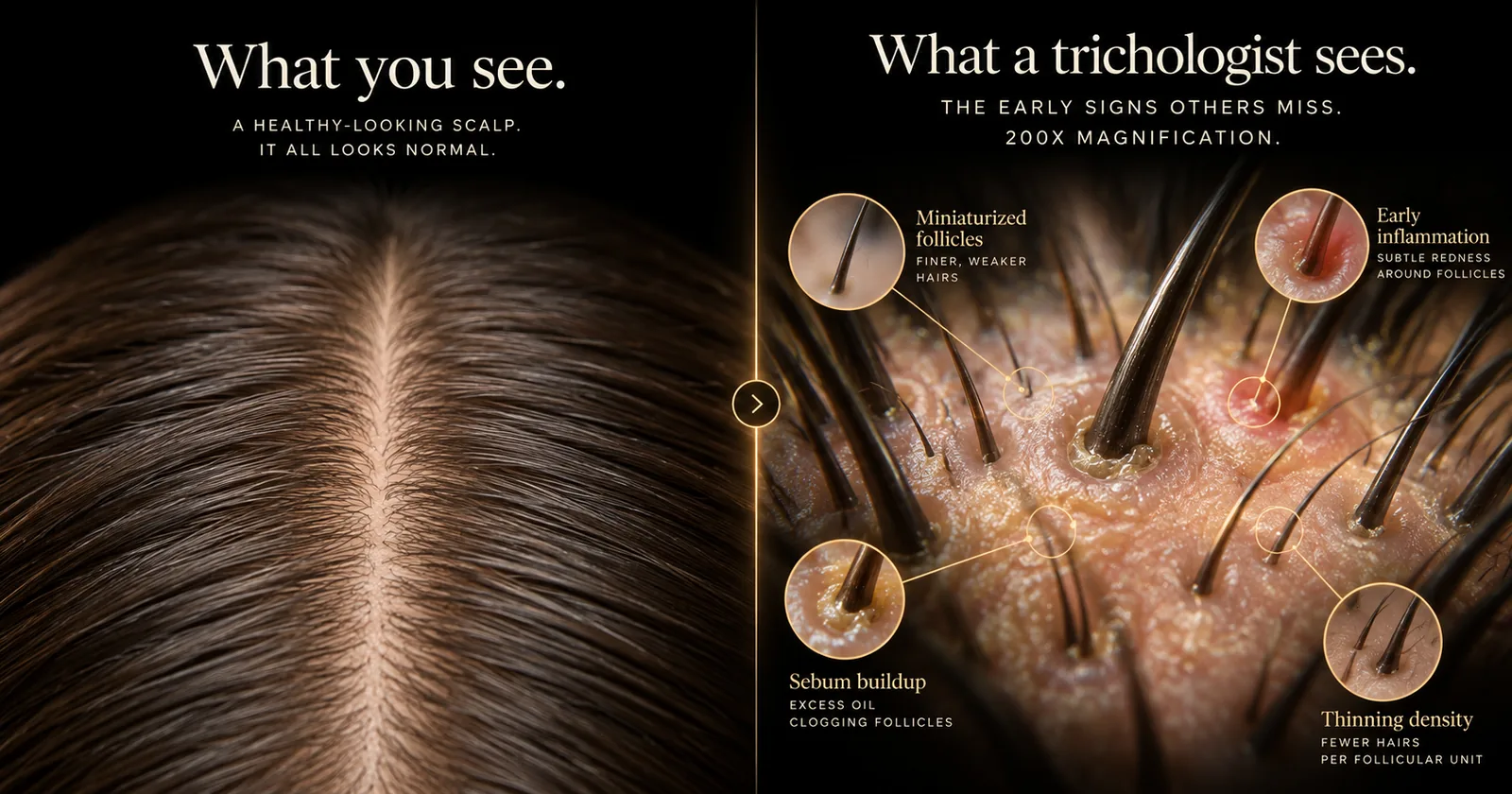
What A Black Hair Trichologist Sees
What you are describing is treated as cosmetic, so you leave with the sinking feeling that nobody looked closely at what is actually going on.
Why Most Treatments Fail Black Women
That is not your fault, and it is not because your hair is complicated. The gap is in the training. Most trichology programs spend very little time on Black hair and the scalp conditions that show up in it.
How To Spot The Right Trichologist
Plenty of women spend a great deal of money on treatments that were never designed for the condition they actually have.
What The First Appointment Should Accomplish
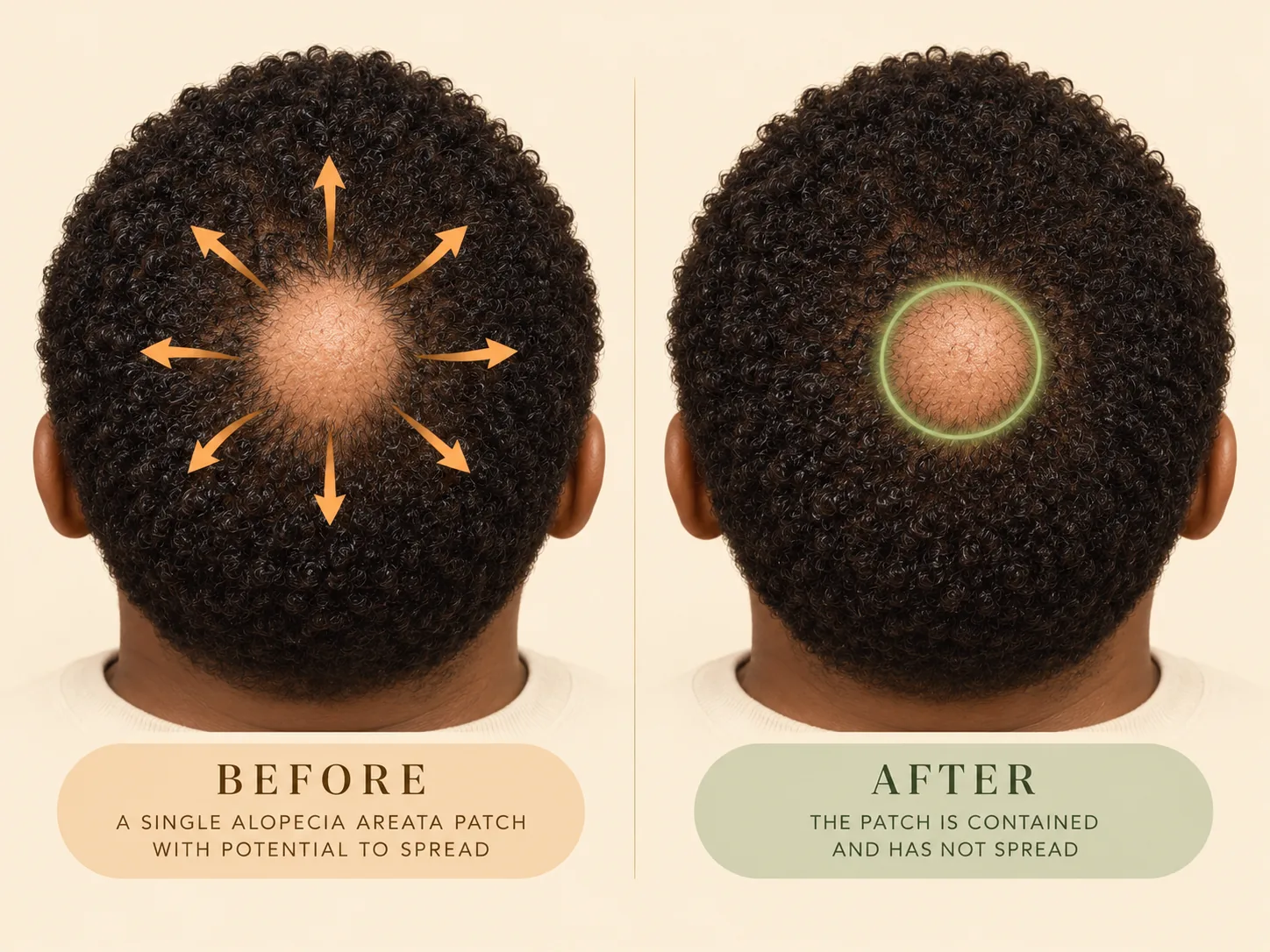
CCCA needs anti-inflammatory rescue while there is still time, before scarring sets in. Traction alopecia needs rehabilitation that accounts for how the hair is actually worn and styled, not a lecture.
What specialization changes in the room
You should not have to translate your hair before the evaluation can begin. A practitioner who works with Black hair understands that the pattern, the scalp surface, the styling history, and the way hair is worn all belong in the same respectful conversation.
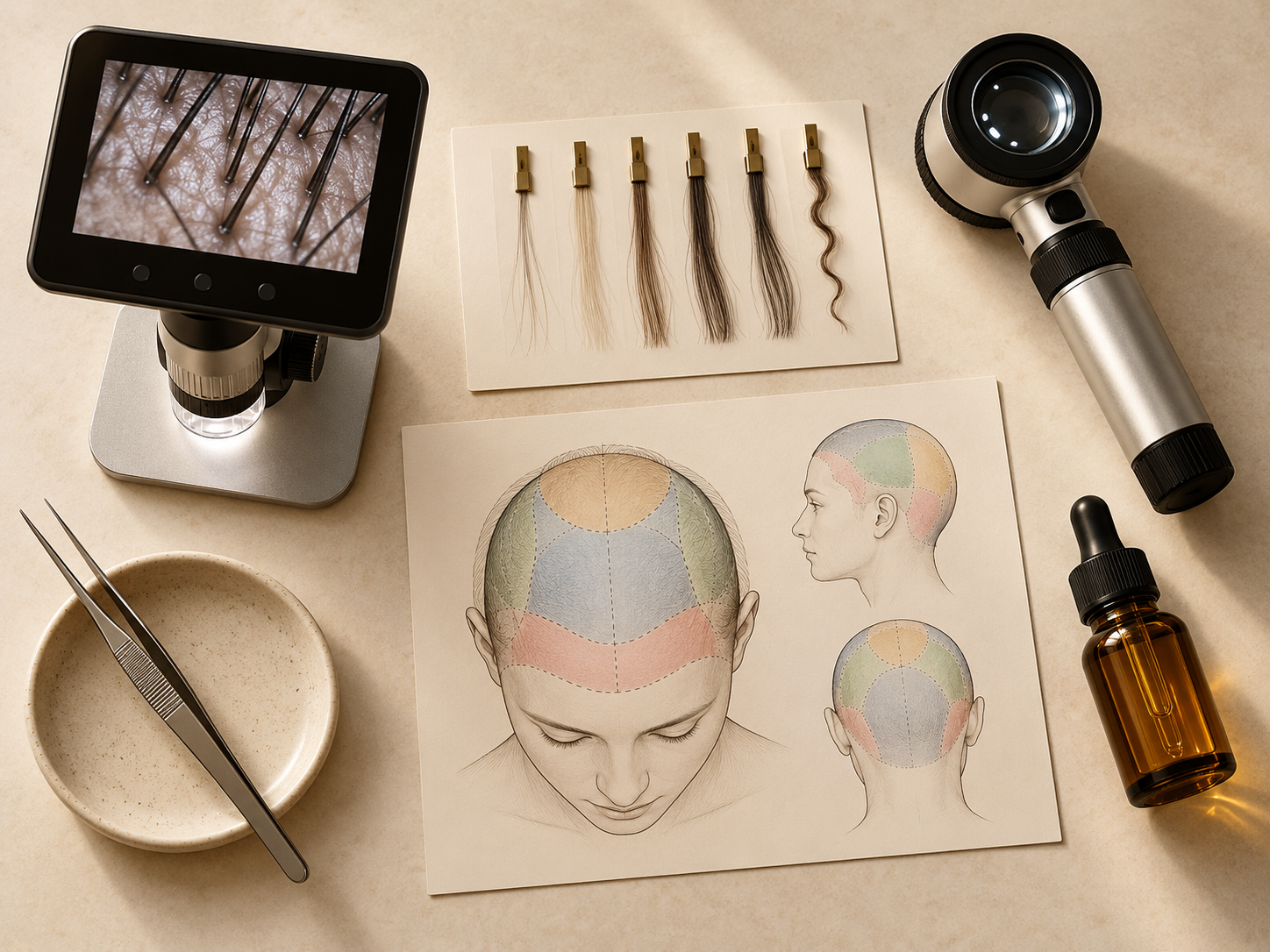
That does not mean blaming every change on styling. It means knowing enough about CCCA, traction alopecia, inflammation, and textured hair to distinguish one possibility from another.
What a close scalp read can separate
| Pattern under discussion | Why the difference matters |
|---|---|
| Early CCCA | It can resemble ordinary crown thinning while inflammation and scarring risk change the urgency |
| Traction alopecia | The plan must account for the location of tension and how the hair is actually worn |
| A mixed picture | Different areas may be responding to different drivers and need different expectations |
These are not labels to choose from a webpage. They are examples of why a glance at the scalp and a generic shampoo recommendation are not enough.
How to recognize a better fit
- The consultation asks where and when the change began
- Your styling history is discussed without judgment
- The scalp is examined closely rather than glanced at
- The practitioner can explain how CCCA and traction differ
- Treatment is not chosen before the pattern is understood
You deserve to understand the plan. The first sign of good care is not a product. It is an explanation that connects what you noticed with what the practitioner can actually see.
What the first appointment should give you
A useful first visit establishes a baseline. It documents the areas of concern, listens to the history that led there, and separates what needs attention now from what still needs investigation.
For CCCA, that may mean recognizing an inflammatory pattern while there is still time to protect follicles. For traction alopecia, it means rehabilitation that respects real styling choices. For a mixed picture, it means refusing to force the whole scalp into one answer.
Feeling seen is not a soft extra. It is what allows the right details to enter the room. When those details are finally included, the path forward can become both more precise and more hopeful.
Not sure this is you? See your scalp at 200x.
Book My $99 DiscoveryFrequently asked questions
Why choose a trichologist who understands Black hair?
Textured hair, melanated skin, styling history, and conditions such as CCCA and traction alopecia need to be understood together. That context helps prevent a real scalp concern from being dismissed as cosmetic or blamed on styling alone.
What can a close scalp read help distinguish?
It can help separate an early crown pattern such as CCCA, traction concentrated in stressed areas, and a mixed picture in which different parts of the scalp may have different drivers.
How can I recognize a better fit?
Look for a practitioner who asks where and when the change began, discusses styling without judgment, examines the scalp closely, explains important pattern differences, and does not choose treatment before the evaluation.
What should the first appointment accomplish?
It should establish a baseline, document the areas of concern, connect the scalp findings with your history, identify what needs attention now, and explain which questions still require investigation.

Written and reviewed by
Double Board Certified Trichologist. PhD in Functional Drugless Medicine. Master Cosmetologist. Founder and Clinical Director of Nina Ross Atlanta, with 10 years of specialized care and 2,500+ clients seen.